CSO Gallery in Hoian
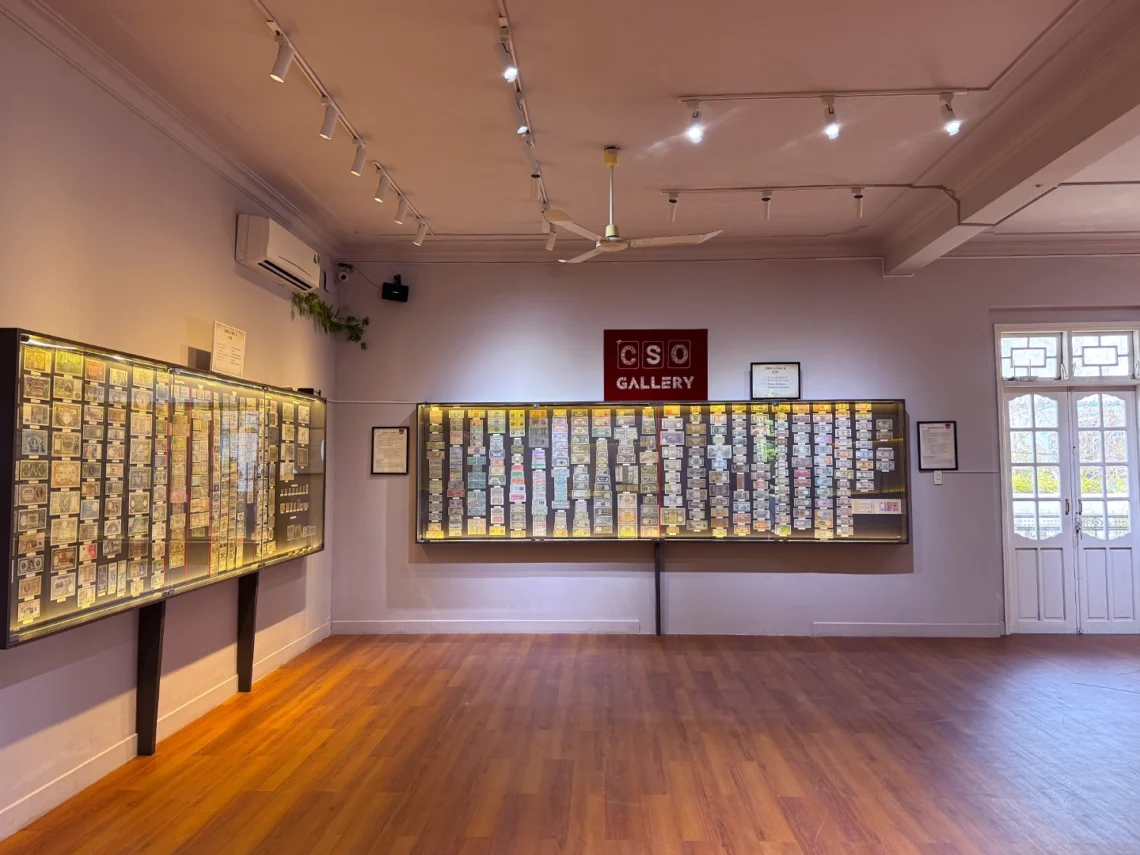
The CSO Gallery in Hoian is a gem of a museum for everyone who wants to dive deeper into Vietnamese history, life over the centuries and everything that connects us across many countries. The gallery has three main focuses: The Tale of Kiều (Vietnams most famous piece of literature), ancient coins and old banknotes and stamps. You can explore the sprawling floors for hours, admire artworks on the way, have a coffee at the museum cafe and even take part in a workshop.
This post contains affiliate links to things like tours and hotels. These help me earn a small commission at no additional charge to you. Every affiliate link is marked with a *.
About CSO Gallery
The CSO gallery in Hoian is not just one gallery, but rather a collection of collections. Let me explain: The spaces on the premises are dedicated to different collections around a topic. One is focused on The Tale of Kiều, one on ancient coins and banknotes and the last one on stamps. Each collection could be seen as a museum or gallery in itself and all of them have been collected by the owner since his youth.
Overview of CSO Gallery
- The Tale of Kiều
- Ancient coins & old banknotes
- Stamps
- Dó paper painting workshop
- CSO Gallery on Vietnamese TV
- Overview
The Tale of Kiều
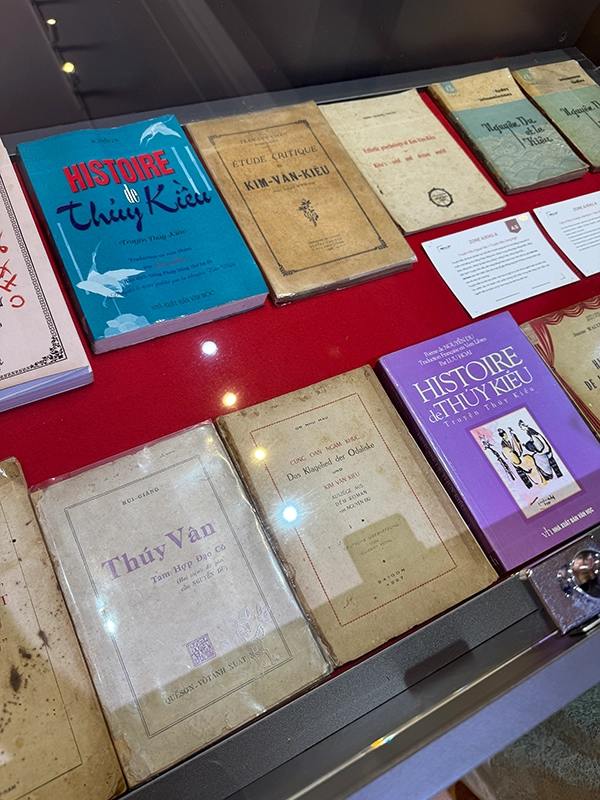
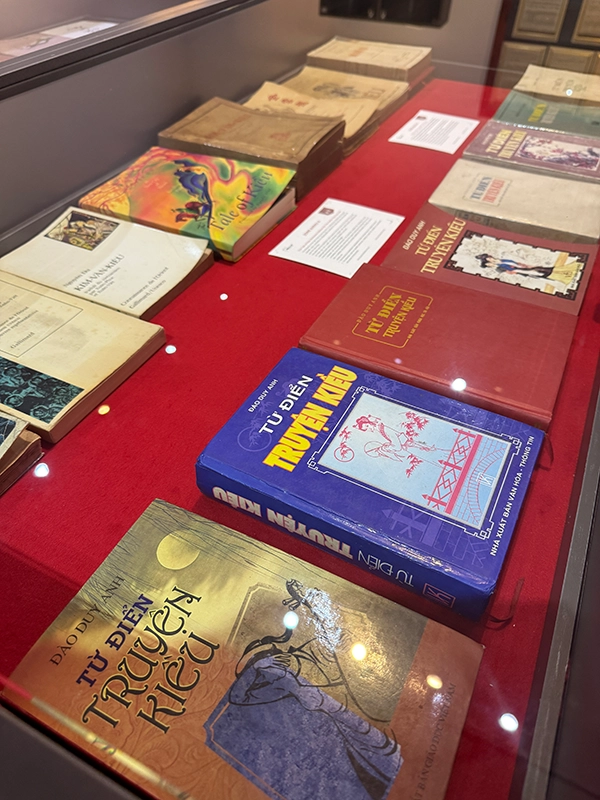
The Tale of Kiều was written by Nguyễn Du as a poem with 3,254 verses! The original was written in Chu Nom, the former Vietnamese writing system. It was based on the plot of the 17th century Chinese novel Jin Yun Qio. In the 1960s the poem was turned into a novelette called Kim Van Kieu by Lê Xuân Thuy. This story, in its many forms, is widely regarded as the most well known story in all of Vietnam.
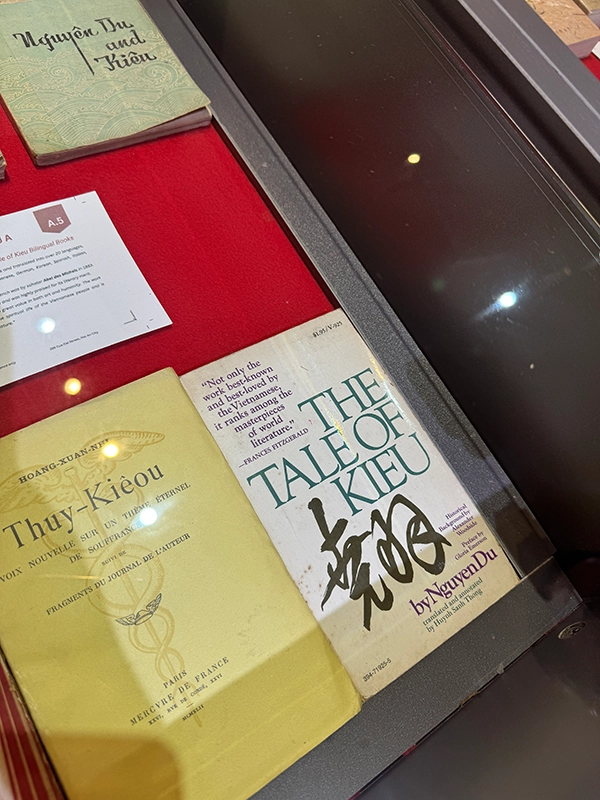
The gallery covers the original poem, rewrites into novelettes and novels, translations into more than 20 different languages and more. There are even books analysing the books and “translations” that rather than translating the story line by line, attempt to explain it instead and put it into a historical context. The poem has inspired many artistic interpretation over the years, from audiobooks to movies, modern twists on the story and even music videos. It can also be used for fortune reading, where you pull a card from a deck and that card has a verse from the poem on it. You can try that at the CSO gallery.
But what is The Tale of Kiều even about?
The poem tells the tragic story of Thúy Kiều over roughly fifteen years of her life. From the first meeting of her and Kim Trọng, a young scholar and her first / real love, over the financial devastation of her family that forces her into an arranged marriage that leads to her being sold as a prostitute, her fight against this fate – even trying to escape it by suicide – and how she seemingly can’t escape it. Her life never stops being turbulent during the duration of the poem, even when she gets taken in by a Buddhist nun her trials are far from over.
The poem ends with being reunited with Kim, who had married her younger sister Thuý Vân years prior and has taken care of her family in the meantime. She marries him, but refuses any kind of physical relationship.
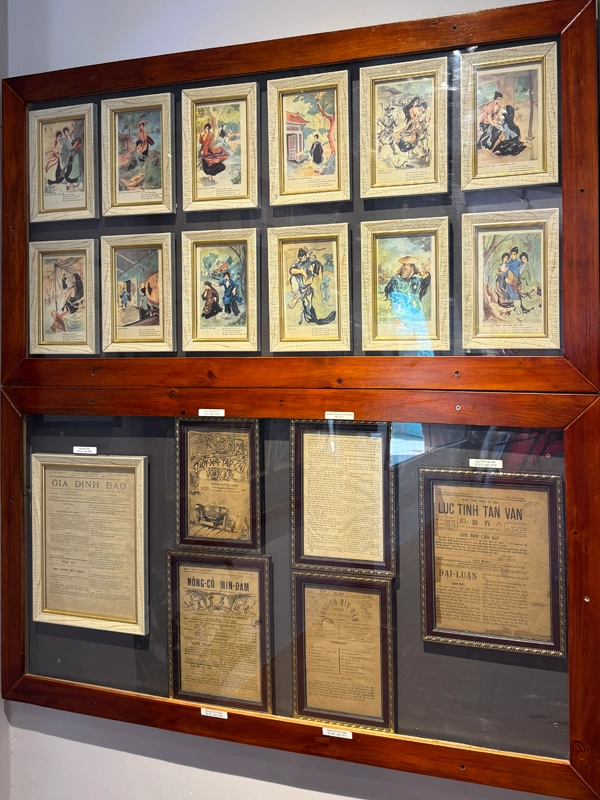
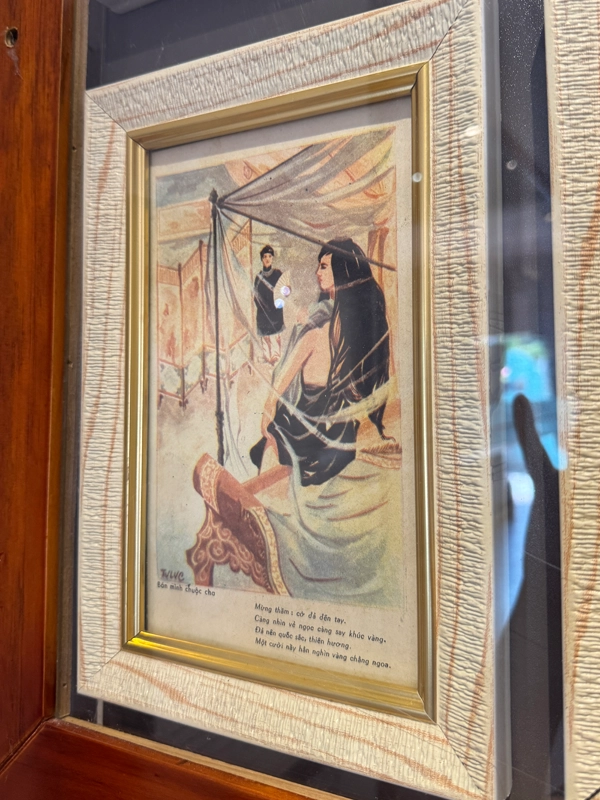
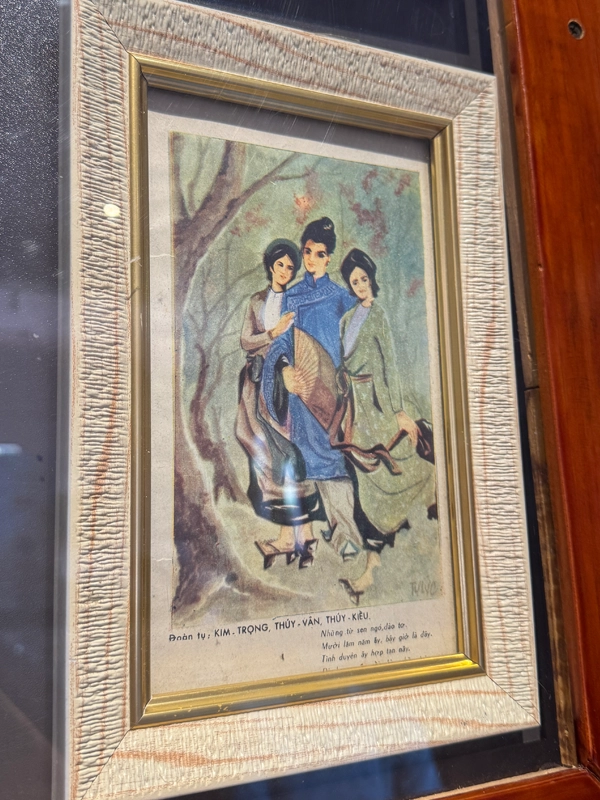
One wall of the gallery is covered in watercolour pictures which depict different events from the story. Below you’ll find the gallery itself, the picture about Kiều when she first accepts her fate in the first brothel shes brought to and the last one where she is shown together with her sister Thuý and their husband Kim.
Ancient coins & old banknotes
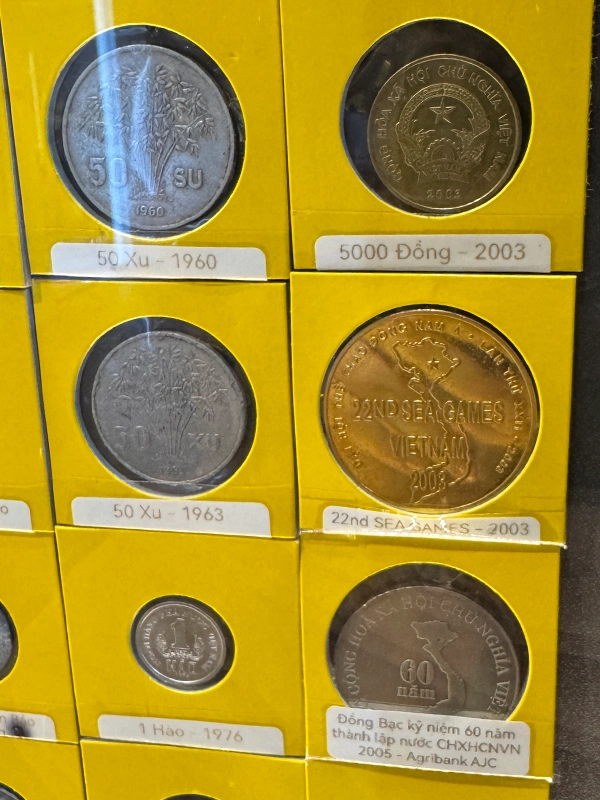
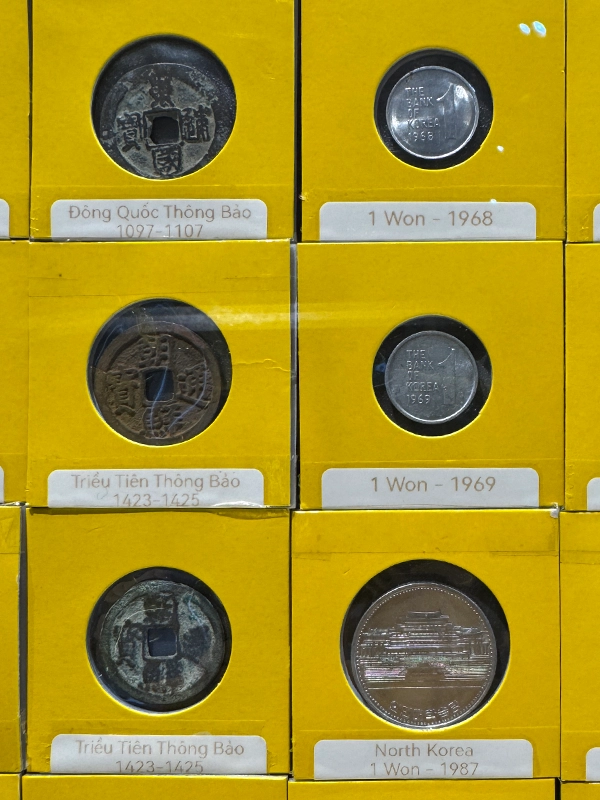
There are many different coins in the collection, including graded coins that have been officially evaluated, commemorative coins that were issued at special occasions or events (some of them were used as currency, others only as keepsakes), coins from many different countries, sorted by the country and ancient Vietnamese reward coins, which come from the time of Vietnamese Emperors, they were given during several dynasties as rewards for loyalty or big achievements.
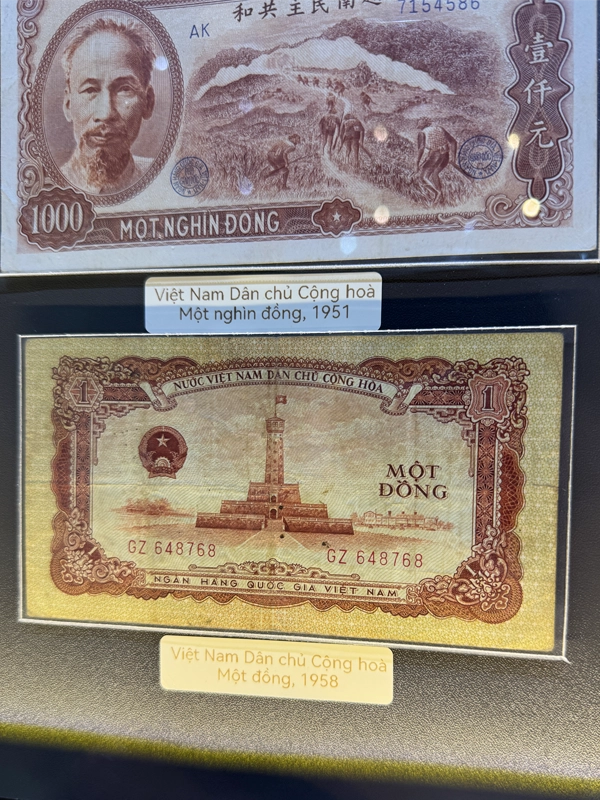
Then there are bank notes from all over the world. Some were printed with royal symbols, examples of famous architecture, colourful animals and historic figures (most of which were less historic at the time of printing). There are notes from colonies and countries that no longer exist today and even notes that were for exclusive use by military personnel during or after war times.
I have taken so many pictures in here, but I want you to go and see for yourself, so here are only three:
- The last 5000 Vietnam Dong Coin, minted in 2003
- A 1 Vietnam Dong Note from 1958
- Ancient (1097!) and international coins (one is from North Korea!)
Another coin I remember well from this collection is an old 5 German Mark coin (currency used previous to the Euro) which was minted in celebration of the 100th birthday of Otto Hahn. He was famous German chemist who won the 1944 Nobel Prize in Chemistry for his discovery of nuclear fission and is is considered the “father of nuclear chemistry” here. I have a coin from the same batch at home, it had been a gift from my grandfather.
Go Home 201
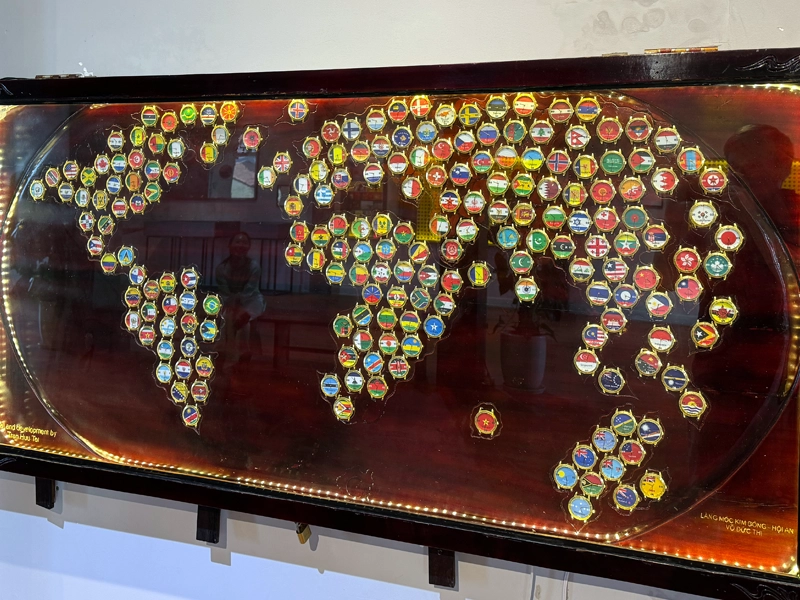
Next to coins and bank notes the second floor of the second building also contains “Go Home 201”. This artwork contains many small watches with flags inside them. Every watch is set to the local time of the country whose flag it’s displaying – in relation to Hanoi time.
The artist describes their intention behind this artwork as “the connection between cultures, time zones, and global life rhythms.”
Lucky Coin Tree
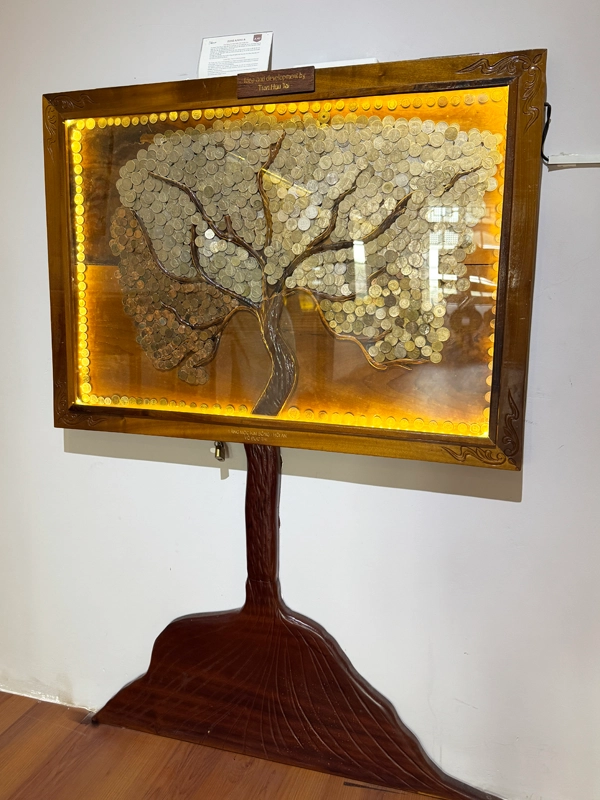
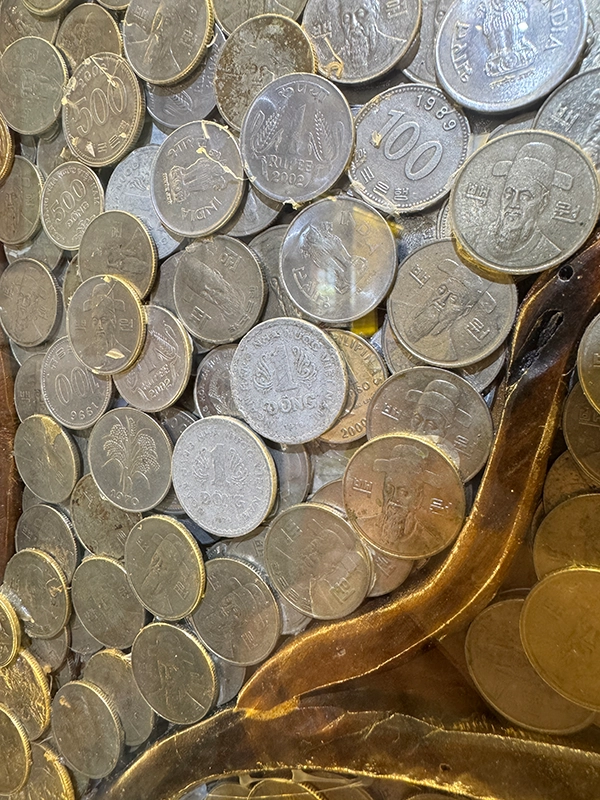
Another artwork in the same area of the museum is the “Lucky Coin Tree of 200 Countries”. A tree-shaped artwork where the leaves are made from coins from 200 countries around the world, with some 1 Vietnamese Đồng coins as well!
The tree is supposed to symbolise luck, wealth, and prosperity, as well as cultural connections between countries.
The “Lucky Coin Tree” artwork was made in the Kim Bong Carpentry Village on Cam Kim Island.
Stamps
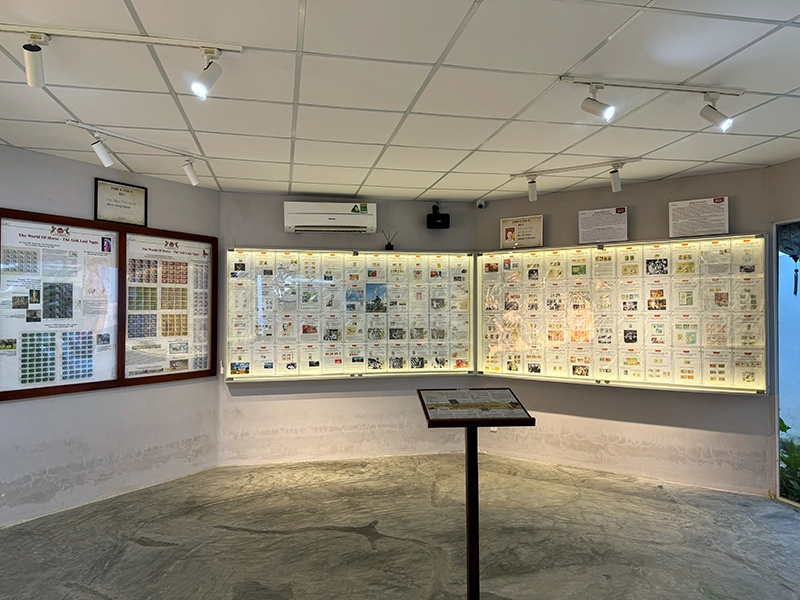
Last but not least, the third gallery covers over ten thousand (10.000) stamps. It is spread out over several rooms and the stamps are grouped by type. The stamp collections are sorted into two categories:
Special variety stamps
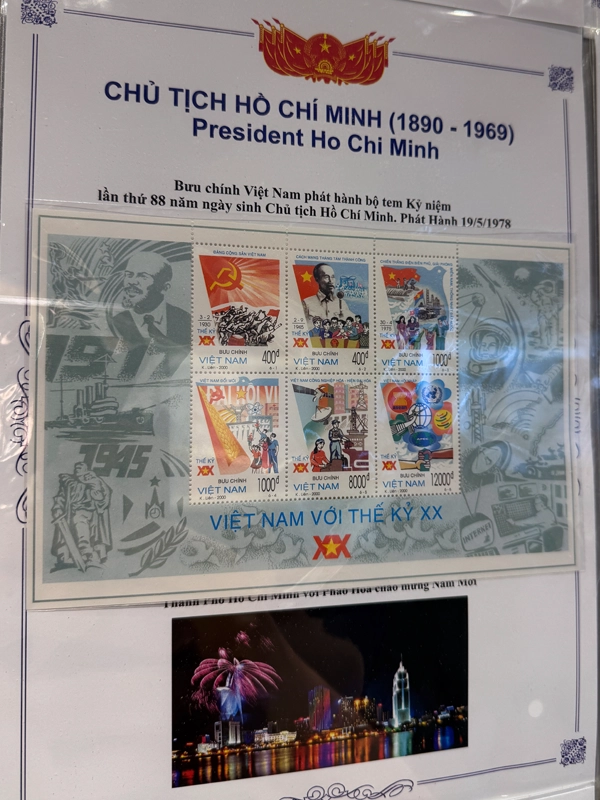
- a collection of stamps featuring President Ho Chi Minh throughout different periods
- overprinted stamps from countries around the world – an overprint stamp is an issued stamp that is printed with additional titles, images, logos symbols, or prices that are not part of the original design due to changes in government, currency denominations, and geography)
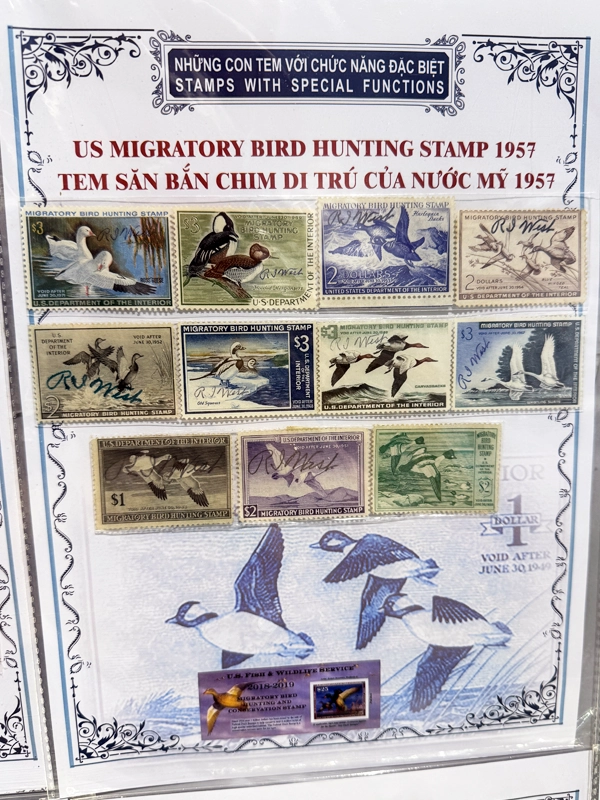
- special function stamps from all over the world – examples of special function stamps are ration stamps during the subsidy period in Vietnam (they could be exchanged for goods and food), dog license stamps, bird hunting license stamps, fishing license stamps, revenue stamps, law stamps, unemployment insurance stamps, railway stamps, telegraph stamps and much more. These impressively show that stamps were much more than just payments for the cost of postal services
Horse stamps
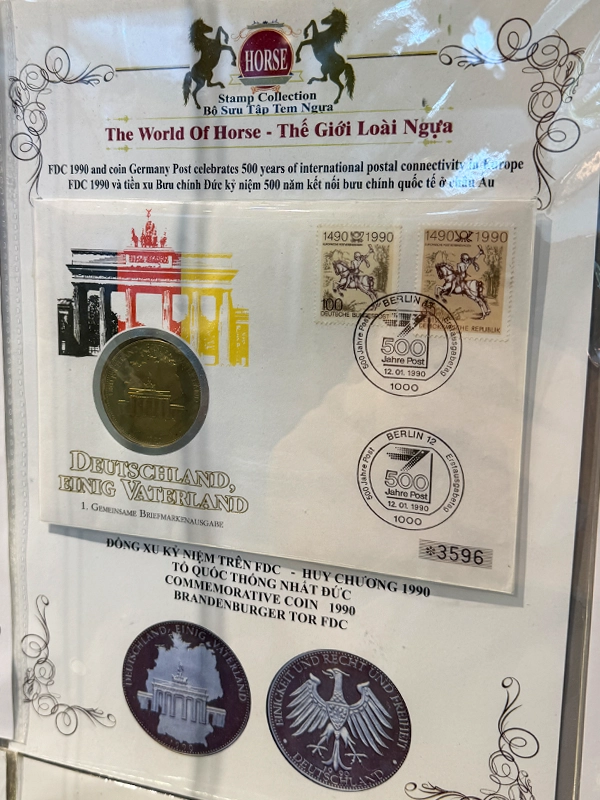
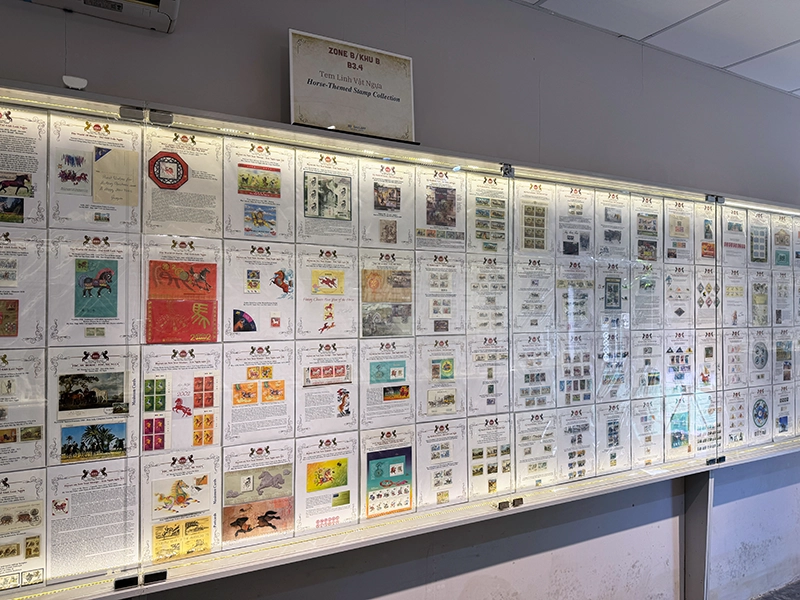
The horse stamp collection itself has exhibits from 200 countries and set a record in 2023 for the most horse stamps in a single collection!
Dó paper painting workshop
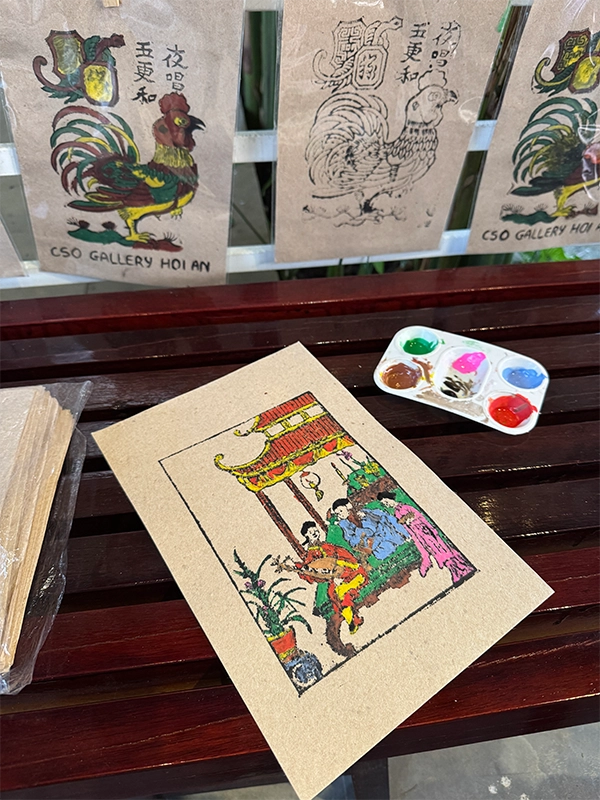
Since it was close to closing time at my first visit I came back two days later to do the workshop they offer at the museum: Another version of traditional Vietnamese woodblock painting (I tried Vietnamese calligraphy, traditional bamboo painting and Vietnamese watercolour painting before).
The process is inspired by Dong Ho painting – a traditional way of painting by using carved wooden blocks that originated in Đông Hồ village. Artisans carve different parts of a picture into wood, then paint the wooden blocks in different colours won from nature and press them on top of each other on the paper until it forms a painting.
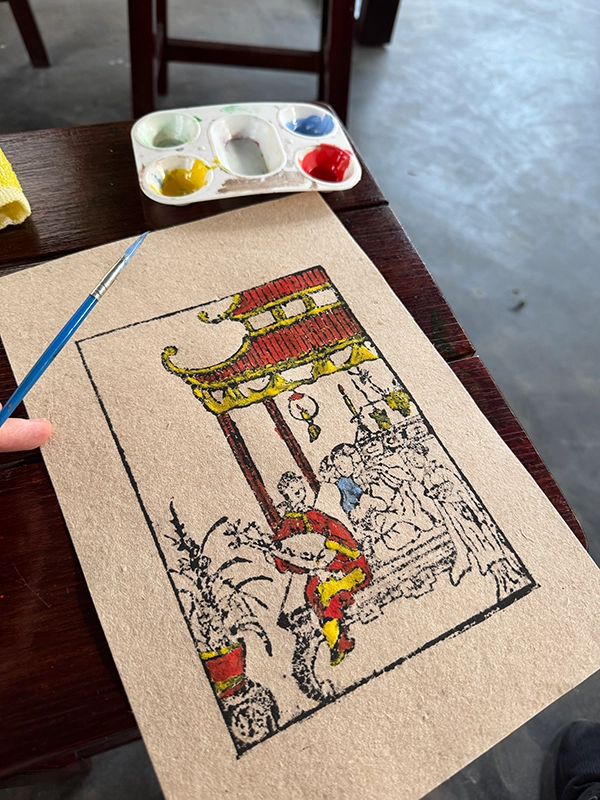
Some of the motifs you can choose from include similar ones to those popular in Dong Ho painting like a rooster = a wish for a happy family life and togetherness, or a boy playing a flute, while riding a water buffalo, which is a traditional Tết painting. While the one I picked, for obvious reasons, was a scene from the poem “The Tale of Kiều“.
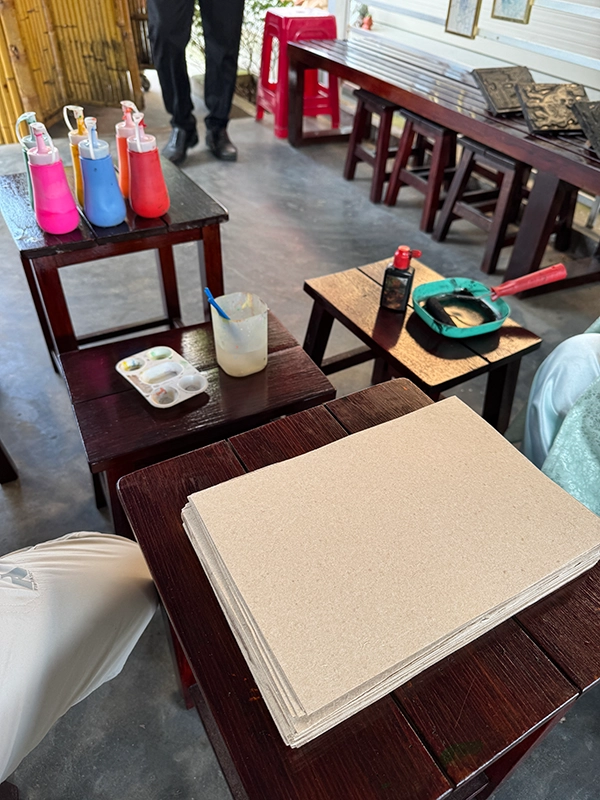
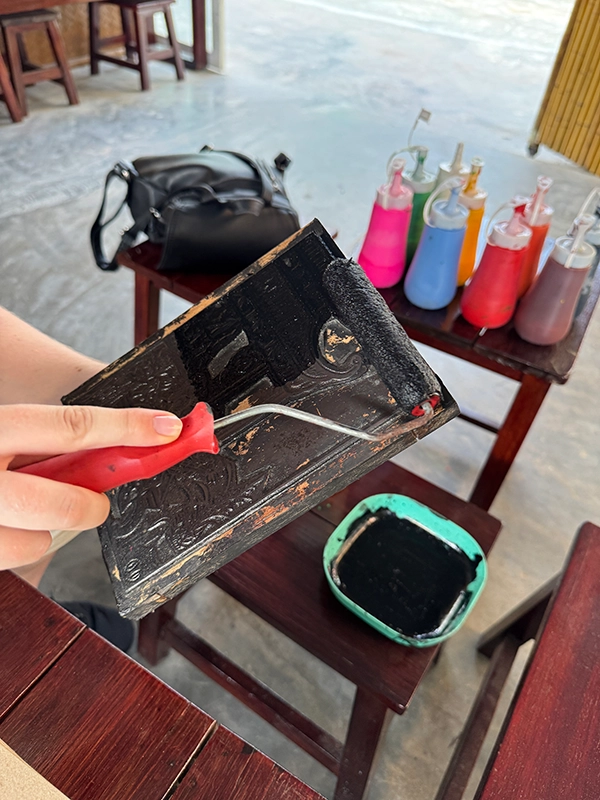
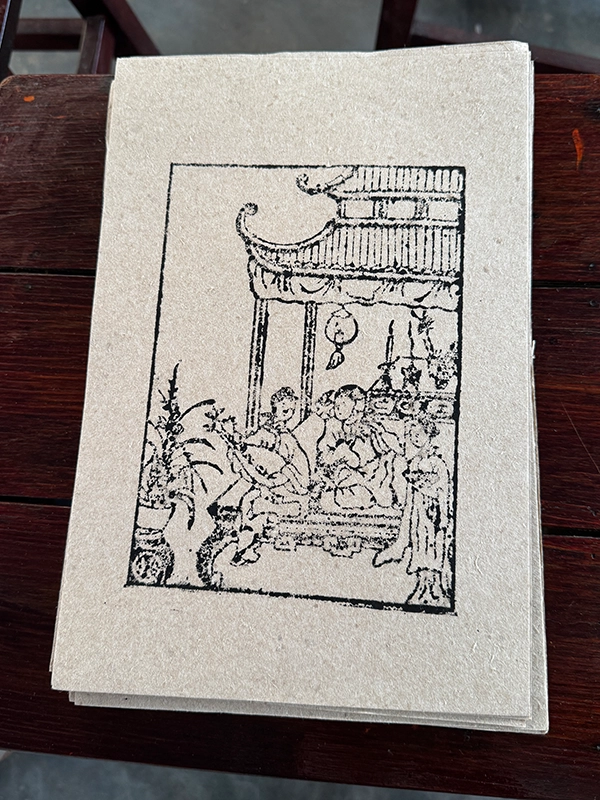
During the workshop at the CSO gallery in Hoian the first step after choosing your motif is rolling black paint onto woodblock with outlines of a painting carved upon it. Then you press it onto the Dó paper. Dó paper is a type of handmade paper that originated in Northern Vietnam. It gets its name from the Dó tree, the inner bark of which is the base for this paper.
Once the outline has dried (the process can be sped up with a hairdryer) you colour it in any colours you want. They have several different ones and give you a palette to mix as you like. At the end of the workshop you get to take your artwork home.
CSO Gallery on Vietnamese TV
Two days after my first visit and one day before my second visit to the CSO Gallery in Hoian a film crew from VTV1 filmed the museum. It wasn’t fated to coincide with my visits, but Nhu Phuong told me about it. I asked her to share the video with me once it was aired, so I could include it here:
CSO Gallery in Hoian
Address:
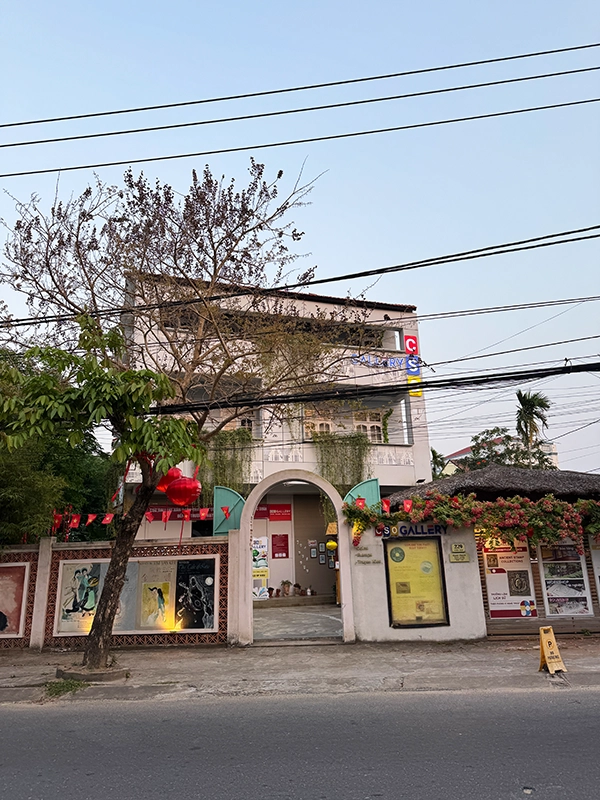
229 Cua Dai, Hoian Dong, Da Nang, Vietnam
-> Can be reached by Grab!
Opening hours:
8:00 AM – 5:00 PM
Monday – Sunday (Closed on Tuesdays)
Admission Fees:
250 000 VND / Adults
150 000 VND / Children
Workshop Fee: 50 000 VND / Person
You can book your ticket here on klook*


Related Posts
Bar hopping in Hanoi – Vietnamese cocktail innovations
Exploring Peranakan Culture in Singapore