Exploring Peranakan Culture in Singapore
On the plane to Singapore I watched “Crazy Rich Asians” in the Singapore Airlines on-board library. Then the person next to me told me: “The Peranakans were the original crazy rich Asians.” But who are the Peranakans? How did their unique culture come to be? And why had I never heard of them before?All these questions guided me to explore Peranakan Culture in Singapore.
This post contains affiliate links to things like tours and hotels. These help me earn a small commission at no additional charge to you. Every affiliate link is marked with a *.
Overview of Peranakan Culture in Singapore
- Who are the Peranakans?
- Peranakan Museum
- Peranakan Mansion Museum
- The Intan – Peranakan House Museum
- Baba House – Virtual Visit
- Peranakan Cuisine
- Peranakan Architecture
Who are the Peranakans?
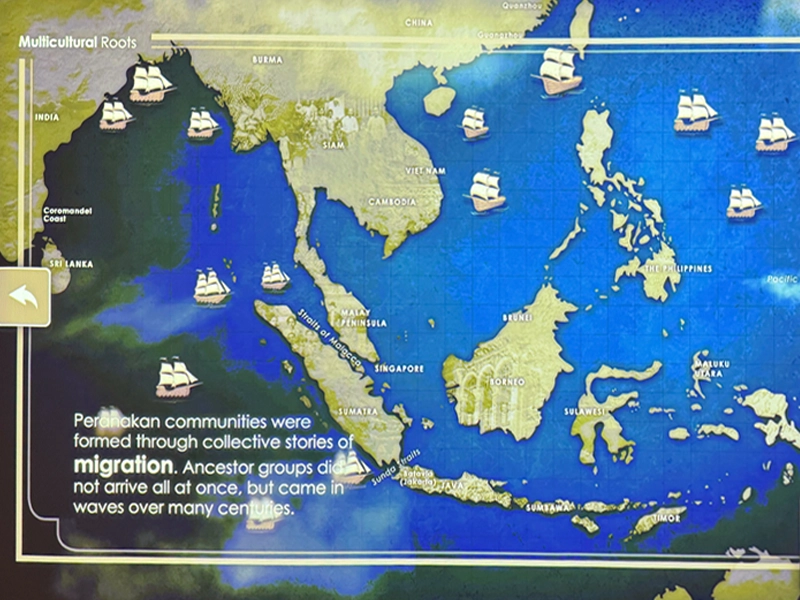
“The Peranakans” are not a singular group of people. In the Peranakan museum of Singapore they explain that there is no single Peranakan culture but rather many expressions of it. However, their unifying trait is the combinations of different ancestral cultures: Chinese, Indian, Arabic & European with the indigenous cultures of Malaysia & Indonesia.
In this article I will mostly be talking about the Chinese/Malay Peranakans of Singapore – the Nyonya and Babas – who additionally draw a lot of cultural influences of former colonial powers like England.
Simplified Malay was the lingua franca of Peranakans, but was adapted over centuries into “Baba Malay”, which mixes in Hokkien as well.

Peranakan Museum
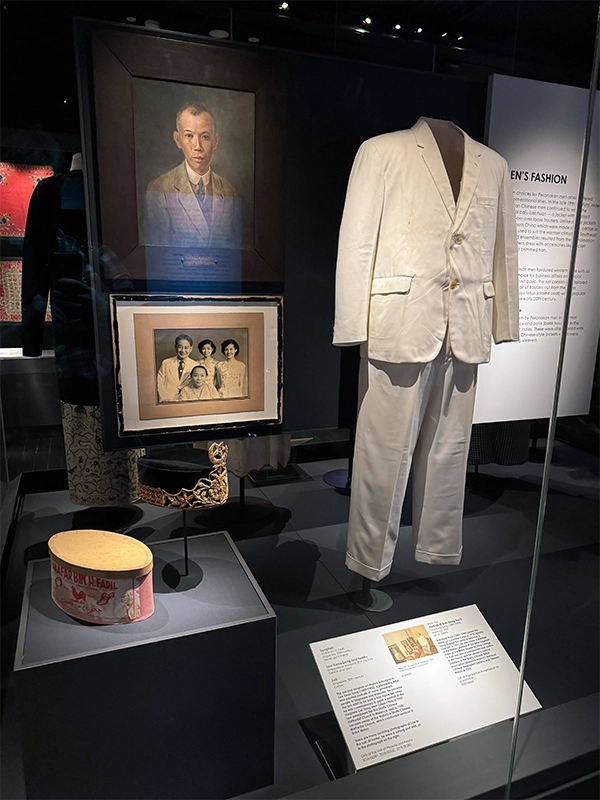
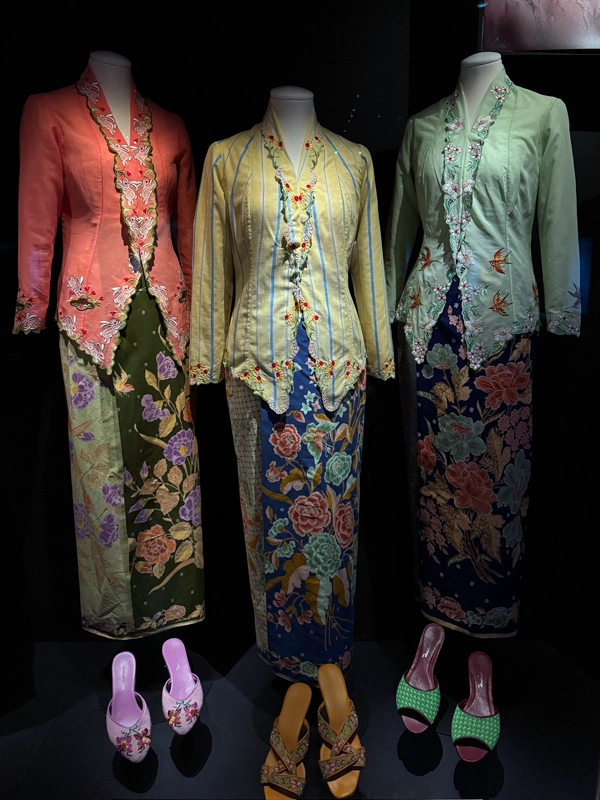
The Peranakan Museum is a good starting point to explore Peranakan culture in Singapore. Their exhibits start with the origins, then dive deeper into family and community life, as well as fashion and art.
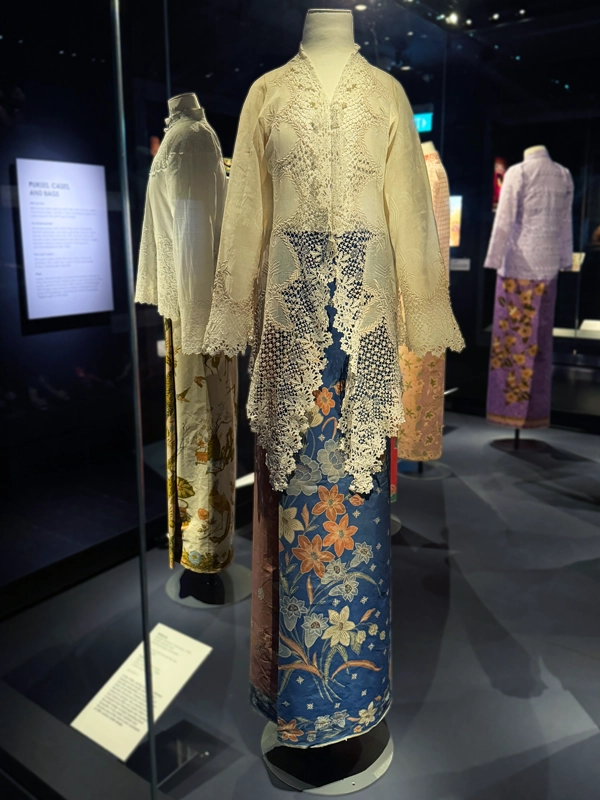
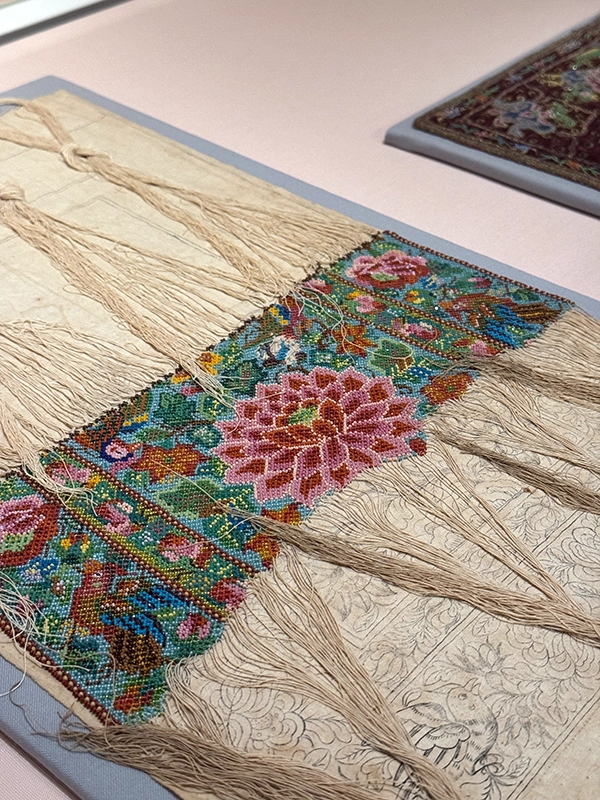
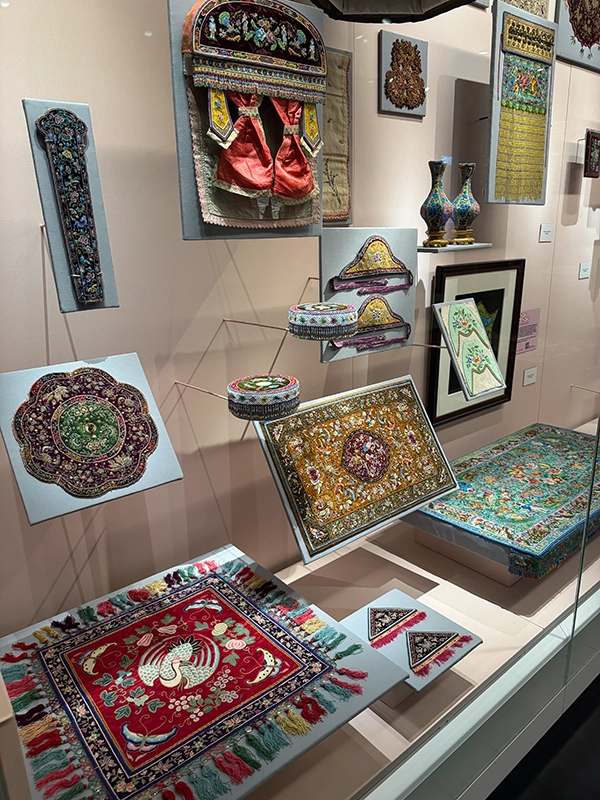
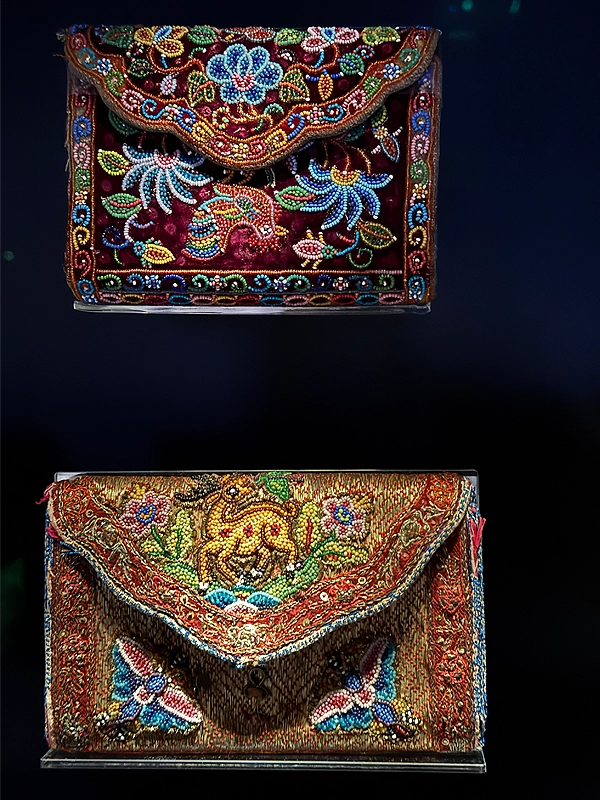
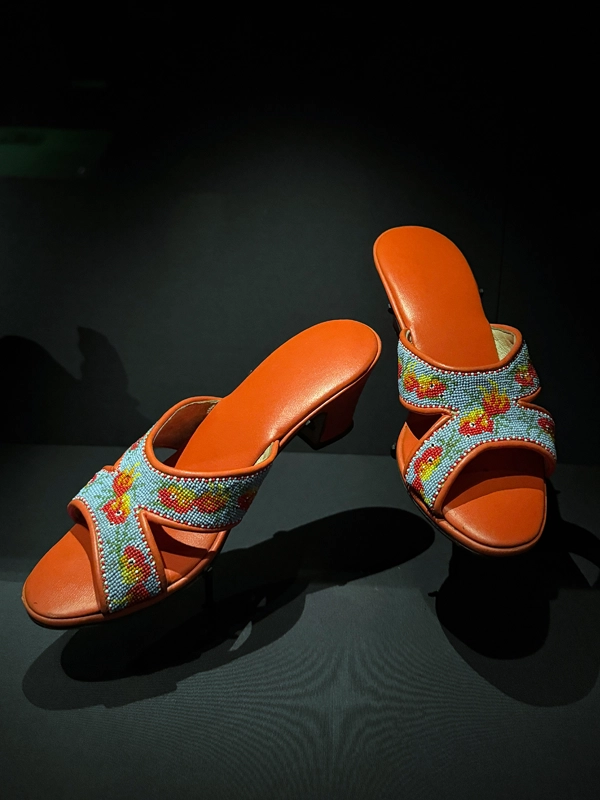
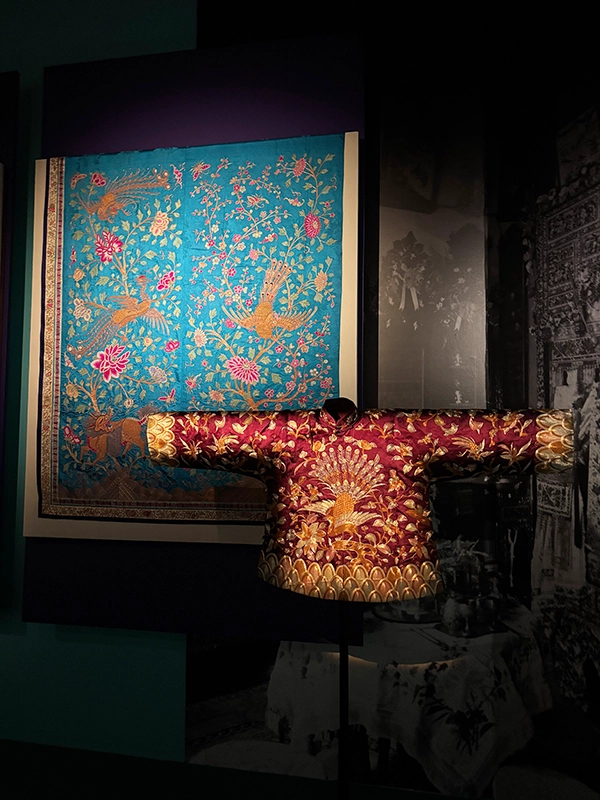
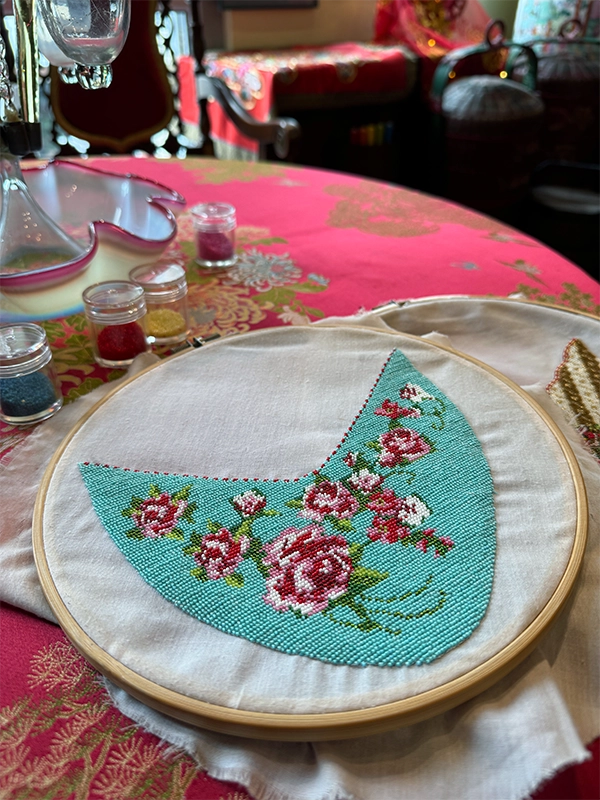
One of the most fascinating exhibits to me was that of Peranakan Embroidery. Born from traditional Chinese embroidery and the use of beads in Malay embroidery this colourful handcraft could be found in all aspects of life, from accessories, to slippers (kasut manek), bed-curtains to entire tablecloth spanning meters. In some of the older pieces you can also see beads with a cut-glass effect from Germany, but the import stopped after WWII.
In the past the beadwork of a woman was used to judge her patience, skill, and suitability as a wife. That means her craftsmanship influenced the prospects of marriage!


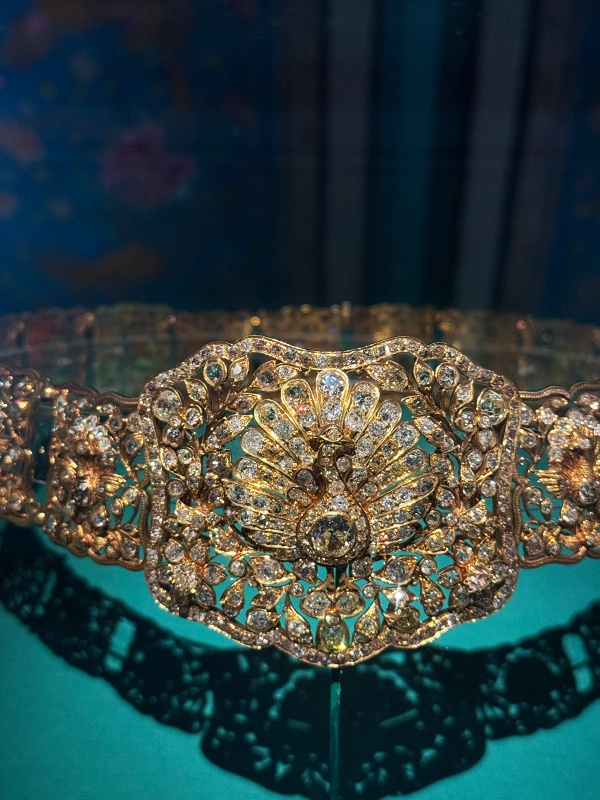
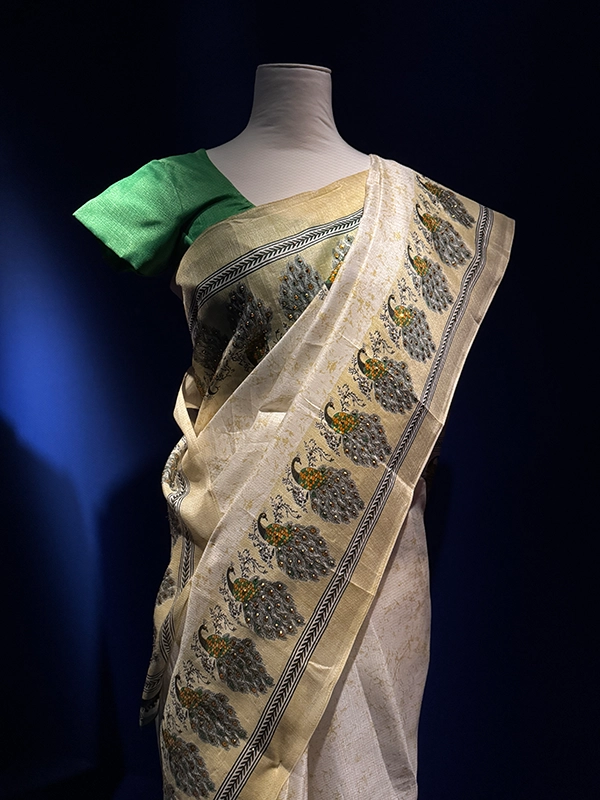
While I was there they had a special exhibit about the Peacock and it’s significance for cultures across the globe, with a focus of the motif in Peranakan Culture. It’s always super interesting to see how the same animal or symbol was used in many different cultures and countries all over the world. It should remind us that at the core there are more things that unite us than divide us.
Peranakan Mansion Museum
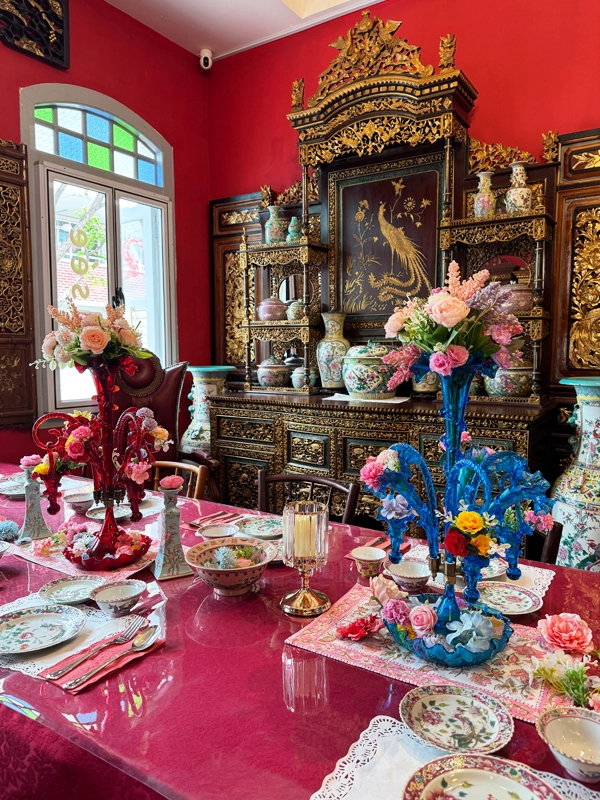
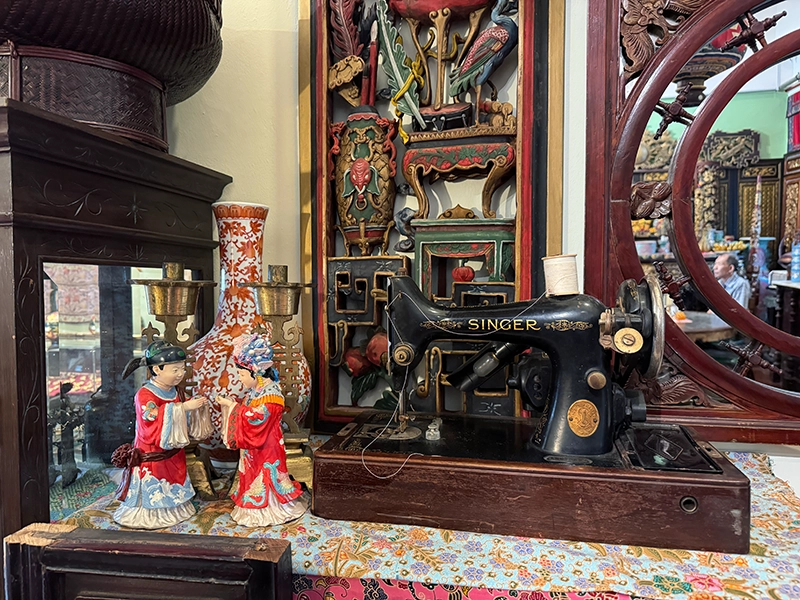
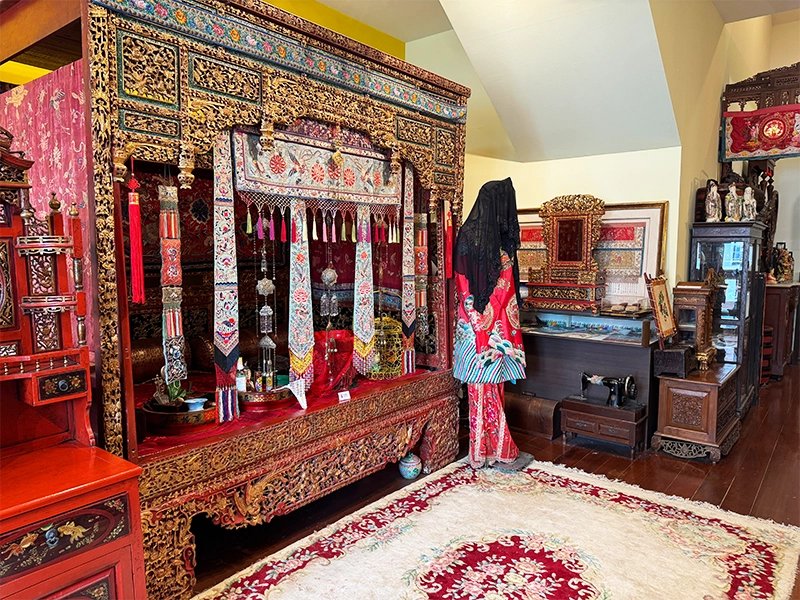
The Peranakan Mansion Museum describes their building as a “Crazy Rich Asian’s 1928 home”. This beautifully decorated building was and still is a shophouse today with shops downstairs and the private museum on the upper floors where the living quarters used to be. The ticket includes a complimentary 30 minute guided tour in either English or Mandarin, but you can walk around the house and get a closer look at the exhibits before or after the tour.
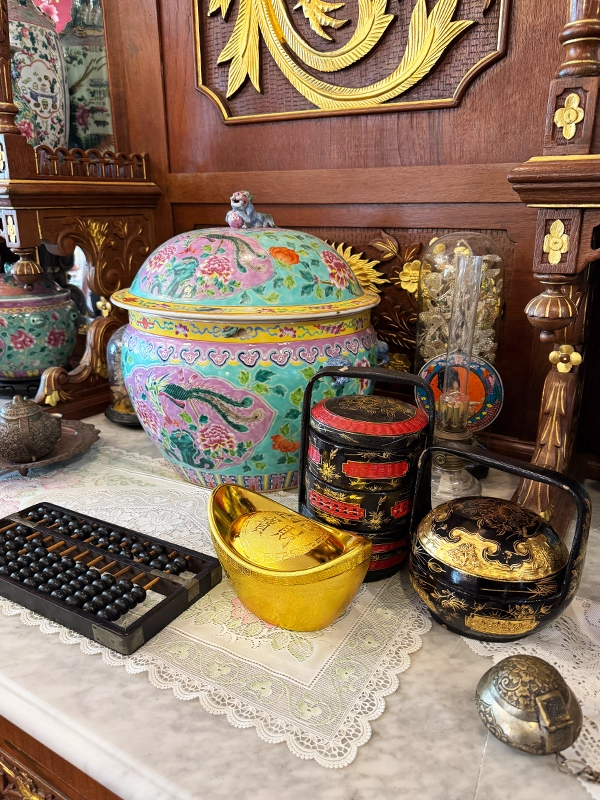
The table decorations, many pieces of pottery showing off wealth, but with no other use, and the colourful beaded everyday items are mostly arranged in the house as they would have been when it was still lived in and offer a look into the past.
Inside the museum they also offer many different colourful Sarong Kebaya & Batik Shirts you can rent to take pictures or have your picture taken. If you are more interested in hands on workshops they also offer beading*-workshops (book here on klook*), tile painting*-workshops (book here on klook*) and shophouse sketch-& watercolour*-paint-workshops (book here on klook*). If you are super interested in the clothing rental, the beading and Peranakan sweets you can even go for a four-hour experience* that includes all of those things (book here on klook*). However those are limited to very few days each month and none were happening while I was in Singapore.
The Intan – Peranakan House Museum
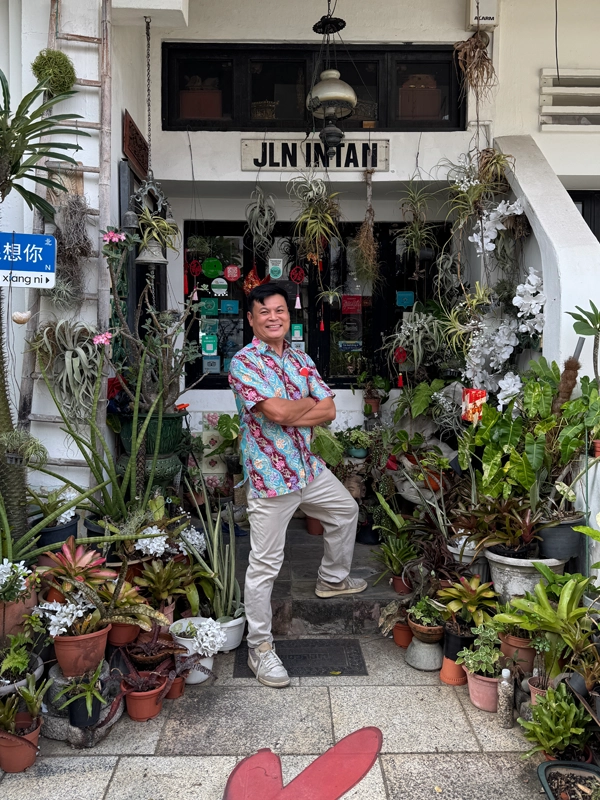
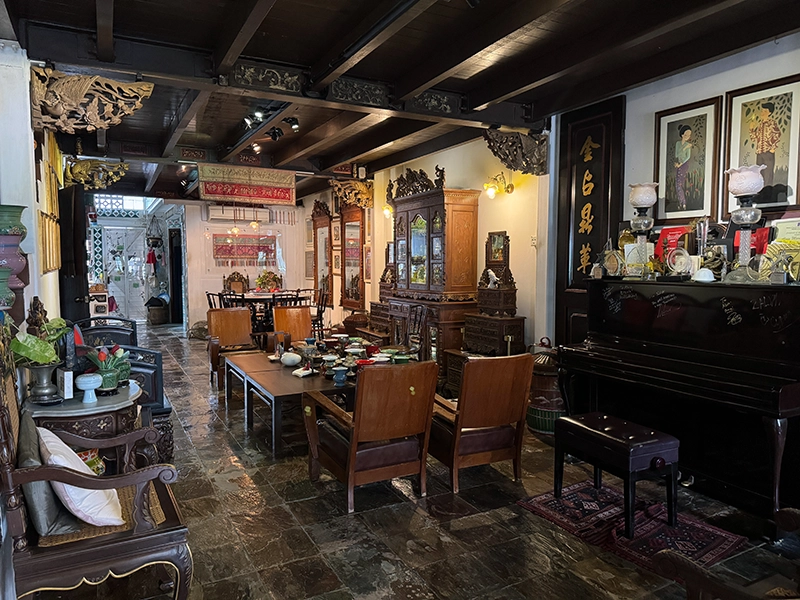
The third museum on this list is the smallest, but has an extensive exhibition of items from Peranakan culture. It’s also very special: It’s a house museum. That means it’s a museum inside someone’s house who lives there. That someone is Alvin. He is Peranakan himself and shares his appreciation of his culture with guests from Singapore and all over the world. His house museum is officially recognized by the National Heritage Board of Singapore.
During the tour (and also just in general) Alvins love for his culture is palpable, he speaks passionately about every artefact and freely shares how he came to open his house as a museum in the first place.
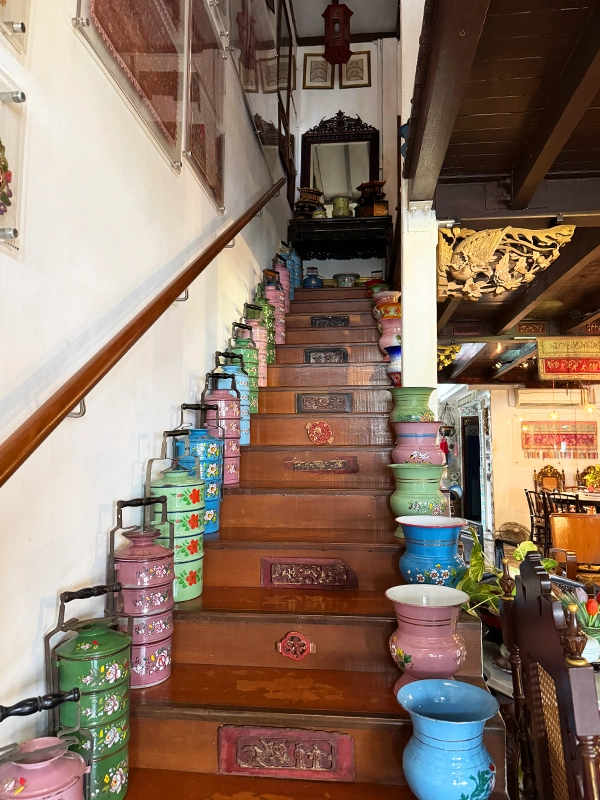
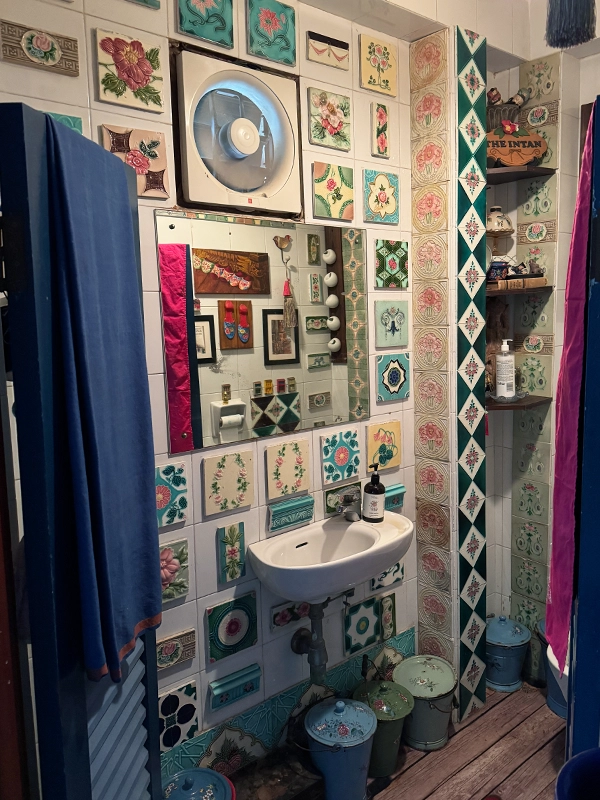
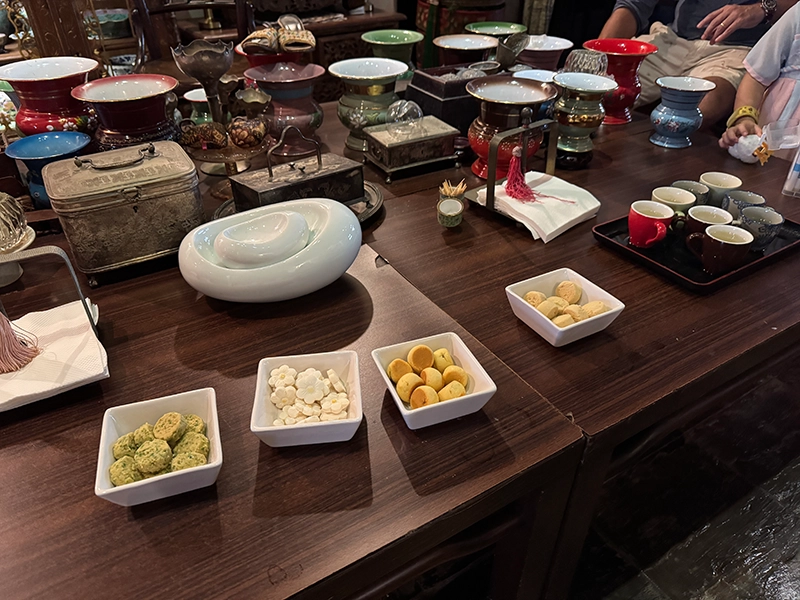
You can book your visit, which includes a tour of the house, the gallery upstairs – no pictures allowed, let yourself be surprised by the treasures from this culture Alvin has collected over the years – as well as tea, and home made Peranakan cookies.
You can book the experience online on klook* and get a Peranakan tile sticker with your visit.
Baba House – Virtual Visit
The Baba House is a traditional Peranakan pre-war terrace-house in Chinatown. It was owned by the family of a 19th-century shipping tycoon. The three storey house impressively shows how families with lots of money lived back in the day. The Museum is manages by the NUS Museum / Centre for the Arts of the National University of Singapore. Currently it’s closed for visitors (until 2027). There are ways to book a tour, but it’s complicated when you’re just visiting for a short time. Instead everyone can visit the hourse virtually on their website. A 360 degree view of all three storeys is available for free: Virtual Baba House
Peranakan Cuisine
Peranakan Cuisine, like the rest of Peranakan culture, has influences from many cultures. There are some places in Singapore who explicitly serve Peranakan cuisine, but you won’t get a recommendation to any of them from anyone who actually is Peranakan. Not because they aren’t good, but apparently because any recommendation that isn’t their mothers cooking is an insult to their mother.
Chin Mee Chin Confectionery
This place is one of the oldest coffeshops in Singapore. Opened over 100 years ago this shop serves kaya toast, kopi, teh and much more. They have different options for breakfast, but the original is the best choice. For $6.20 SGD it comes with two half buns with Kaya spread and squares of butter, served with two soft boiled eggs for dipping and a Teh or Kopi of your choice, this is THE Singaporean Breakfast when you’re out exploring the Katong District.
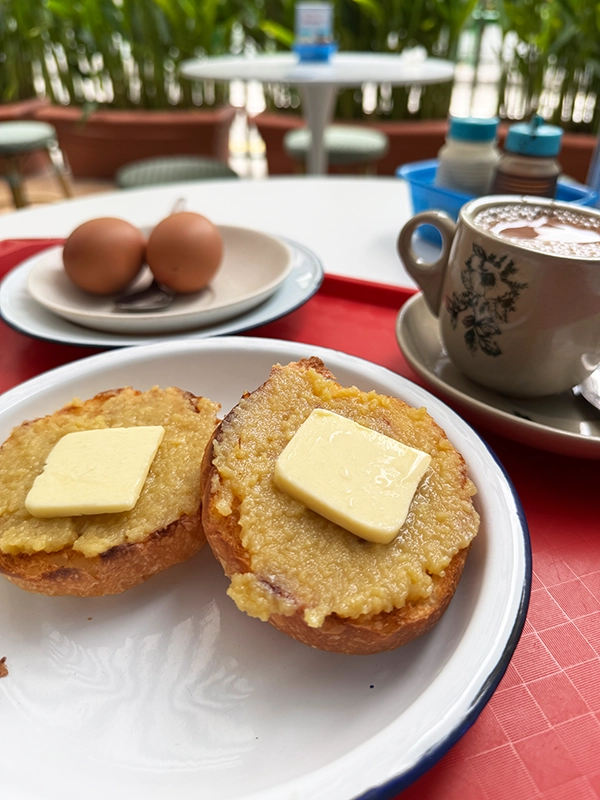
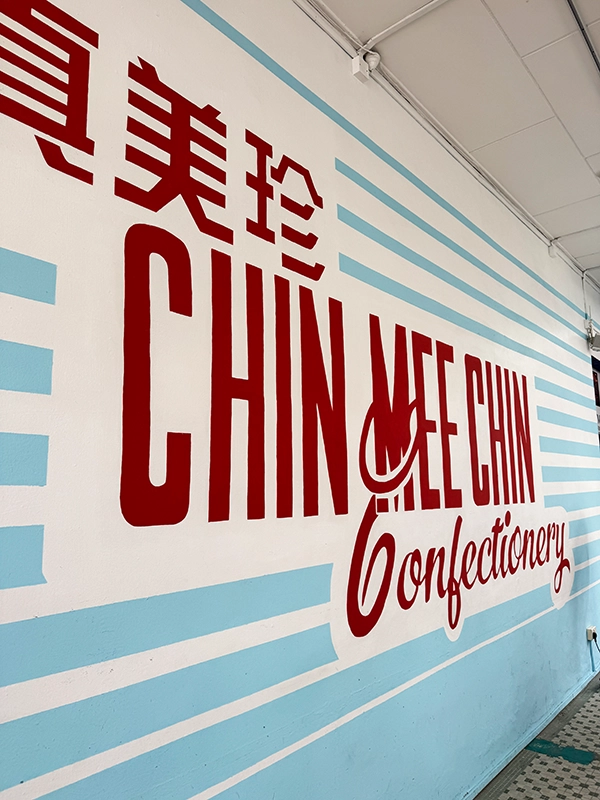
Update: I have since been informed that Kaya Toast with soft boiled eggs is of Hainanese-Singaporean origin, not Peranakan. So I have corrected & edited that part. It’s still a good place for breakfast though and a Singaporean staple.
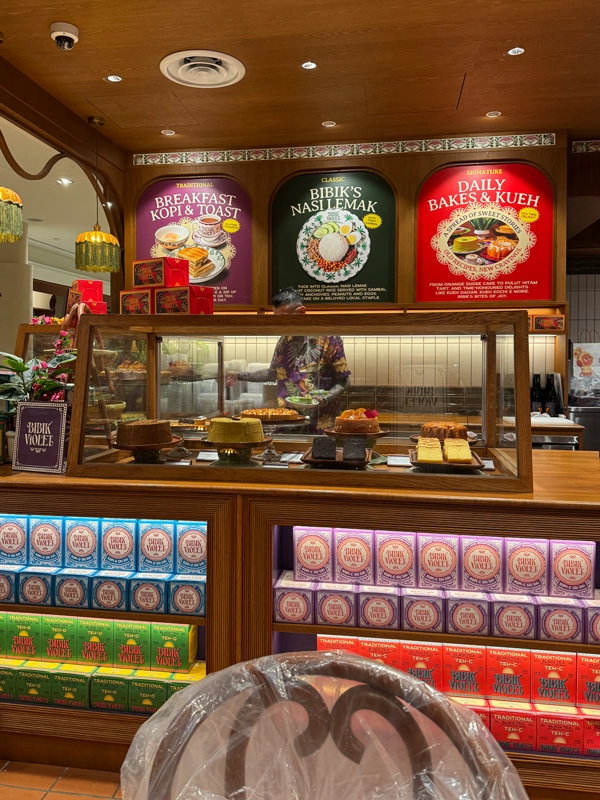
Bibik Violet
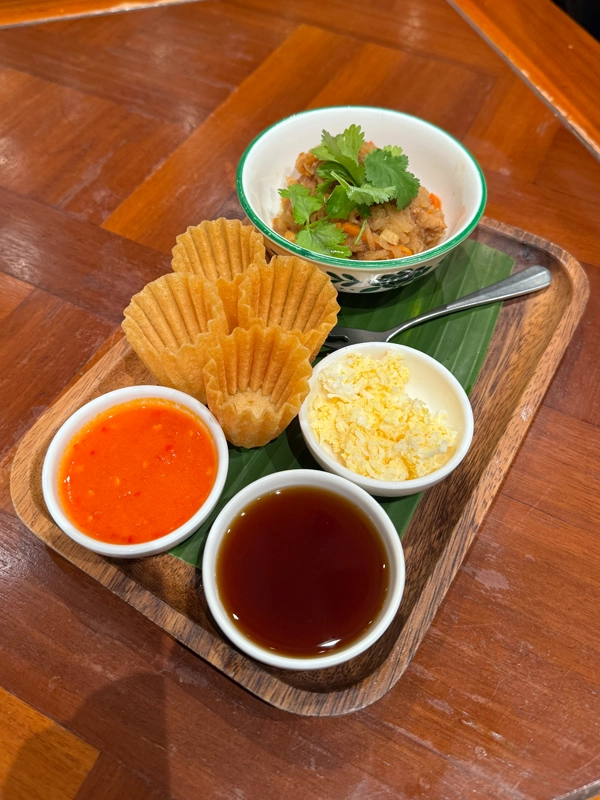
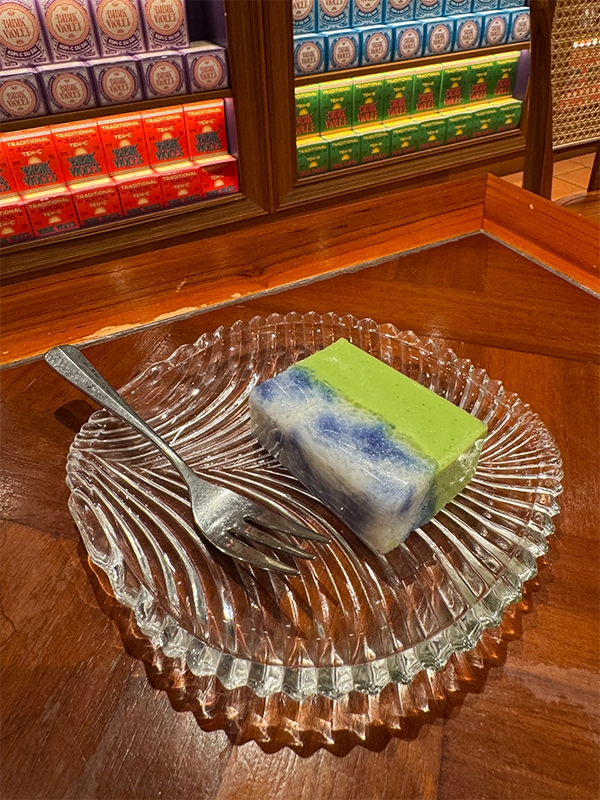
Located in the Temasek Shophouse this Café / Restaurant serves Peranakan dishes, as well as Malay Cuisine. I went for the Kueh Pie Tee – small crispy cup-like shells, served with shredded turnip, carrot, tofu and bamboo shoots, topped with egg, chilli and sweet sauce. You can fill them yourself – to taste, so I went for less chilli. Afterwards I had one of their Nyonya Kueh for dessert, by just asking which one they’d recommend. It was a rice-pudding cake base with blue butterfly pea, topped with Kaya (young coconut jam) jelly.
Peranakan Architecture
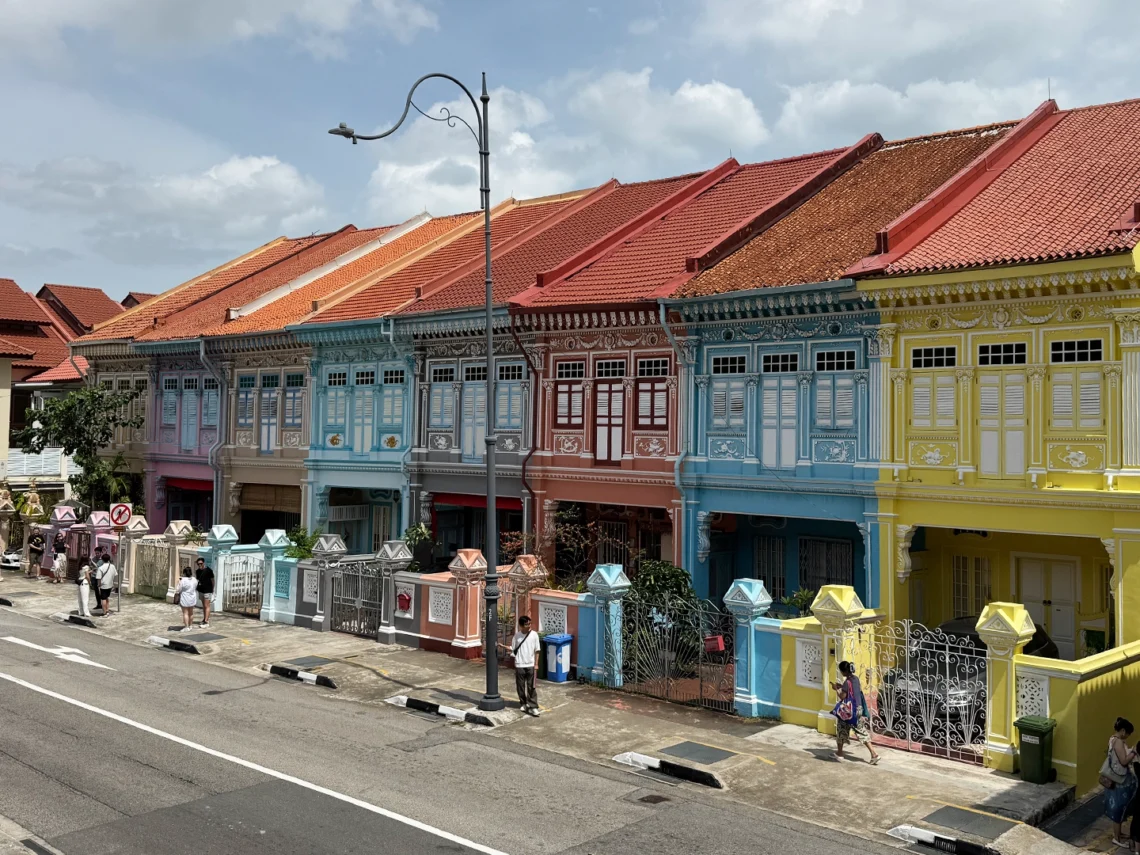
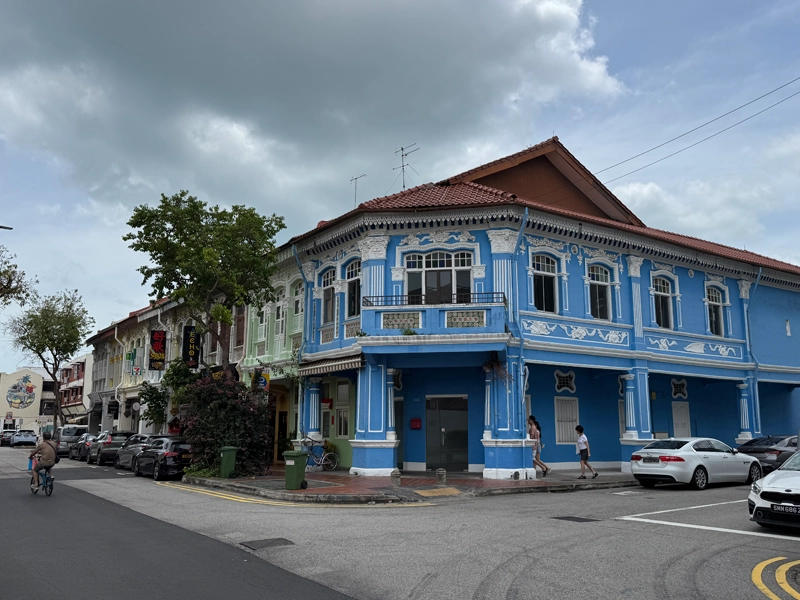
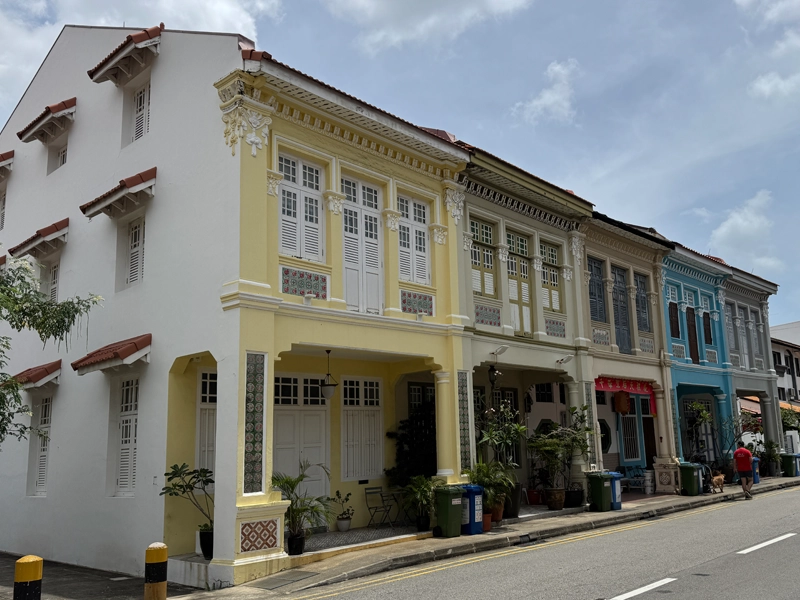
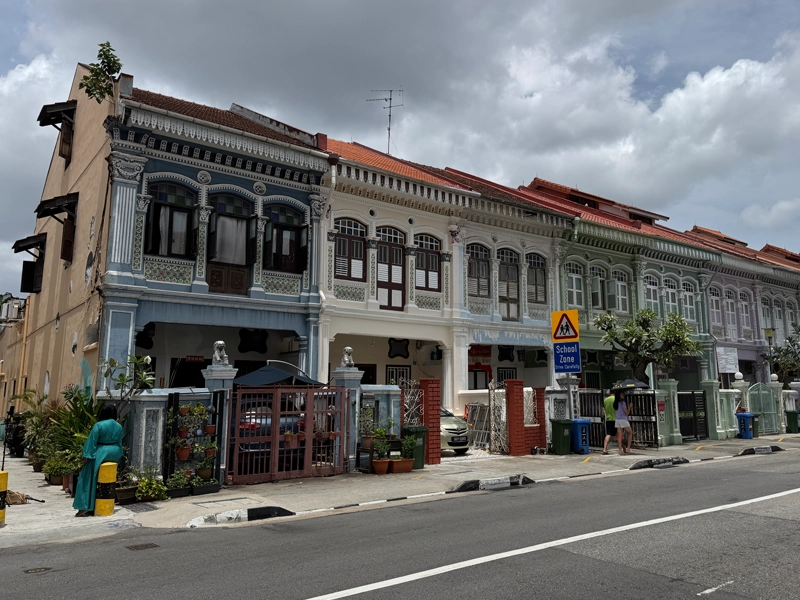
Peranakan Houses are colourful and feature decorative tiles (often with flower motifs), intricate wood or stone carvings and ornate window-frames. Some houses still have swinging doors (pintu pagar) which were a trend at one point for homeowners looking to show off their wealth and that they were going with the times.
Many houses built in the Peranakan Architectural style have been preserved in Singapore, specifically in the Joo Chiat area of the Katong District. Their architecture mixes Chinese, Malay, and European elements. Most of the houses in this style were shophouses with shops on the ground floor and the living quarters on the upper floor(s).
Along Koon Seng Road in the Katong District rows of pre-war terrace houses have survived and are being kept in good condition. They are known simply as as “Peranakan Houses” in Singapore and on Google Maps. Today, even though still inhabited, they are a well-liked photo background.



Related Posts
Knife Making Workshop in Hanoi
Pottery Workshop in Hoi An – Thanh Ha Pottery Village