Day on Cam Kim Island – Hoi An
Cam Kim is an island to the south of Hoi An Ancient down. On the island you’ll find Kim Bồng Village, a crafting village that is most well known for it’s carpentry. It’s easy to spend a day on Cam Kim Island and do many handiwork workshops, learning from families who have honed their crafts over generations. In this post I cover these workshops: woodcarving, incense making, rice paper making and mat weaving.
This post contains affiliate links to things like tours and hotels. These help me earn a small commission at no additional charge to you. Every affiliate link is marked with a *.
How to get to Cam Kim Island
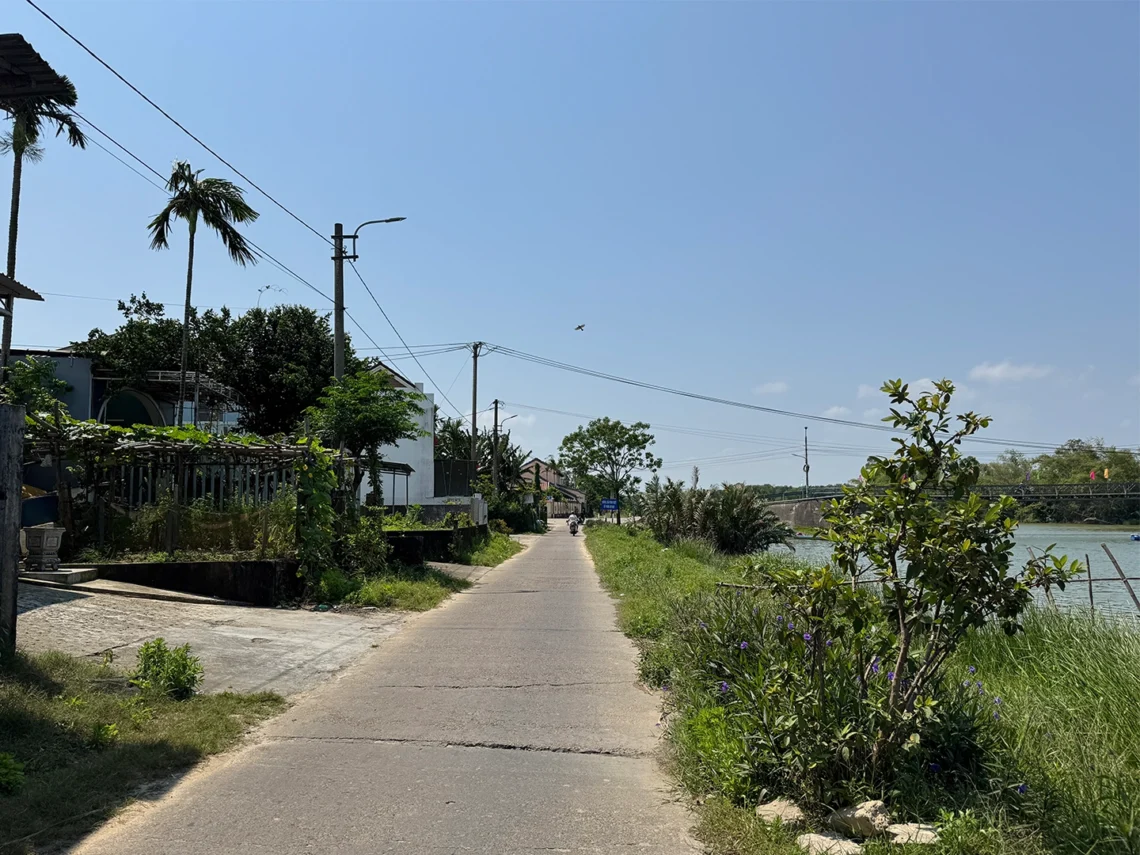
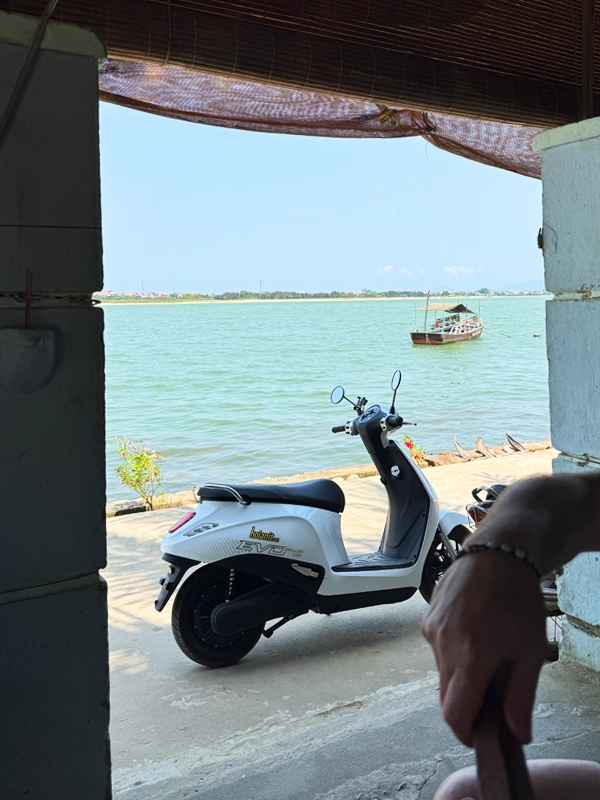
You can reach the island by boat, bicycle or scooter. By boat you are most likely going to arrive at the pier “Bến Thuyền Du Lịch Cẩm Kim“, from where you’ll have to walk across the island. Make sure to negotiate a return price and time, or you might get stuck. Though many locals will help you organise your transport back it will be more expensive that way. By street it’s about 3 km to reach the island from the center of the ancient town. A lot of hotels and homestays in Hoi An offer bicycles to their guests. Some keep them in better condition than others. Keep in mind to do a check of all the safety features before you leave on a full day trip. You have several options to rent a scooter in Hoi An, but you’ll need an international driving permit / international drivers license.
What to do during a day on Cam Kim Island – Hoi An
- Woodcarving Workshop Kim Bồng
- Incense making Workshop in Hoi An
- Ricepaper Workshop (and eating it afterwards)
- Placemat Weaving Workshop
For my day on Kim Cam Island I bought a Banh Mi and Coffee for breakfast near my homestay in Hoi An. However there are some options to buy breakfast and coffee on the way there and on the island itself.
Woodcarving Workshop Kim Bồng
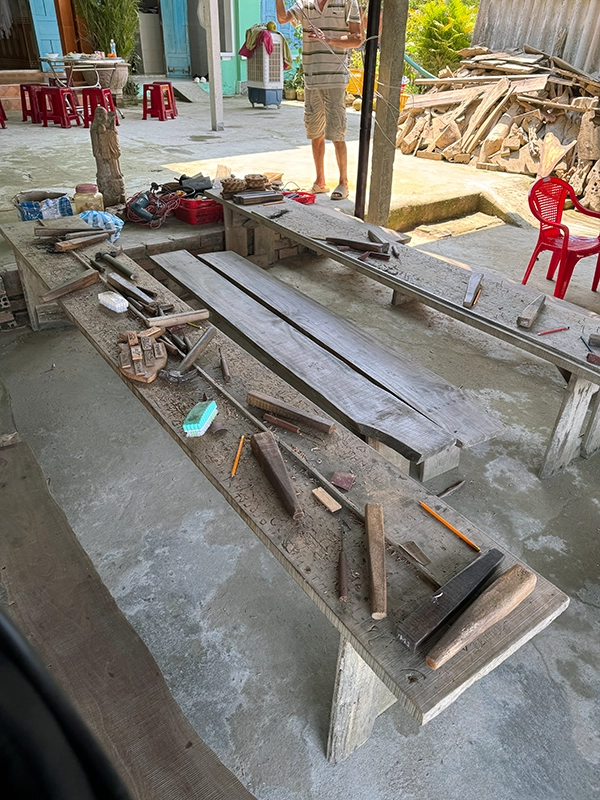
The main village on Cam Kim island is the Kim Bong Carpentry Village, a more than 500 years old artisan village renowned for woodworking. To this day the wooden crafts from Kim Bong are held in high regard. The wooden crafts made here are not just sculptures and woodcarvings for decorations, but also household items, furniture, architectural decorations and even boats! Several of the workshops in the village have opened their doors to tourists these days and most offer roughly the same experiences in terms of workshop. Of course I didn’t do all of them and since I did a woodcarving workshop in Hoi An already in 2024 I wanted a different experience this year.
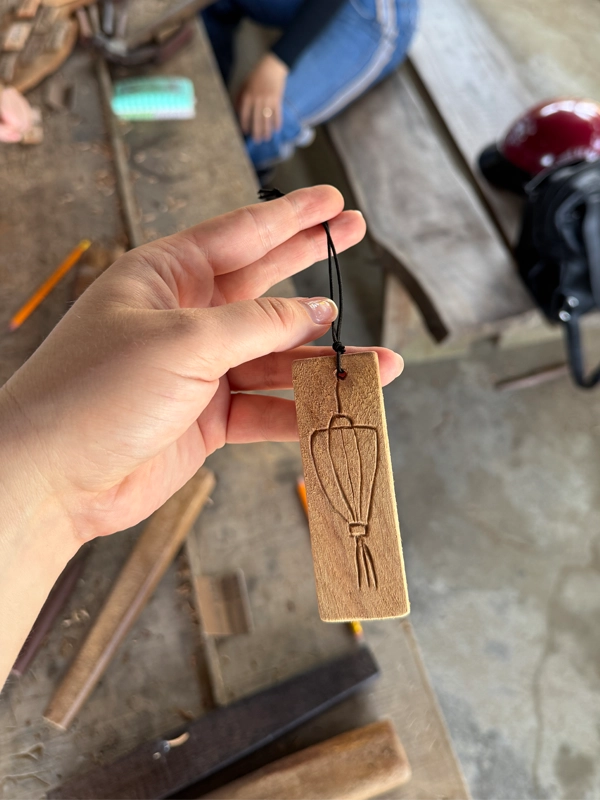
This family owned woodworking workshop offers visitors the opportunity to carve keyring pendants. They are made from Agarwood which smells nice! I carved a Hoi An lantern into mine and my grandmothers initials into the back, to bring it back as a gift for her. Afterwards I also visited their shop and bought a small wooden elephant (I love elephants) for myself!
This is where you can find them: Experiential Carpentry Village at V87H+8PH, Hội An, Đà Nẵng, Vietnam
Incense making Workshop in Hoi An
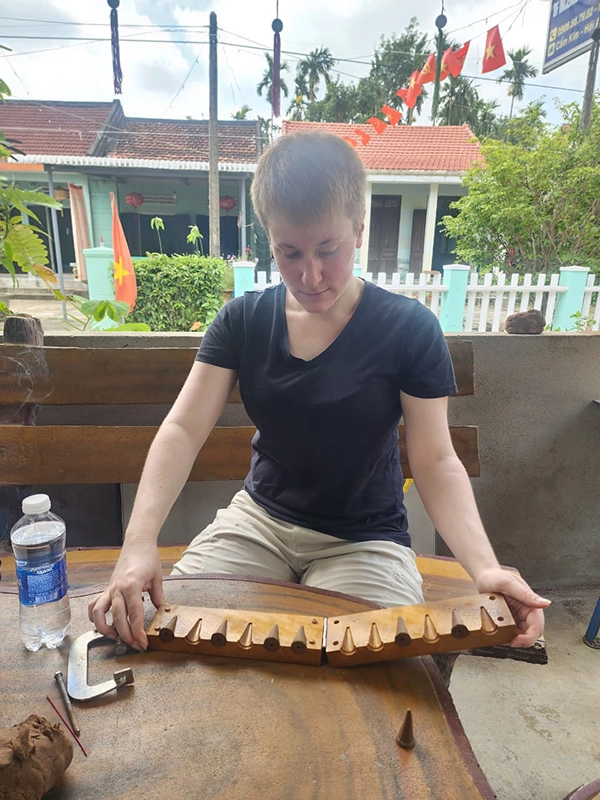
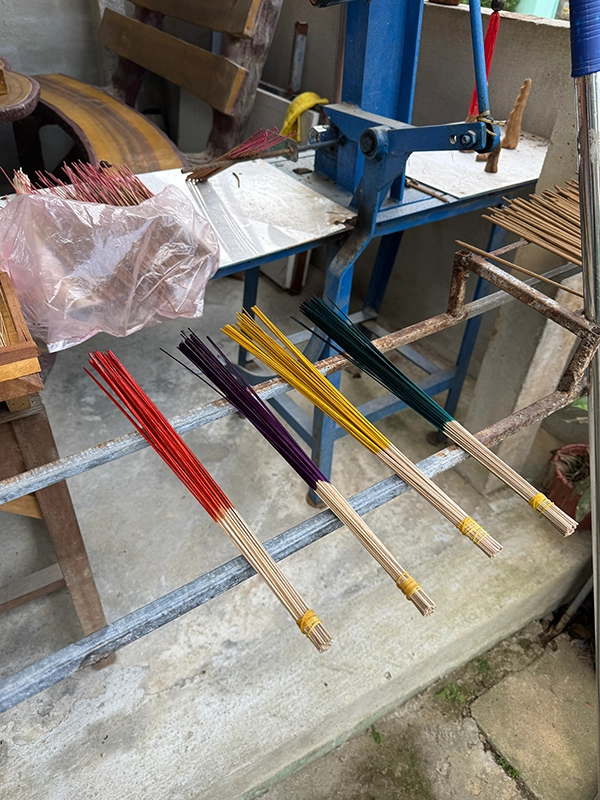
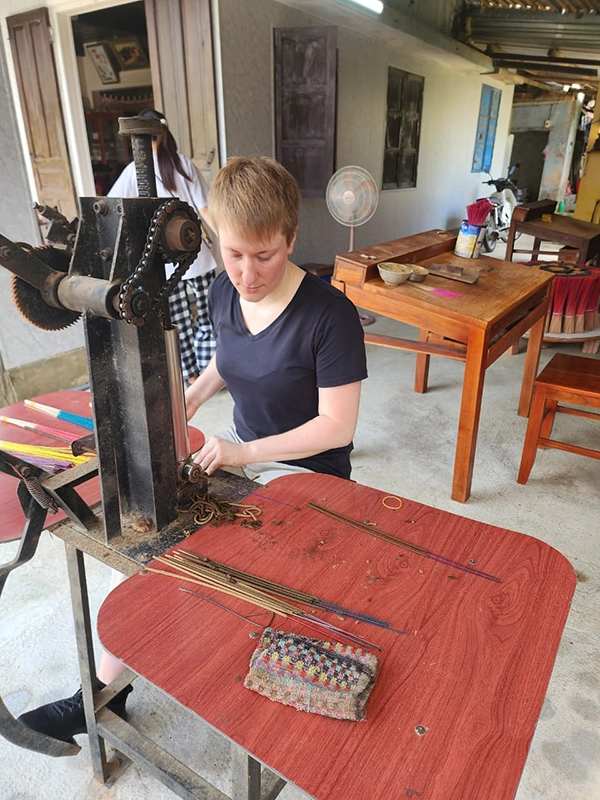
The incense workshop is just down the road from the woodcarving workshop. Here I got to make three types of incense: cones, hand-rolled sticks and human-operated-machine shaped sticks. The workshop includes colouring your bamboo sticks and mixing the incense mixture with the scents as well. And you get to keep all the incense you make!
More about that workshop here: Incense making Workshop in Hoi An
Ricepaper Workshop (and eating it afterwards)
During your day on Cam Kim Island you can also stop at Mrs. Tiens Noodle Shop. Here you can eat Mi Quang, buy Ricepaper Snacks, Peanut Snacks and Noodles and do a small ricepaper making workshop. The kind old lady who operates this place (who I assume is Mrs. Tien, but I cannot be sure) doesn’t speak a lot of English, but very happily communicates via translator and point-and-smile language.
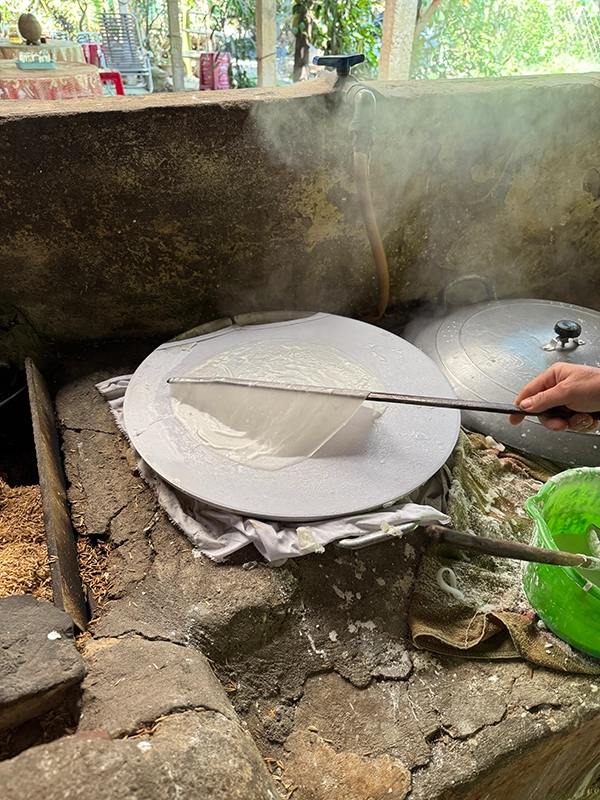
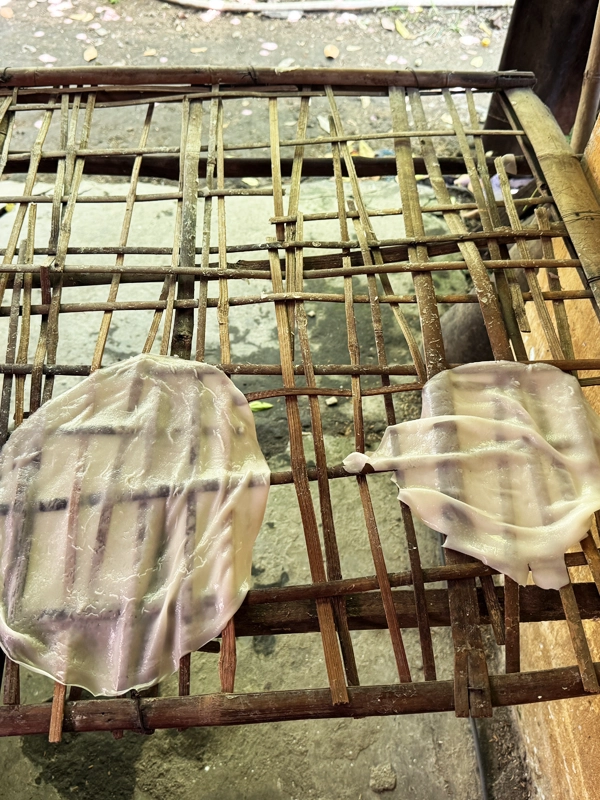
She showed me the big bags of rice lining the walls of her courtyard. They split the rice from it’s skin and use the rice husks to stoke the fire they use to make the rice paper and noodles. The rice itself gets milled with water to turn it into a thin dough. This dough is applied to a wet cloth that’s pulled tight over a pot of water and spread out until it becomes translucent. Then it is covered with a hollow lid and steamed. Once it is done they peel it off the cloth with an oiled bamboo stick and placed on a rack to dry.
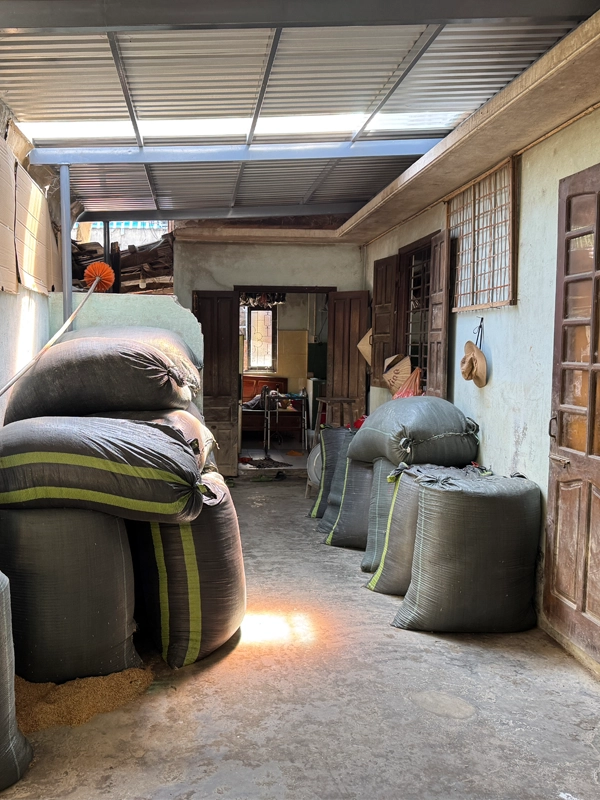
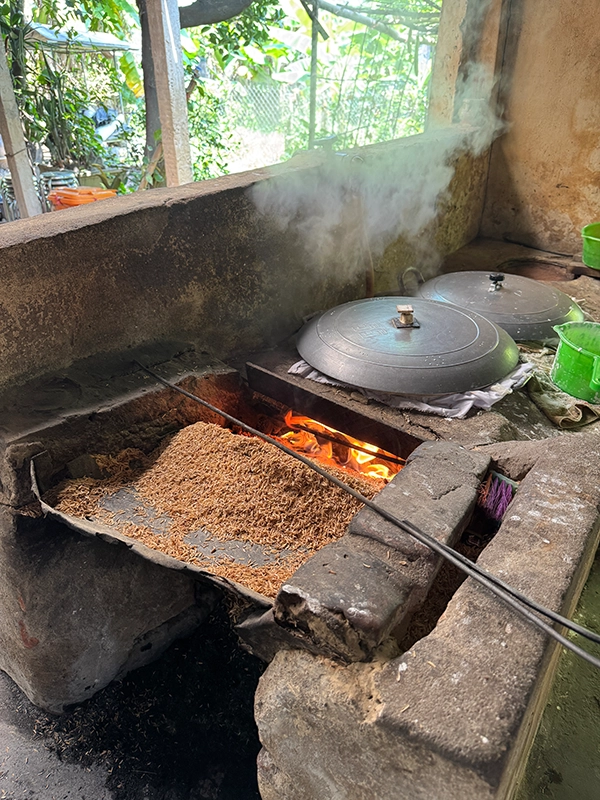
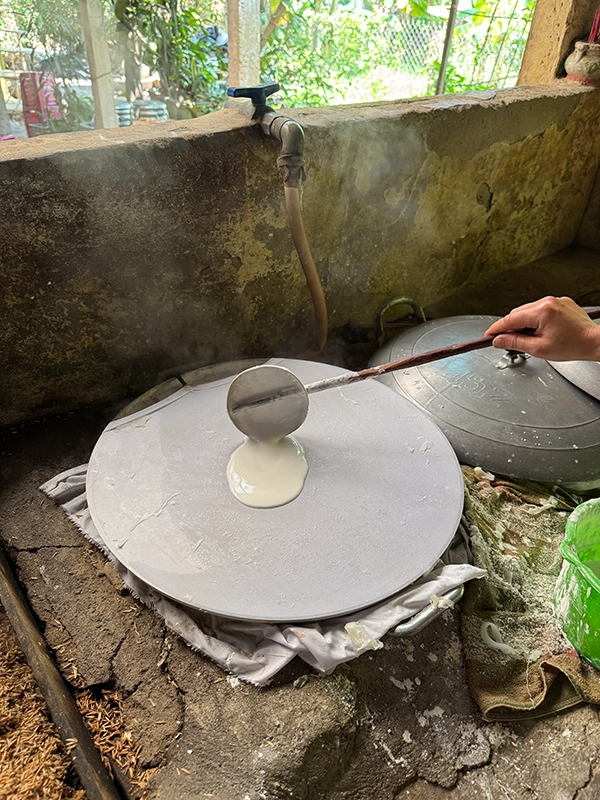
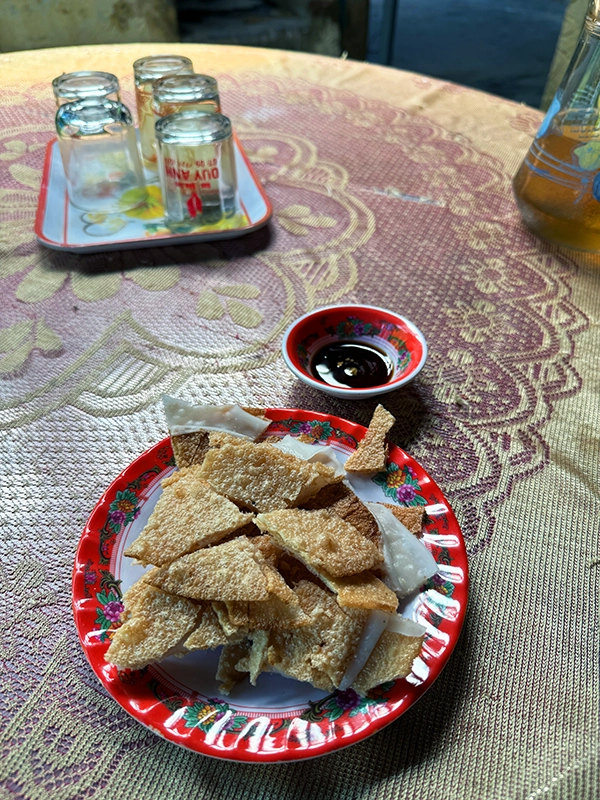
If it’s super thin and dried more it turns into rice paper, if it’s thicker it can be pulled through a cutting machine and made into rice noodles. The third option is that it’s stuck to a sheet of deep fried rice paper and chopped into pieces. That’s the way you get to eat your self made rice paper. This snack is both crunchy and chewy and very delicious when dipped into soy sauce.
I just showed up after the first two workshops and asked via translation app if they would show me how to make it, since I had just seen a tour group leave. She nodded and typed back how much it would cost. I nodded back with a smile and she walked straight off without another word to start showing me. Don’t be discouraged by that.
This is where you can find them: Lò Mì Quảng Bà Tiễn at V87F+5RX, Hội An, Đà Nẵng, Vietnam
Placemat Weaving Workshop
The last workshop of the day could be this placemat weaving workshop. This family produces everything along the chain of making a woven placemat. They grow the sedge that is dried and coloured before it is ready to be woven. Sedge is a type of reed that grows along the riverside.
These woven sedge mats have been made this way for centuries and are used for sleeping mats, as rugs, placemats and for chairs. Today they also make bags from the finished woven product.
At the start of the workshop you get an introduction to the process. From sustainably growing and harvesting the plants, to the drying and colouring. After the explanations you weave your own mat on a traditional wood loom, with the option of using traditional patterns as well.
This is another great souvenir that carries so much history with it. When you use the mat inside your own home it connects you with humans over so many generations!


Related Posts
Visiting the Silk Village in Hoi An

Elon Farm – Experiencing Coffee and exploring the Gia Lâm Commune