Incense making Workshop in Hoi An
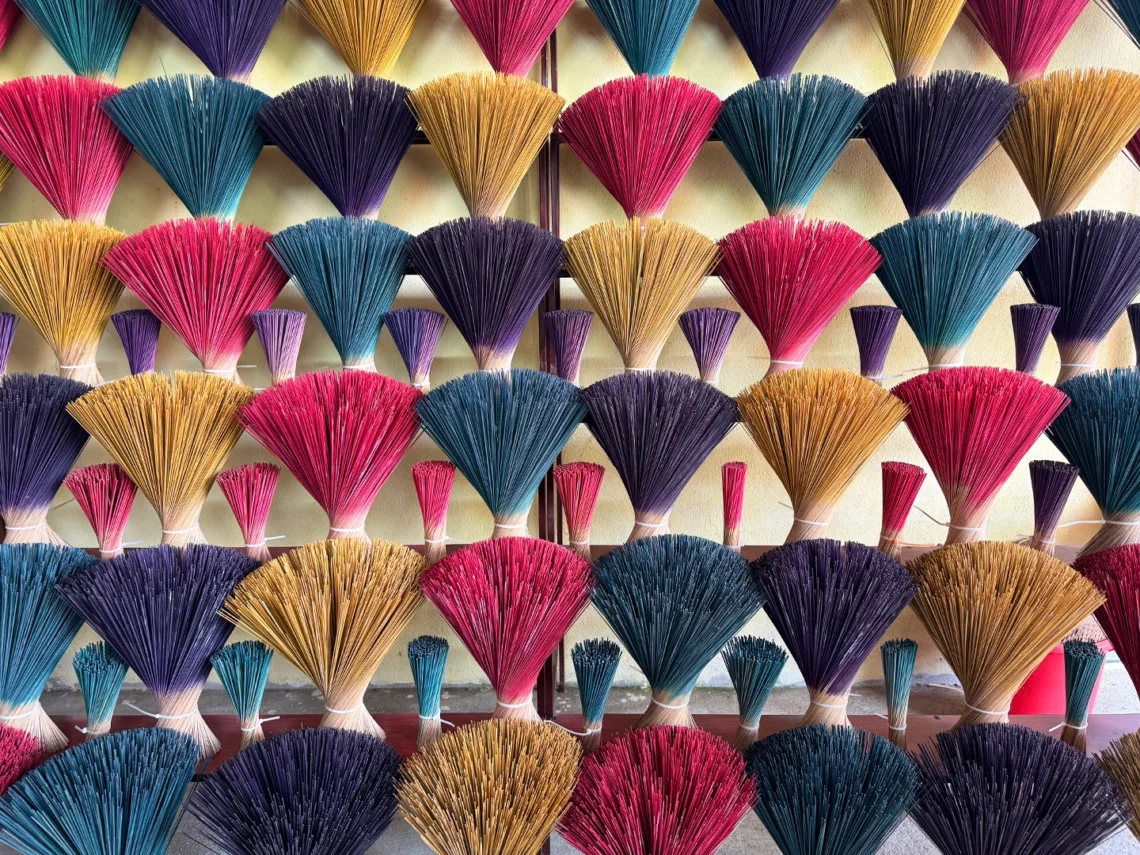
On Cam Kim Island, close to Hoi An, you can make your own incense. Incense has been used in Vietnam for millennia and the traditional methods of production are still used to this day. At the incense making Workshop in Hoi An you’ll use all natural ingredients and learn how to shape incense by hand into cones and sticks – which you get to take home at the end of the day.
This post contains affiliate links to things like tours and hotels. These help me earn a small commission at no additional charge to you. Every affiliate link is marked with a *.
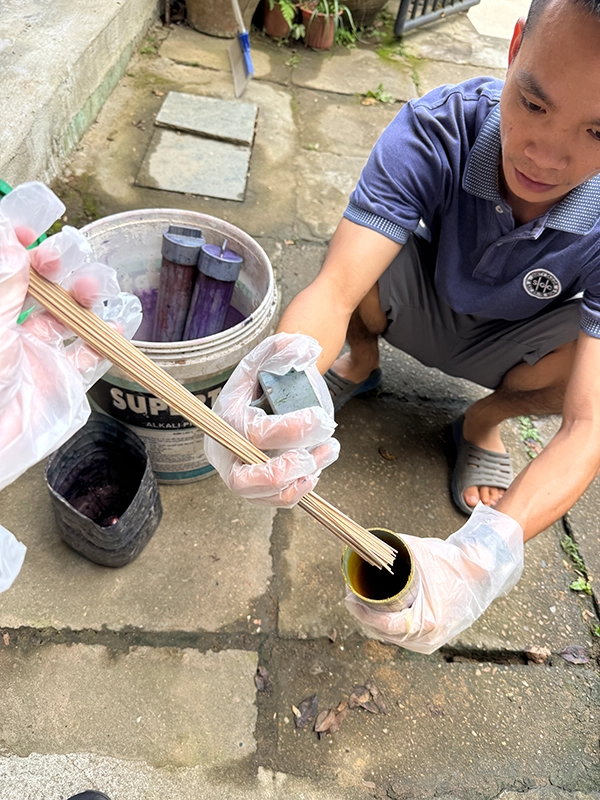
The workshop starts with a short introduction on what incense was and is used for in Vietnam: it has been burned in temples, homes, and sacred spaces throughout centuries. Included in the introduction is a demonstration by the family who owns the workshop on how it was traditionally made. Then you colour the bamboo sticks you are going to use during your workshop in four different colours.
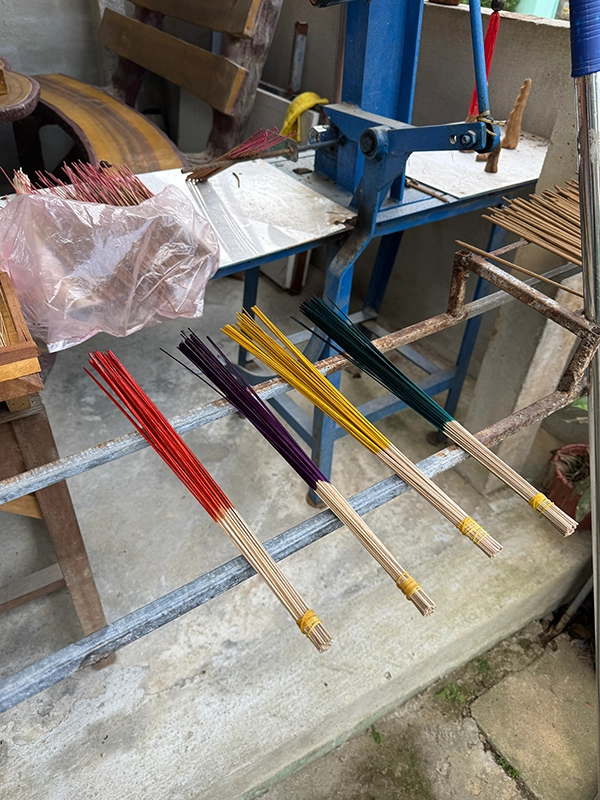
While the wooden sticks are drying in the sun it’s time to mix the dough. The first step is already done, it consist of grinding the dry ingredients into a powder after drying them for a long time. They explained that they use mainly agarwood and cinnamon for the scents of their incense. Inside a stone mortar you gradually mix water into the the dry ingredients. After every splash of water the mixture is pounded with a heavy wooden instrument to form a pliable dough that is just wet enough to stay together as you shape it.
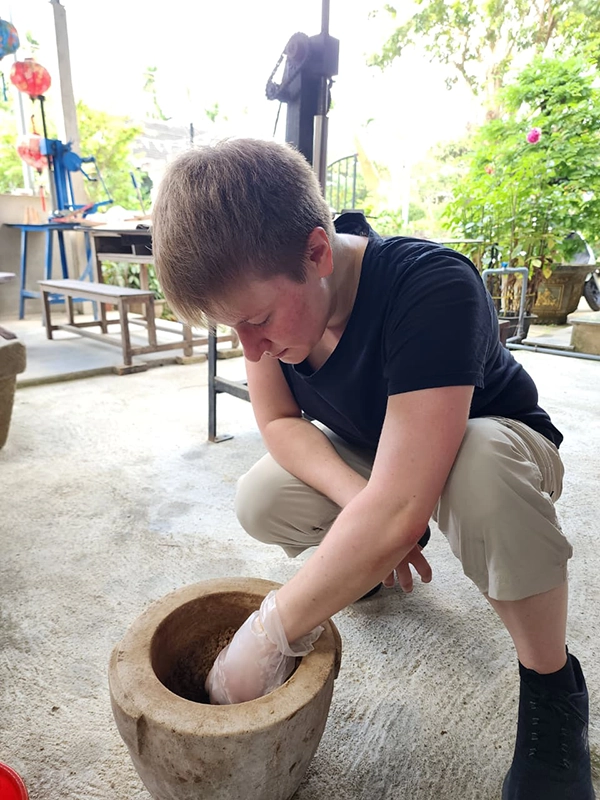
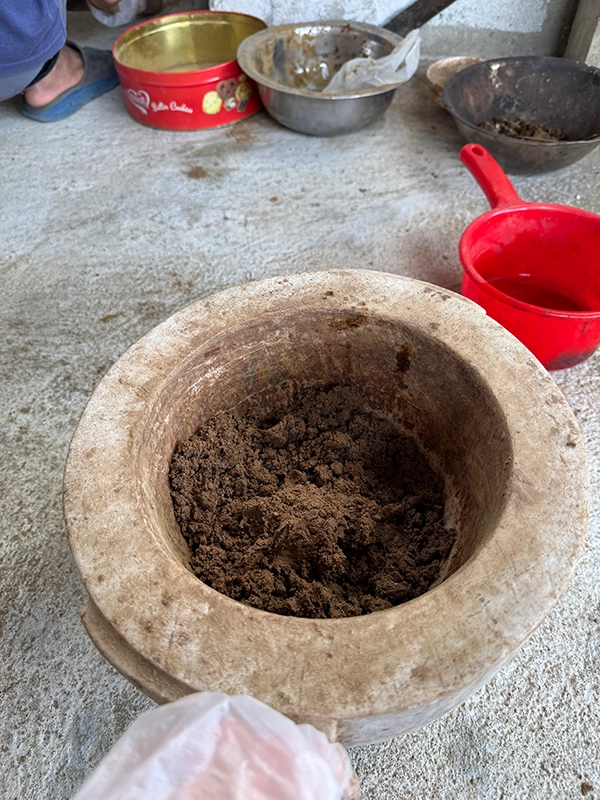
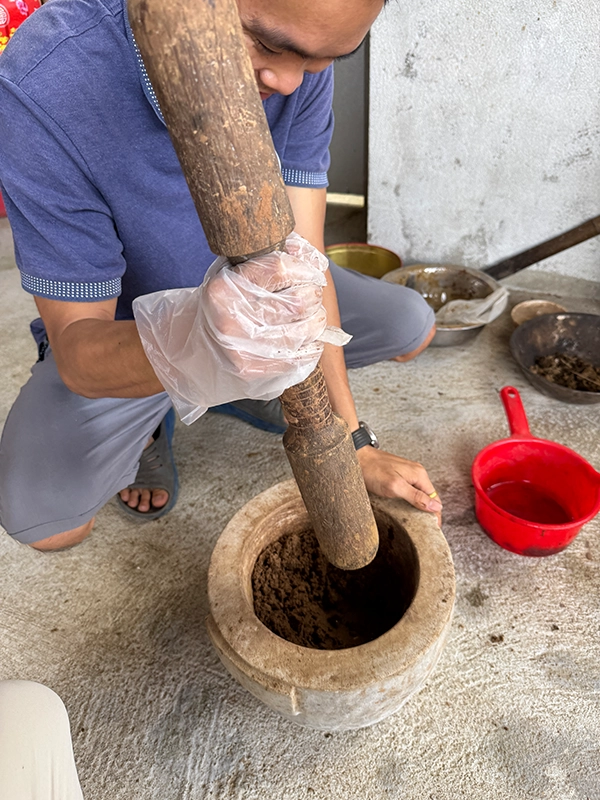
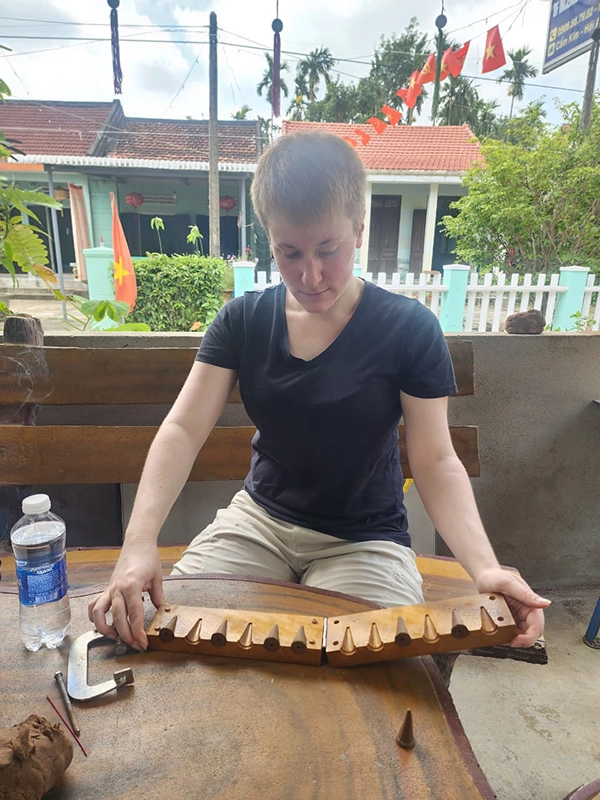
From this dough they instructed me how to make incense cones. There is a specific way to press the dough into a mould, ensuring that it is packed tightly enough to hold its shape and not to crumble as it dries. Incense Cones are burned from the tip down and produces a stronger, more concentrated scent than the sticks.
While I was stuffing the cone-moulds the family explained that their incense are all made from high-quality natural ingredients, without any synthetic fragrances or chemical binders. This means that while the scent might not be as strong, the burn is very clean and the smoke is less toxic. They added that the quality of incense depends on the quality of its ingredients. (Which is the case with many things, but tends to often get ignored for a cheaper price or higher product margin.)
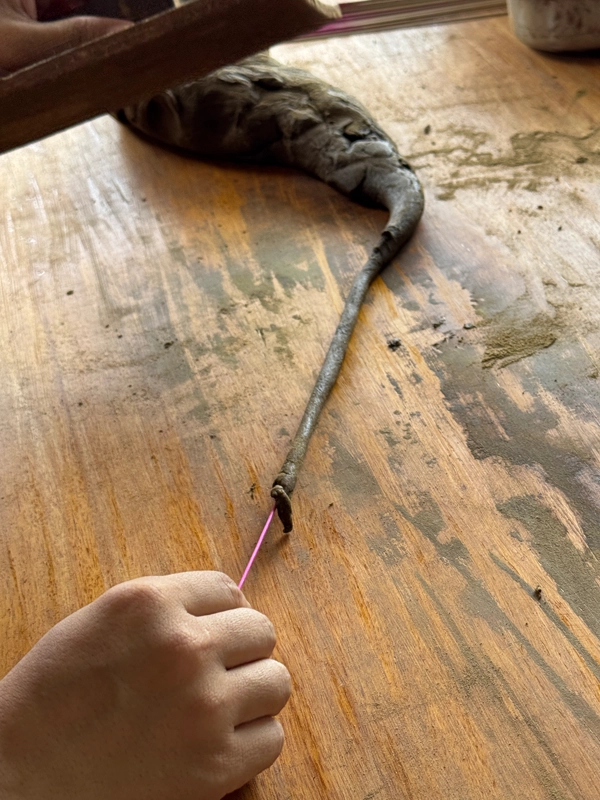
After that I got to roll incense sticks by hand, which was a lot harder than it looked. But to be fair, the person who was showing me how to do it has been doing it for at least a decade. I have no pictures of that since my hands were too dirty to take one myself and my teacher was busy, well, teaching me.
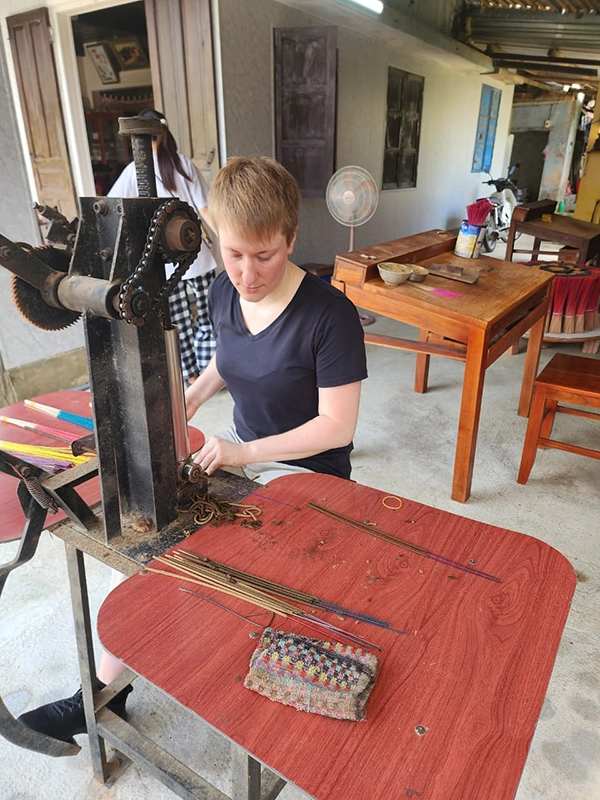
The last step of the workshop was using a simple human operated and physical strength operated machine to make more incense sticks. The dough is filled into the top, you push the stick into the side and then you press down on a pedal. The downward force moves a chain that pulls the bamboo stick through a hole and pushes the dough out around it at the same time. WAY less complicated than hand rolling. Incense sticks are the most common form of incense around the world. They burn slowly and evenly, releasing their scent in the form of smoke over a certain time.
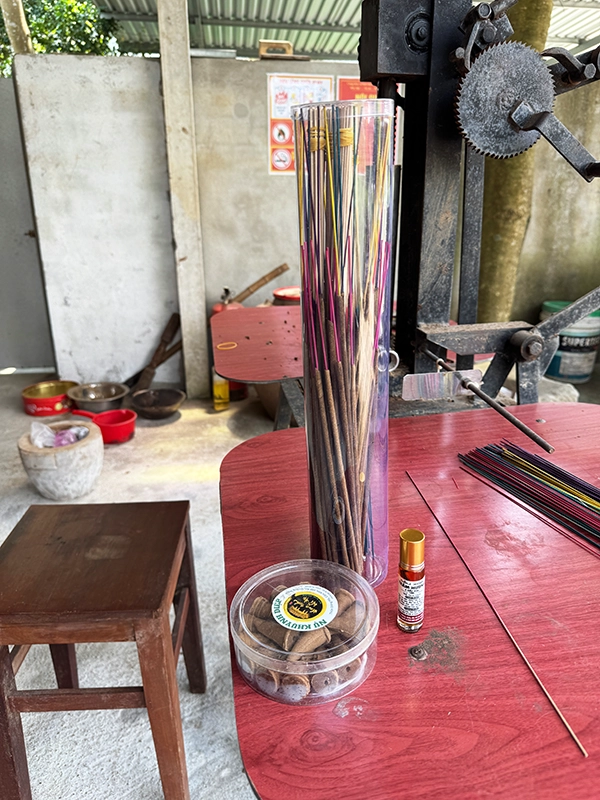
At the end of the workshop I could take everything home. That means 12 cones and almost 40 sticks of incense! They also have a small shop at their workshop where you can buy something, but there’s no pressure whatsoever to do so. I bought an oil-agarwood roll-on for my headaches. It smells sooooo nice and it cools you down.
I recommend this workshop for everyone who wants to learn more about the traditional way of intense making!
Where to book the Incense making Workshop in Hoi An
You can book it online on GetYourGuide*!
If you have more time I recommend spending a full day on Cam Kim Island. I wrote a post of what else I did there and includes three more workshops: woodcarving, ricepaper making and placemat weaving. Read about it here: Day on Cam Kim Island – Hoi An


Related Posts
Vietnamese Craft Beer Tasting – Hue
10 must try Workshops in Hoi An