
Museum hopping in Singapore
You’ve heard of bar hopping? Museum hopping works the same. But instead of drinking alcohol you’re drinking in culture, history, science and art. Singapore has a lot of museums, more than you could ever hope to visit in a single week, even if you don’t do anything else.
This post contains affiliate links to things like tours and hotels. These help me earn a small commission at no additional charge to you. Every affiliate link is marked with a *.
Overview of the museums in Singapore
- National Museum of Singapore
- Asian Civilisations Museum
- Four Peranakan Museums
- Red Dot Design Award Museum
- National Gallery of Singapore
- Free Museums in Singapore
National Museum of Singapore
The National Museum of Singapore is the oldest museum in Singapore and it’s exhibitions focuses on art, culture, history and people who shaped the country. It gives a comprehensive overview about the country and is the ideal starting point for museum hopping, as the other museums are more specific and sometimes feel like deep-dives into topics you first encounter at the national museum.
Imagine my shock, when after having to pay for an all access ticket (the only choice you have as an adult tourist without concessions) the Singapore History Gallery was closed, with a sign stating it is set to reopen in October of 2026. However while I was at the National Museum of Singapore they had two special exhibitions instead: Once Upon a Tide: Singapore’s Journey from Settlement to Global City and Singapore Odyssea – A journey through time.
Once Upon a Tide: Singapore’s Journey from Settlement to Global City
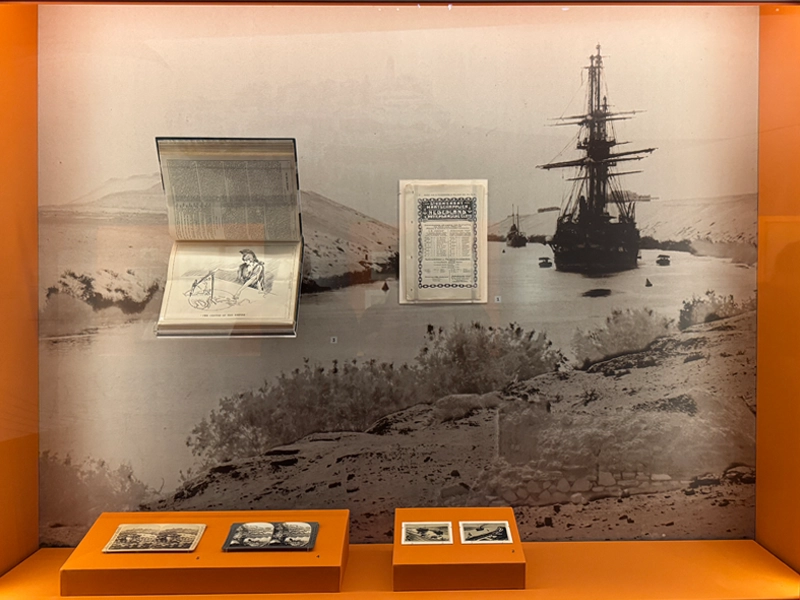
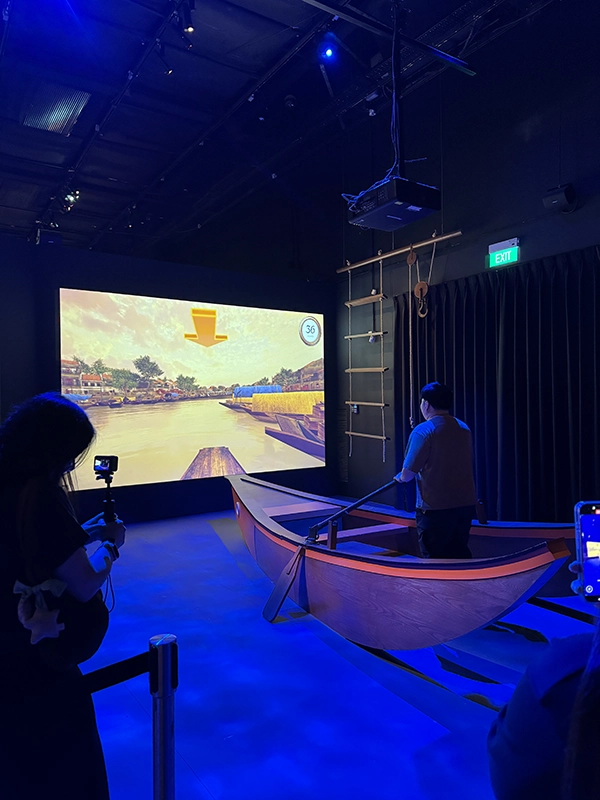
This special exhibition was created in celebration of Singapore’s 60th year of independence and covers 700 years of Singaporean history. It starts with ancient maps, showing how the knowledge about Singapore changed and expanded between Malay and Chinese traders, how it became a settlement and finally how it first became known the to European explorers, before then becoming a British settlement.
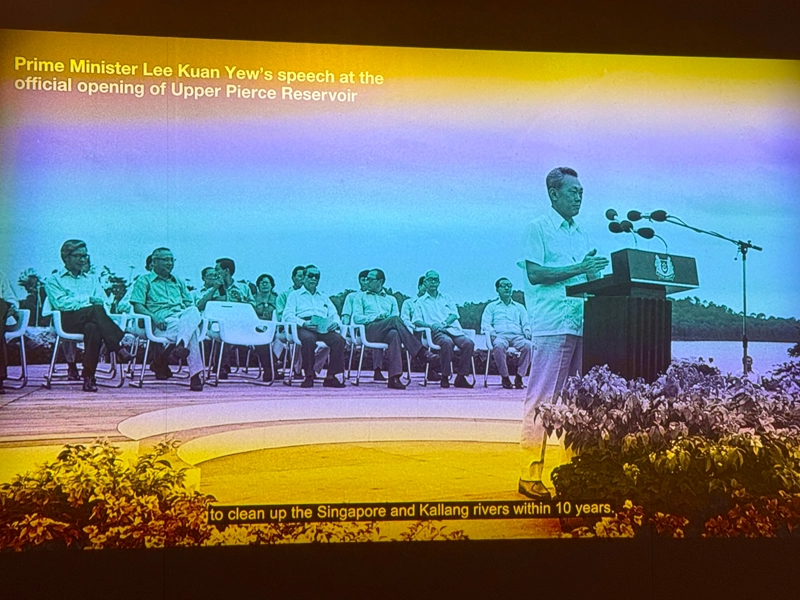
The second part focuses on the Singapore River as the lifeline of the city and shows how it and it’s influence on daily life changed over the centuries – and how, in some cases, it stayed the same. Afterwards the exhibitions follows the history of land reclamation, as well as the technology behind it: with the countries ever changing coastlines in an interactive map-table and the previous plan of urban planning in Singapore hanging on the wall. I especially liked the comparisons between cityscapes 100 years ago and today, showcased through paintings, photographs and postcards.
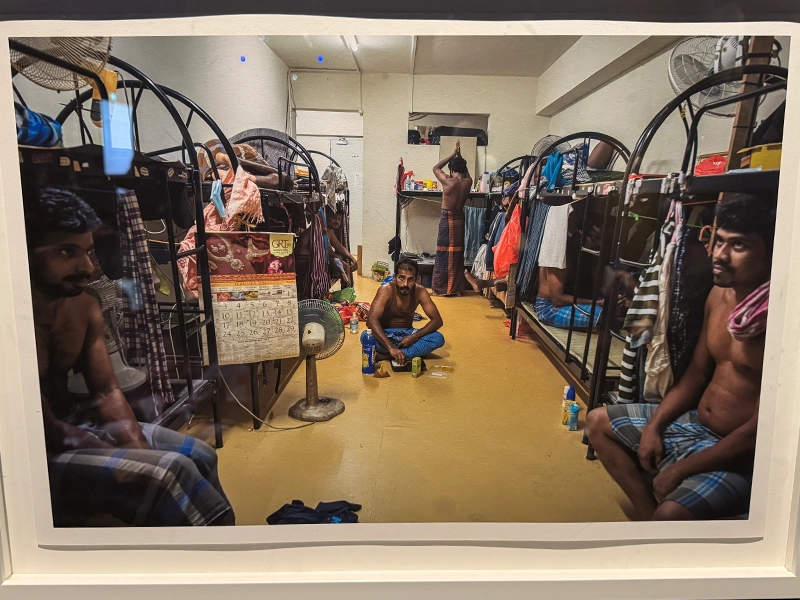
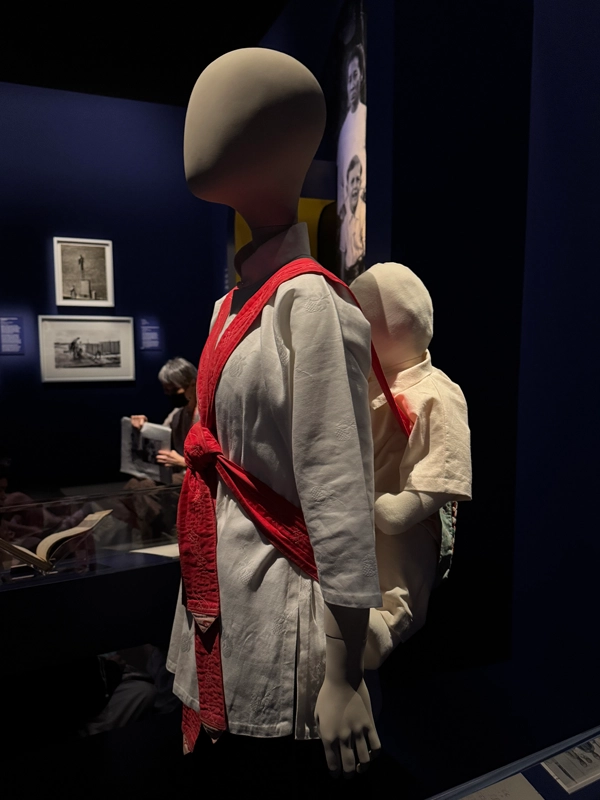
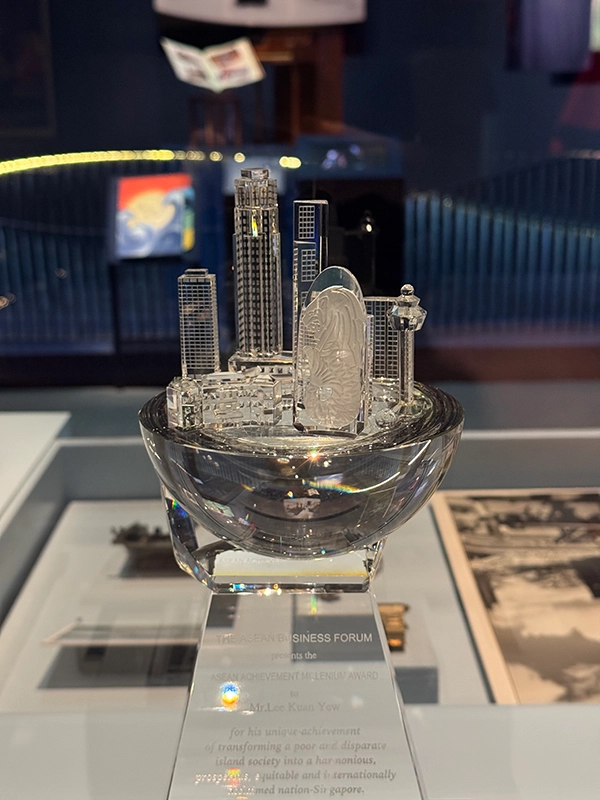
Finally the last two parts of the exhibition focus on people. First on the people of the past who made Singapore what it is today: the merchants, settlers, entrepreneurs, immigrants, migrant workers and their children and grandchildren. Photos, videos, audio statements and in older cases diaries showcase the life of people from multiple cultures, religions and stages of life. And in the last area on the people of the present, Singaporeans who “play on the worlds stage” so to say, from inventors to athletes, innovators to authors, doctors to designers and so many more.
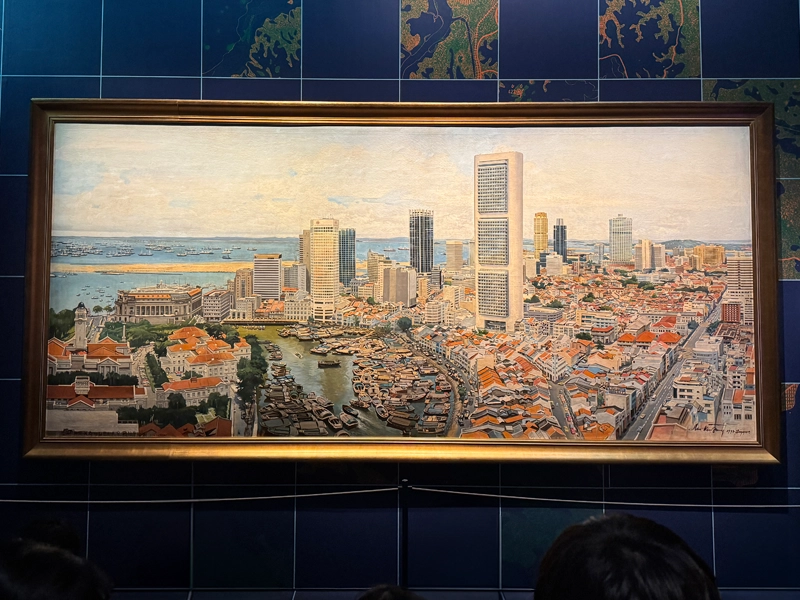
Guided Tour of Once Upon a Tide
The museum offers guided tours of this exhibition, for no extra cost. A guide takes you through the exhibition and focuses on the main exhibits while telling you more about the story. It’s good for a quick, but comprehensive overview of the exhibition if you’re strapped for time, or, how I did it, an introduction to the exhibition, after which you then walk through it at your own pace and stay longer at the spots you found most interesting.
Each tour slot is limited to 15 people and you can only register once inside the building. The slots are given on a first-come-first-served basis. The tours are held in English, Mandarin, Japanese, Korean and French. All on different days and at different times. The museum posts the offered tours on their website every week here.
Singapore Odyssea
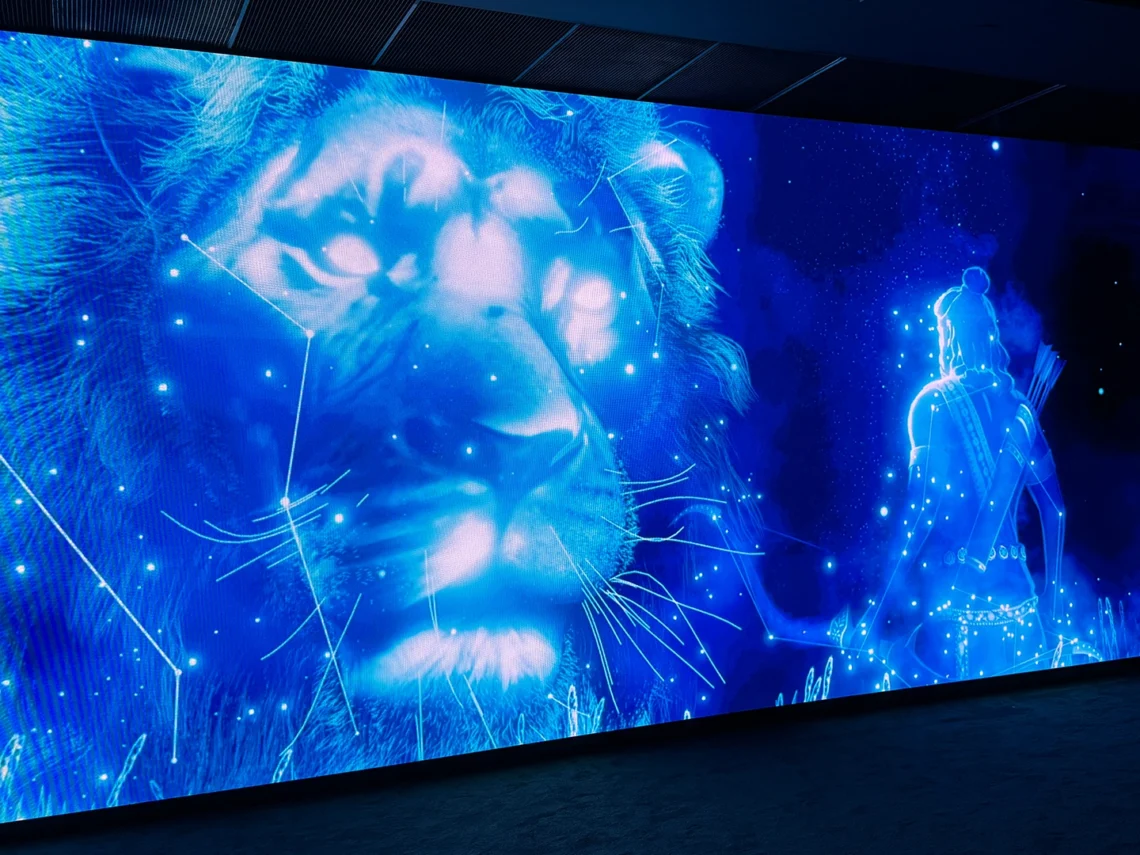
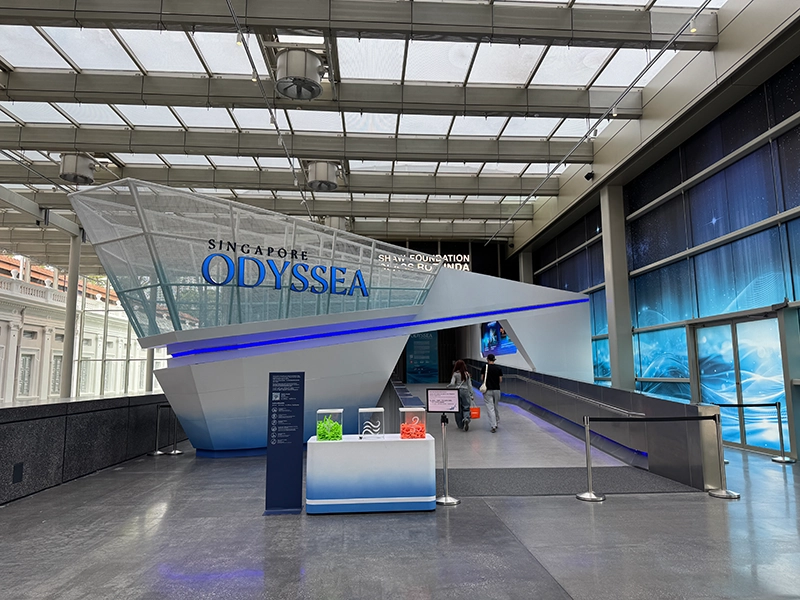
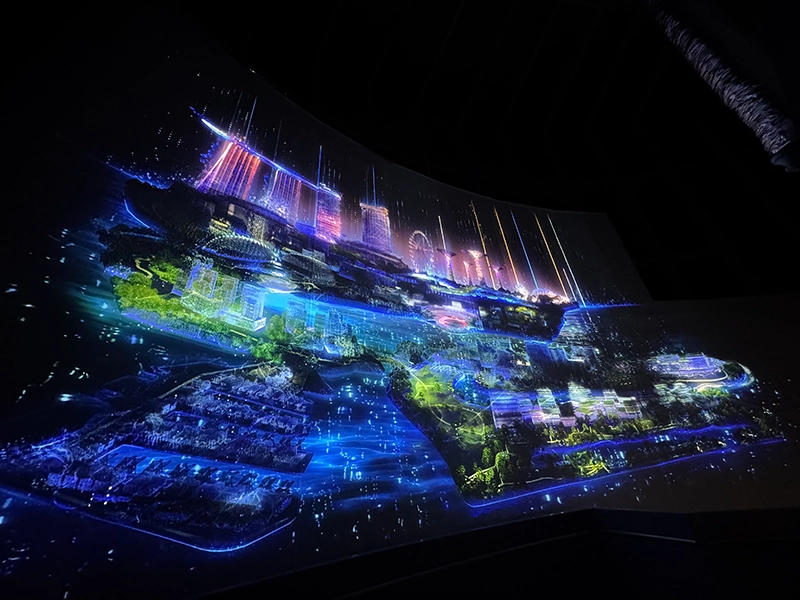
The Singapore Odyssea is an immersive light display, again about Singaporean history. You pick an RFID wristband at the entrance, green, blue or orange and with it your animal companion for the exhibition. It starts with a globe-light-show about Singapores connection to the world, followed by a floor-to-ceiling display of how Singapores skyline changed over the centuries.
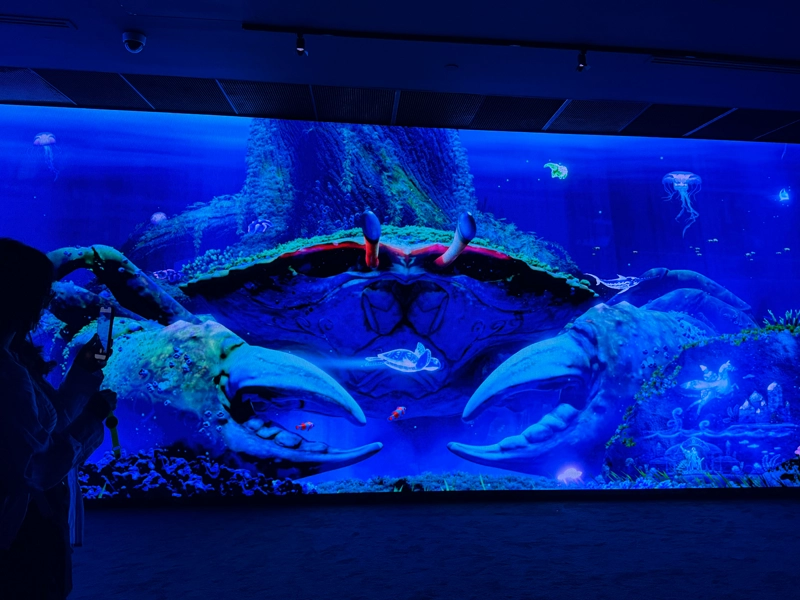
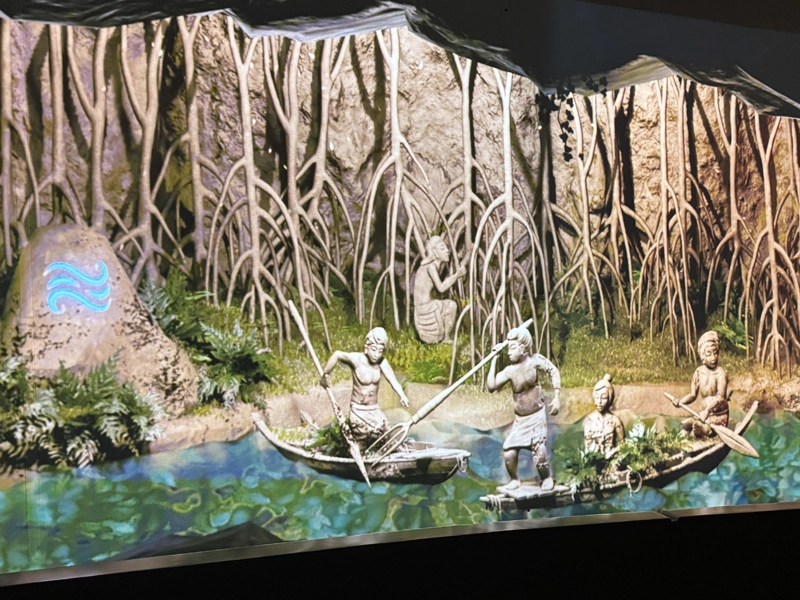
Afterwards you walk though the development of Singapore, from early humans, over traders, settlers to the modern day. Along the way your companion spawns in at key points and offers explanations on some key moments in history, myths- and folktales. By the end of the exhibition an almost 365 degree room has interactive walls and an interactive floor, showing glimpses of the city as if you are there in person. Then, the room where you give back your wristband and say goodbye to your companion, acts as an underwater experience, complete with marine wildlife and a giant crab that slumbers under the tree of life.
Tip: If your companion doesn’t show up at the first spawn point turn around and get a new wristband. 🥲
Asian Civilisations Museum
The Asian Civilisations Museums tagline is “Understanding Asia Through Singapore“. It turned out to be my favourite museum in Singapore! I expected to spend an hour here, maybe two hours, but ended up staying for five. It’s so much bigger than you think when you see it from outside.
Inside the museum are three permanent galleries, each with dedicated sub-areas:
- Maritime Trade
- Tang Shipwreck
- Maritime Trade
- Faith & Belief
- Ancestors and Rituals
- Ancient Religions
- Christian Art
- Islamic Art
- Scholars
- Materials & Design
- Ceramics
- Fashion and Textiles
- Jewellery
Once inside with an AA = all-access ticket (the only one available of you’re a tourist without concessions) you can join guided tours every hour for no extra money. They have a museum highlights tour, specific tours inside the three galleries and tours about their special exhibitions. Most tours end in time to catch the next one – if you are interested in more than one and / or simply want to get your monies worth.
When I was there it was just in time for the Materials & Design Gallery tour. We started with Ceramics, then continued to textiles and ended with jewellery. Right after that I went on the Museum Highlights Tour, which started (and spend a lot of time) in the Maritime Trade Gallery, continued in the Ancestors & Rituals and Ancient Religions areas and then ended with a short overview of the Jewellery area. This time I was not in time, but still close enough that I managed to catch the tour of the special exhibition on Asian Games as well. Truly a great day for a museum lover!
They had three special exhibitions while I was there, of which I visited two: Let’s Play – The Art and Design of Asian Games and Garden of Senses: A Tea Reverie. While the one about games felt more like the rest of the museum, with carefully selected exhibits and to-the-point explanations, the one about tea felt more art-nouveau, very design forward and more like it was a giant installation in itself.
Let’s Play – The Art and Design of Asian Games
This special exhibition was focused on Asian games. From those centuries old – drawn on the ground and played with stones, to board games like chess – still played in world championships today. From games that started out as a religious teaching method, then travelled internationally – like snakes and ladders (original name: Gyan chaupar) to the game that became the base for QR codes: Weiqi.
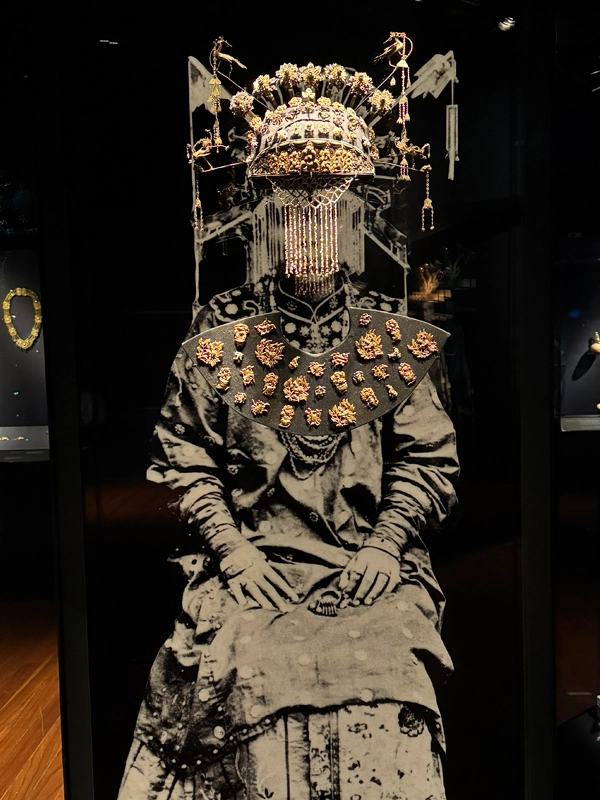
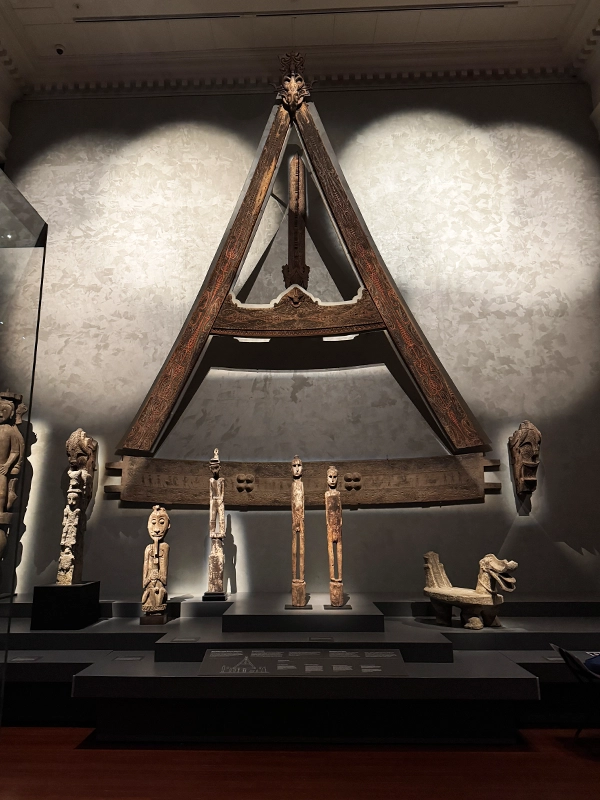
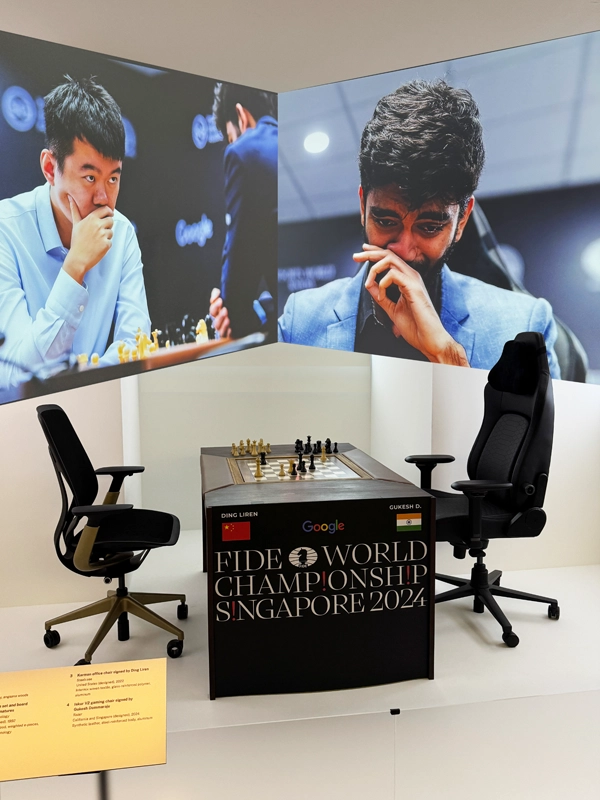
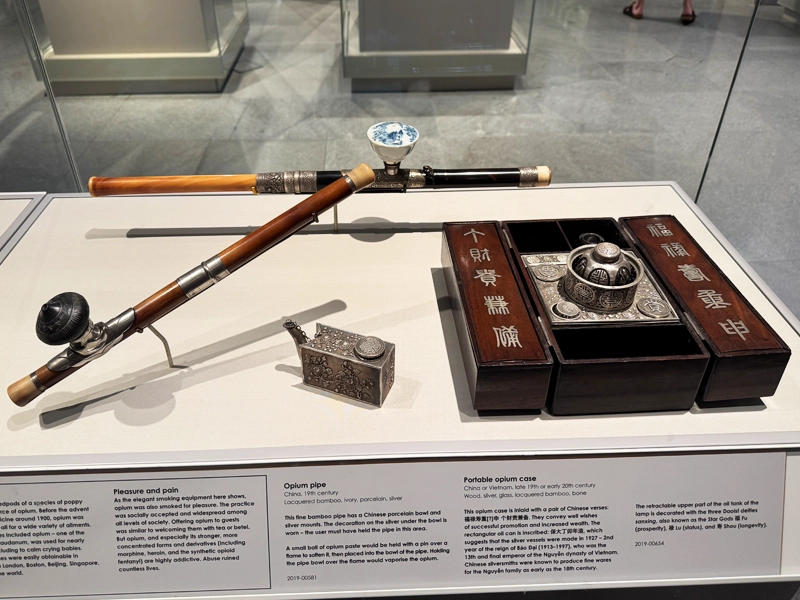
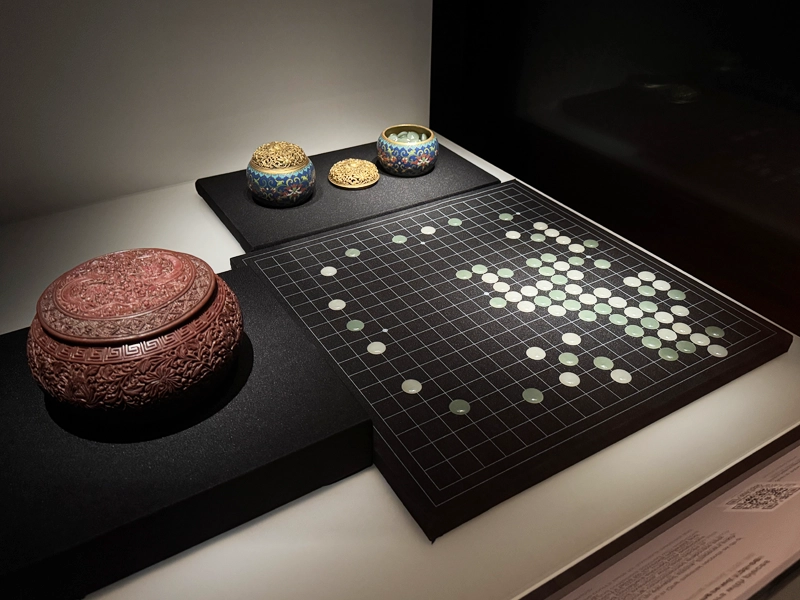
Gallery legend from top left to bottom right:
- Ancient jewellery
- Front point of a boat and ancient statues
- Chess World Championship Singapore 2024 (edited picture since the two screens where too far apart)
- Opium pipe and portable opium case
- Ancient board game
Peranakan Museums
Peranakans are (in the most abbreviated version of a few centuries of history) a group of people within Singapore whose culture developed from (most often) a marriage of Chinese merchants / immigrants with Malaysian women. This mix of cultures was then influenced by the European settlers / colonizers and a new culture was born.
To my knowledge there are four museums in Singapore that focus on the Peranakan culture:
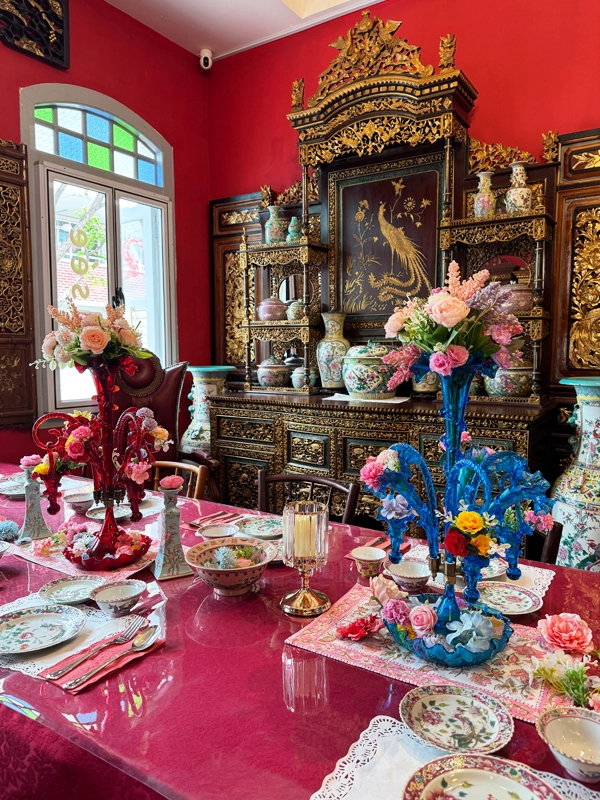
The Intan is a „house-museum“, meaning that you visit someones house which has a rich history and is filled to the brim with memorabilia, fashion and historic artifacts from a specific time or cultural group. In this case the Peranakans.
Secondly the Peranakan Mansion Museum, a beautifully decorated building that was and still is a shophouse today, with shops downstairs and the private museum on the upper floors where the living quarters used to be.
Third, the Baba House, a traditional Peranakan pre-war terrace-house in Chinatown. It was owned by the family of a 19th-century shipping tycoon. The three storey house impressively shows how families with lots of money lived back in the day.
And finally the Peranakan Museum, a more traditional museum that dives more into the history of Peranakan cultures, as well as the different kinds of Peranakans and how they came to Singapore, which languages they spoke and how the culture came to be. They frequently host special exhibitions, for example on the symbol of the peacock across different cultures globally, with a strong focus, again, on Peranakan culture.
Red Dot Design Award Museum
This museum understands itself as a “physical embodiment of the Red Dot Design Award” (direct quote).
Inside you can find selected products and prototypes which have won the award in the past on the ground floor.
When I was there they also had an exhibitions on currently nominated products, designs and design concepts. But to my understanding that special exhibition changes regularly.
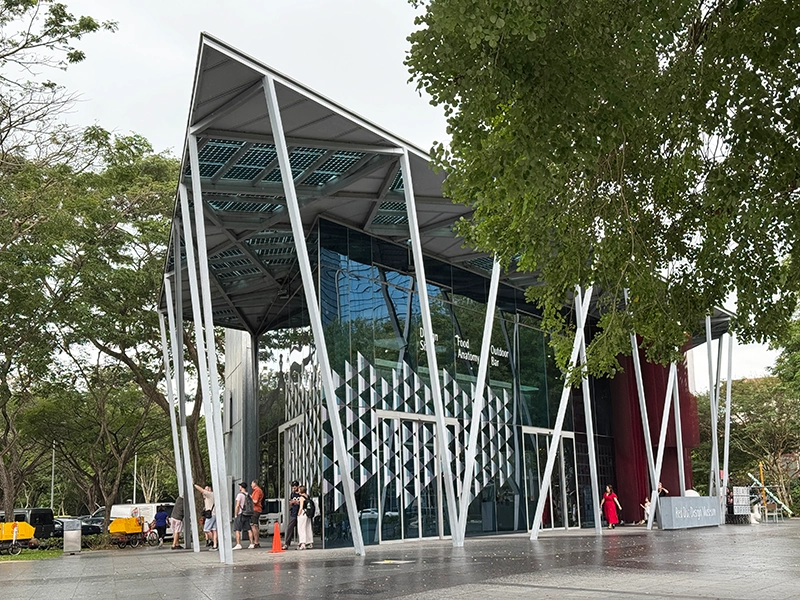
It’s an interesting museum, especially the exhibit on the recent winners. As in interesting what won, compared to other winners. It’s cold inside. The AC is turned on full blast. The staff seemed surprised when I asked to buy a ticket. Most people just look around the museum shop I guess?
Side note: the second worst toilets of any museum in Singapore.
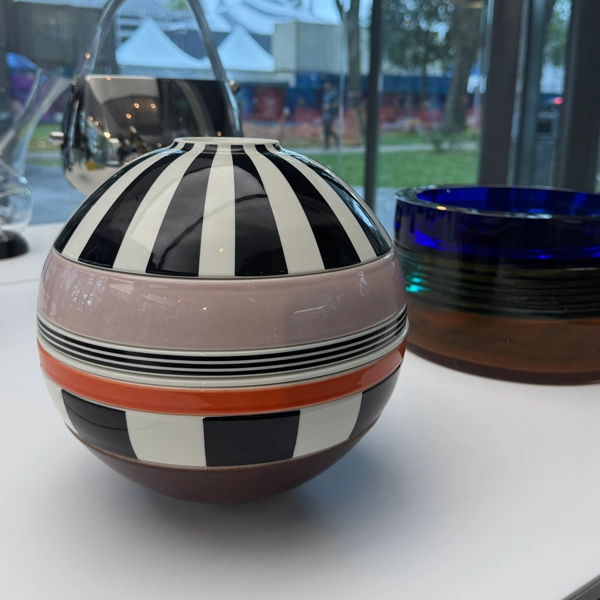

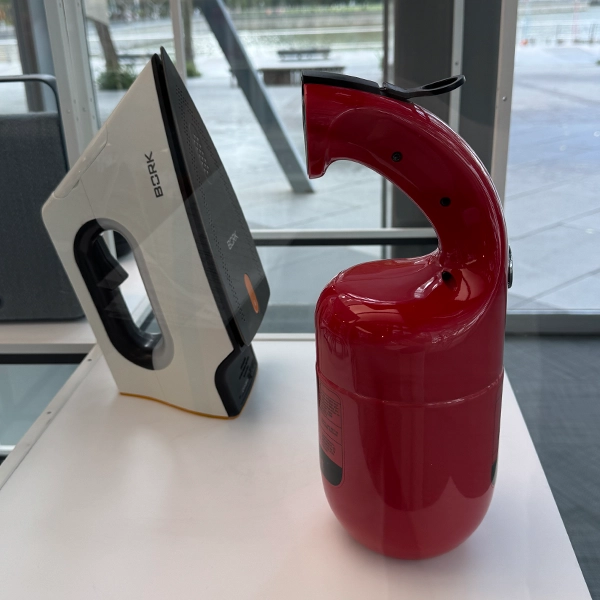
I only included pictures of actual products here, prototype or already in production. On the left is a full set of dishes, all stackable into a big globe that then serves as decoration. Next are sleek walkie-talkies, which also have a very wide range and long battery time. And the last picture has the firephant, a fire extinguisher that takes design inspiration from an elephant trunk.
Spoilers: More than half of the recently nominated things include AI and just made me angry for one reason or another.
National Gallery of Singapore
The National Gallery of Singapore is located in the Former Supreme Court and Former City Hall of Singapore. The two historic buildings have been connected to become a new landmark.
Once you have a general admission ticket to the Gallery you can take part in as many tours as you’d like, with no extra charge. For example the DBS Singapore Gallery Guided Tour with the focus on “Singapore through its art, artists and artistic heritage from the 19th century to present”, the UOB Southeast Asia Gallery Guided Tour, which covers over “300 artworks that highlight how sociopolitical changes were deeply connected to artistic influences across Southeast Asia” or the Highlights of the Gallery Guided Tour that gives a deep insight into key architectural features of the two historic buildings, before diving into “selected masterpieces from our long-term exhibitions that showcase the art and heritage of Singapore and Southeast Asia”.
I highly recommend joining at least one of the tours during your visit, though not every tour is offered every day. Find out which tour is happening when you visit on the National Gallery Website.
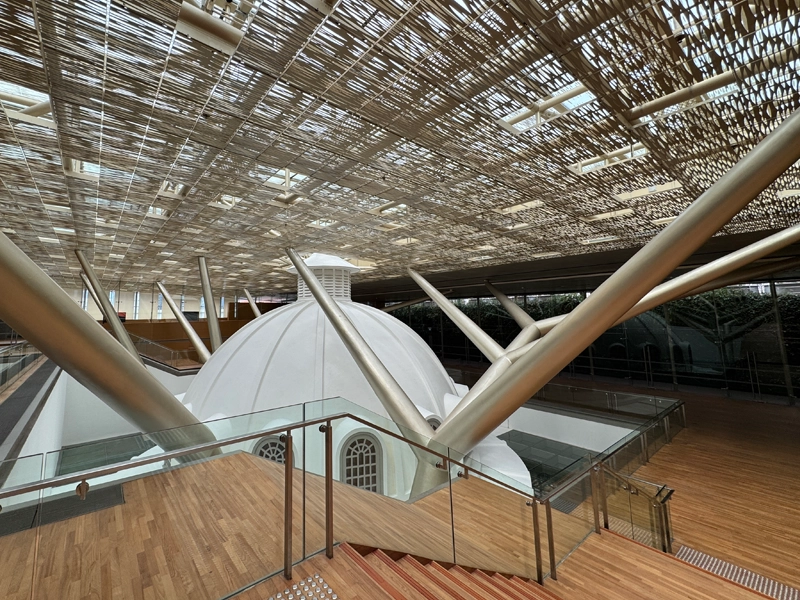
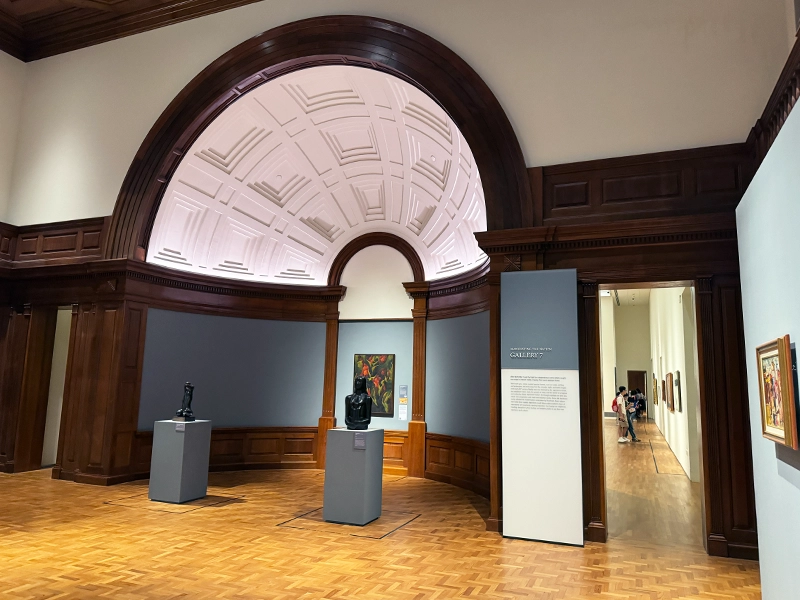
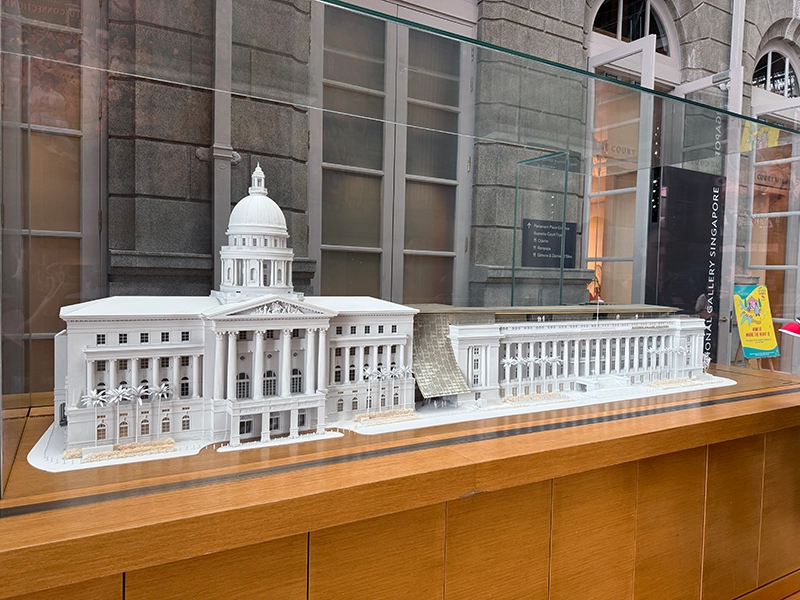
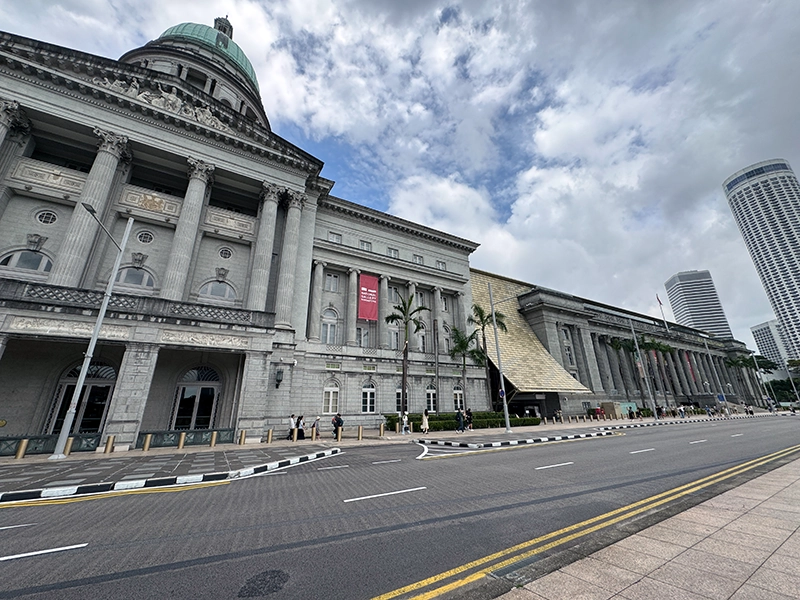
Did you know you can visit the Former Supreme Court Building and the Former City Hall Building for free? I wrote about it in this article “Free things to do in Singapore“, telling you exactly which parts of the building you can visit and how you can get in for free!
Free Museums in Singapore
Civil Defence Heritage Gallery
The Civil Defence Heritage Gallery is located inside the Central Fire Station of Singapore. It’s a museum all about the story of firefighting and everything related to it. From the first establishment of a designated firefighting squad, the evolution of fire-trucks (and mopeds), as well as hazmat fire fighting and much more.
Chinatown Heritage Centre
The Chinatown Heritage Centre, located in Chinatown, is a mix between a small museum about the history and changes of Chinatown over the decades and a tourist information centre, where you can book tours around the neighbourhood.
I wrote about both of these places in more detail in my post “20 free things to do in Singapore“.
Which is your favourite museum in Singapore?
I know I haven’t listed nearly close to every museum here, but there are just so many! Which one is your favourite? I’ll make sure to visit it next time.


Related Posts
Knife Making Workshop in Hanoi
Hoi An Memories Show – 2024 Experience