
Phong Nha National Park Cave Exploration
Alternative Title: Exploring the largest cave in the world (kinda)
Hang Sơn Đoòng – the largest cave in the world, is located in the Phong Nha national park in Central Vietnam. Phong Nha National Park counts over 400 known caves, though not all of them are open to the public. Most of those caves where discovered by Hồ Khanh, a local man who used to wander the forest in search of Agarwood and other things to sell. Until one day a British Exploration Team showed up and the area of Phong Nha changed forever. With Ho Khanh as a guide they mapped many of the caves and in 2009 they entered Son Doong Cave – which is so big it has it’s own own ecosystem!
Since 2013 tours into the biggest cave in the world are operated by Oxalis Adventure. However, that tour lasts one week (6 days, 5 nights), costs over 3.000€ and sells out years in advance. The next best thing you can do is visit the Phong Nha Cave, Paradise Cave (Thien Duong), Tien Son Cave, Tu Lan Cave and the Dark Cave. All five belong to the same cave system as Son Doong, with the major difference that you can visit them within a day.
This post contains affiliate links to things like tours and hotels. These help me earn a small commission at no additional charge to you. Every affiliate link is marked with a *.
Phong Nha – Ke Bang National Park
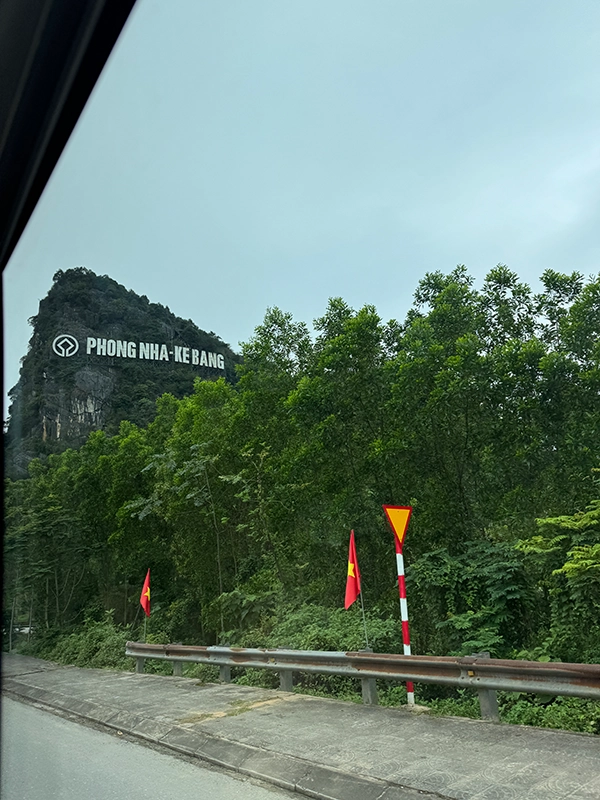
Phong Nha – Ke Bang National Park was recognized by UNESCO as a world natural heritage site in 2003 for geology, geomorphology and geography and again in 2015 for outstanding global biodiversity. Over 400 caves have already been discovered in the park and yet experts say that only about 30% of the national park has been properly surveyed.
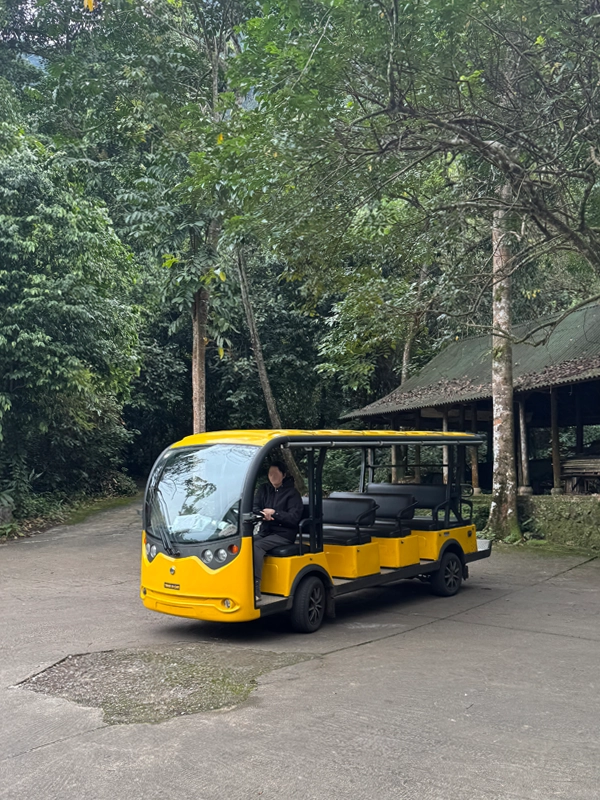
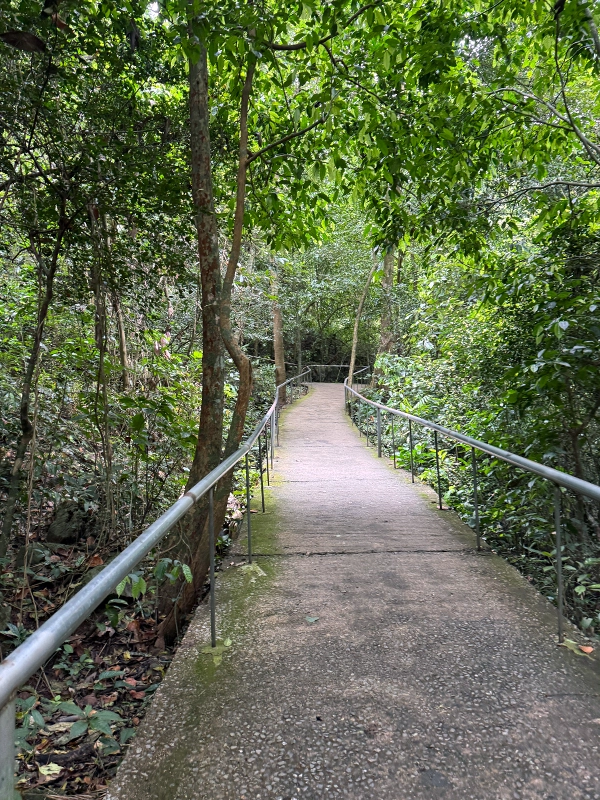
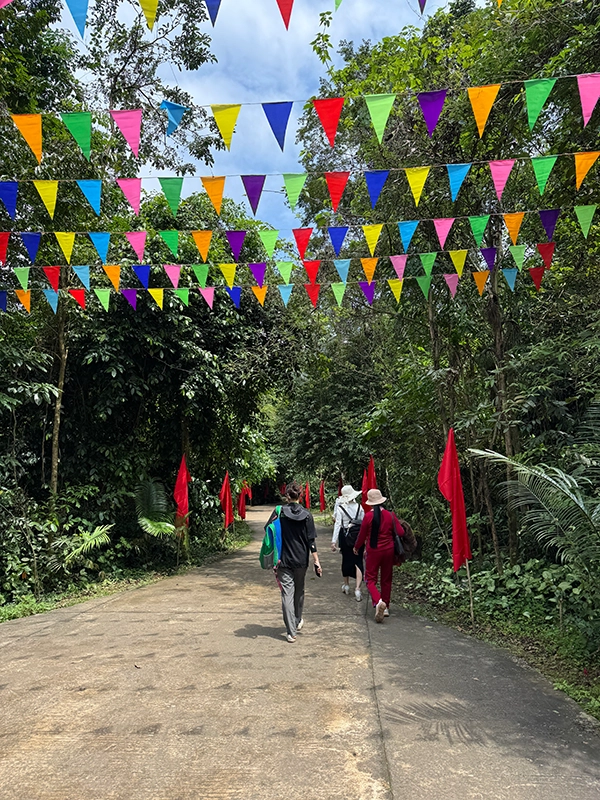
From Dong Hoi you can reach the park by public bus (45-90 minutes | 35k VND), private driver (~60 minutes | 400k VND) or in a mini van when you book a tour. The Paradise Cave makes for an ideal first stop. Once you arrive at the parking spot of the Paradise Cave electric golf carts take you closer to the cave for a fee, but only to the beginning of a hiking trail that leads up the mountain to the cave entrance.
(Try to guess how often I use the word “cave” in this post. Answer is here.)
Paradise Cave
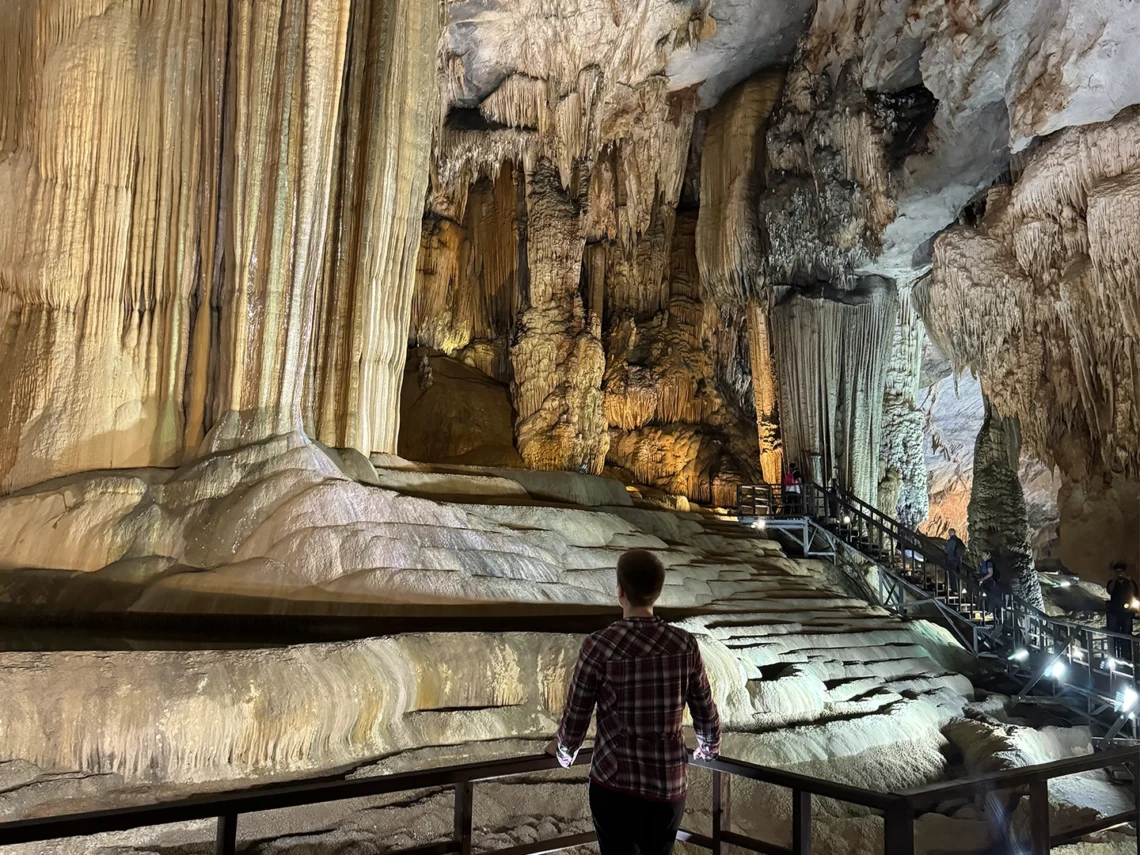
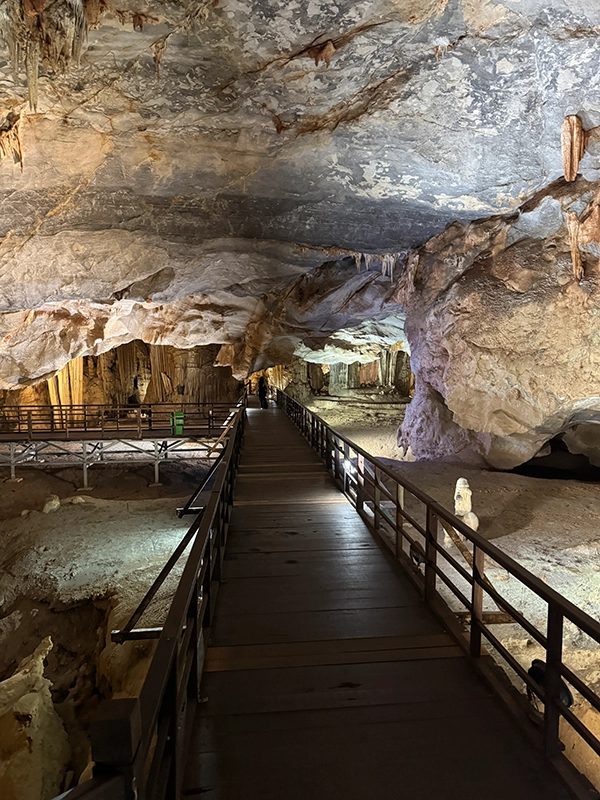
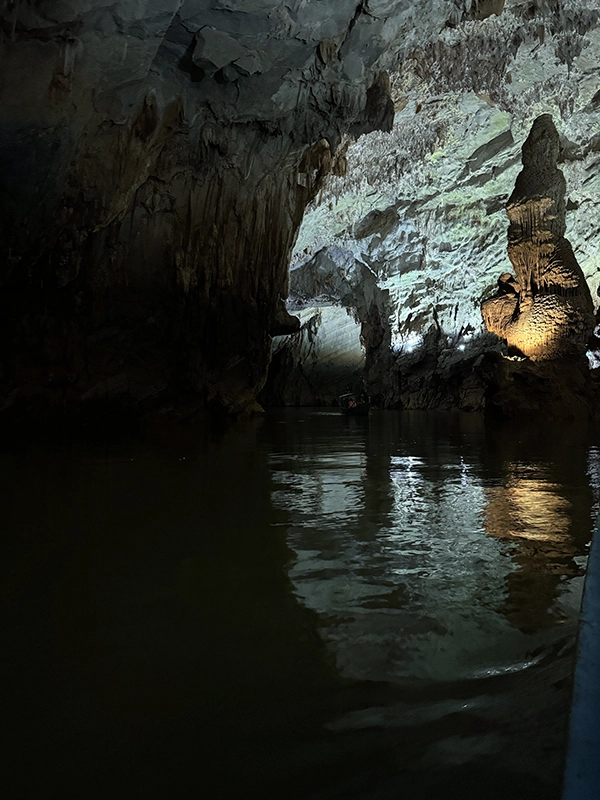
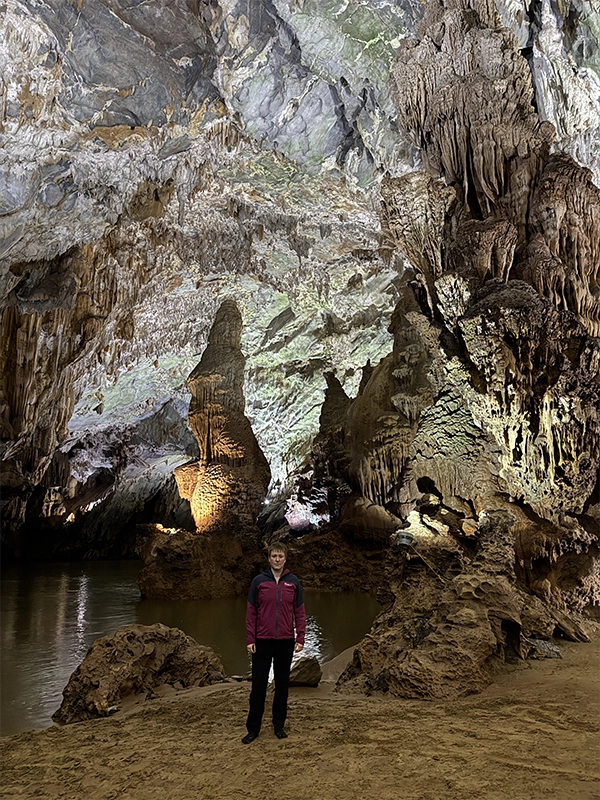
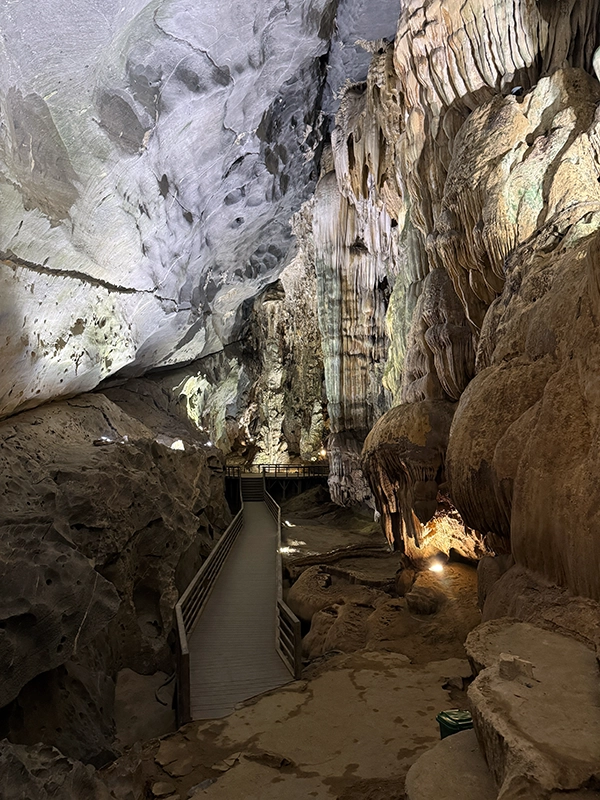
With a length of 31 kilometers the Paradise Cave is the longest dry cave in Asia! The first 1000 meters are open for the normal day tour tourists, with wooden walkways through well lit caverns. The cave features impressive stalactites and stalagmites – stone “scuptures” formed by nature over thousands of years.
And if you are like me and can never remember which is which: stalacTites hang like chandeliers from the ceiling, like the Latin alphabet letter T, with the line on top being the cave ceiling and the stem forming the stalactite, while stalagMites rise from the floor like the arch of the Latin alphabet letter M.
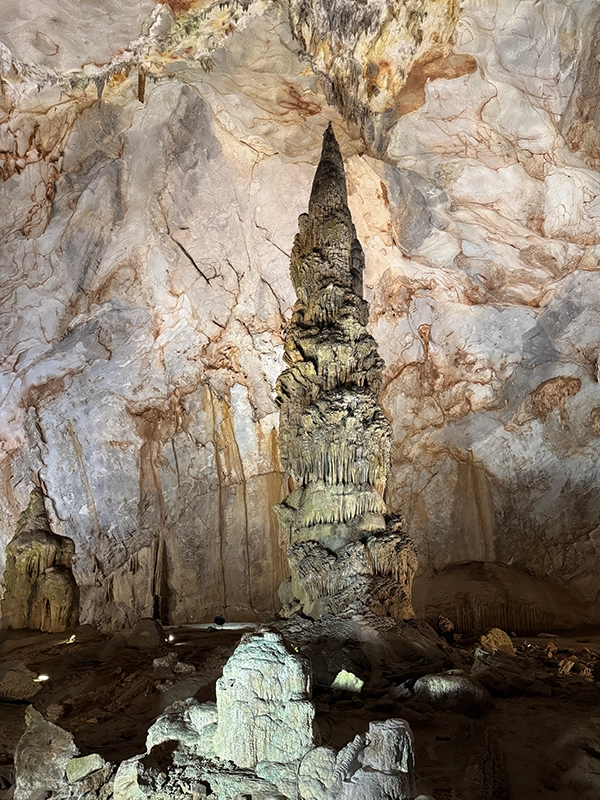
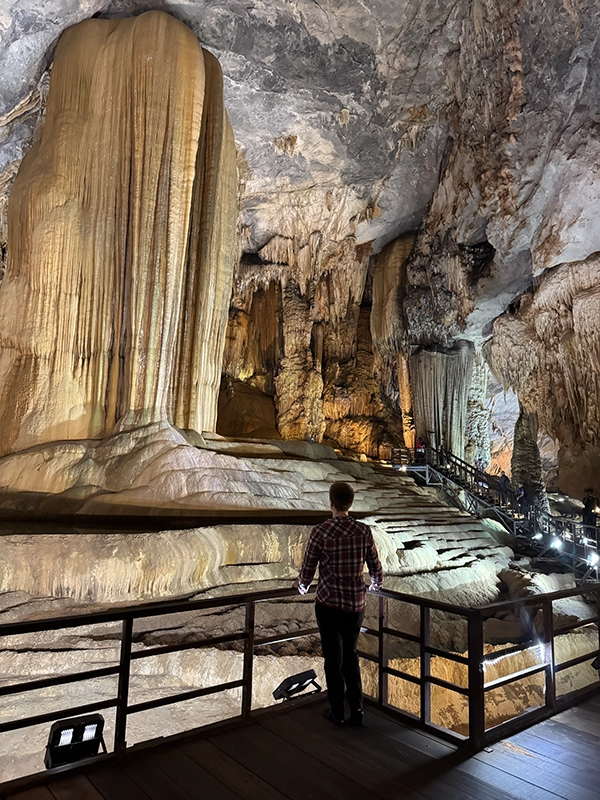
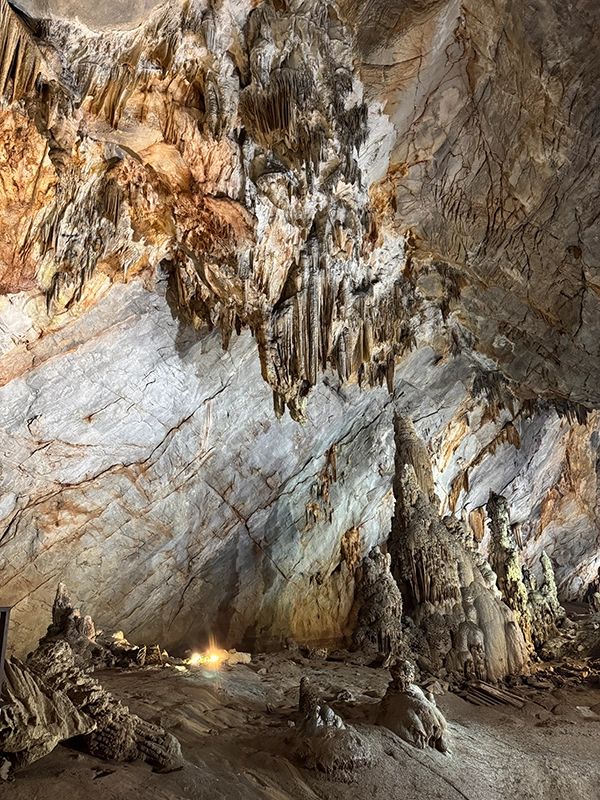
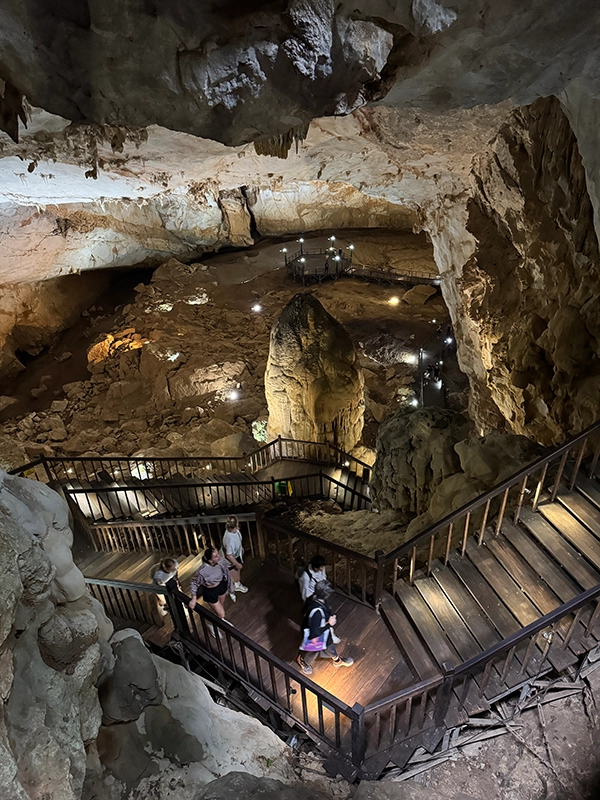
Among the caves of the national park the Paradise Cave is one of the most accessible. However, that does not mean accessibility in the inclusion sense. It only means that it has well-maintained wooden stairs and wooden walkways with railings and it’s well lit. Meaning if you can’t climb or abseil, this cave is great, but it’s not accessible for people in wheelchairs or even people with clutches if you rely heavily on them.
For people with claustrophobia, this cave might be your ideal first step. Most parts of it are vast and open, nothing is tighter than two meters and the ceiling is mostly higher than 2 meters as well.
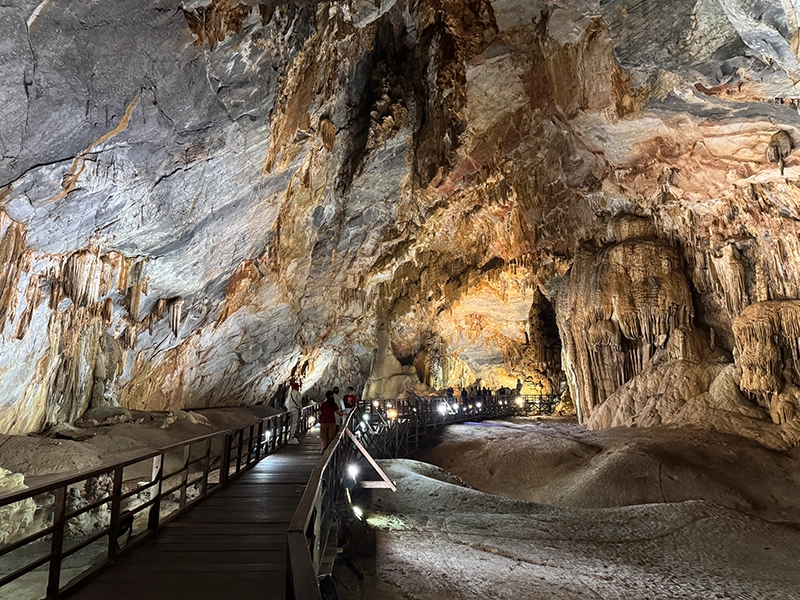
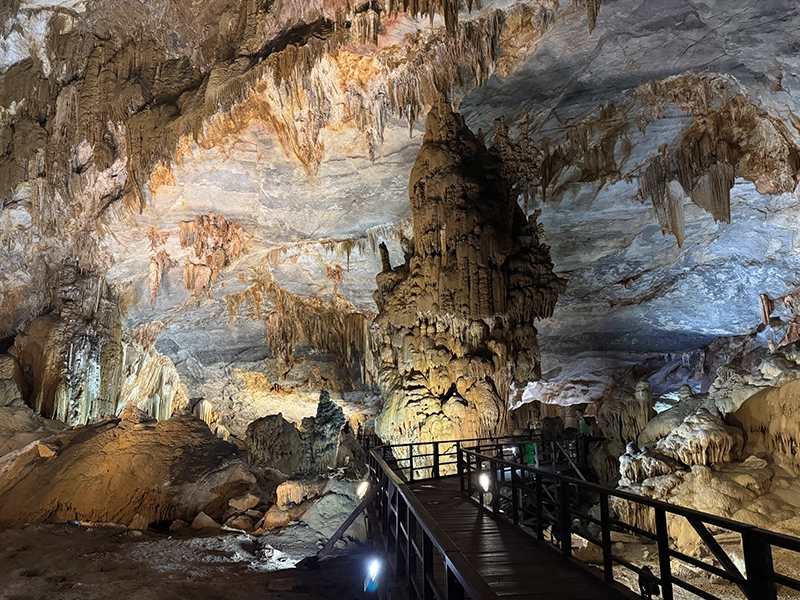
The descent into the cave and the exit are done by wooden stairs. These are wide and evenly spaced, but there are still many steps and it’s somewhat steep. The way back from the cave felt a lot hotter than the way there, since the cave is cooler than the outside.
Phong Nha Cave
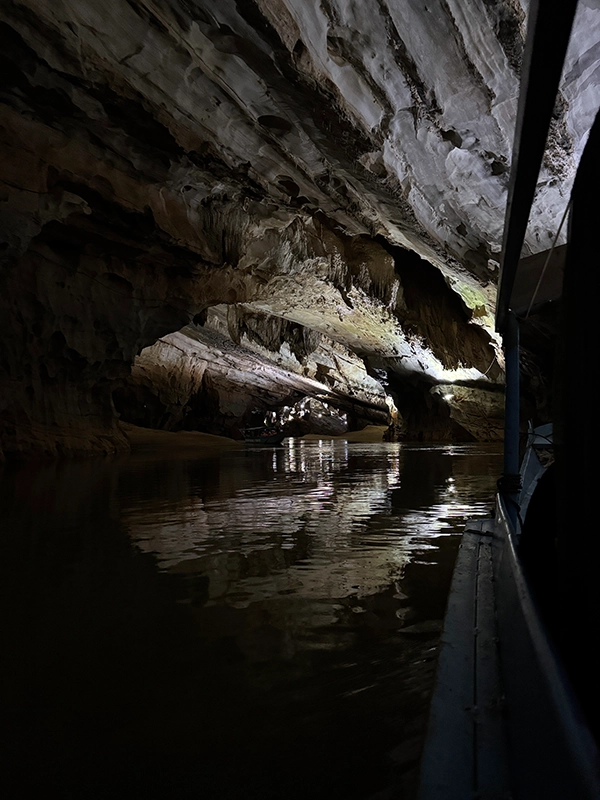
Inside the Phong Nha Cave is an underground river that is almost 14 km long! The cave itself is only roughly 7700 meters long, so the river disappears into the rock half way through. About 1500m of the river inside the cave is opened for tourists and only accessible by boat.
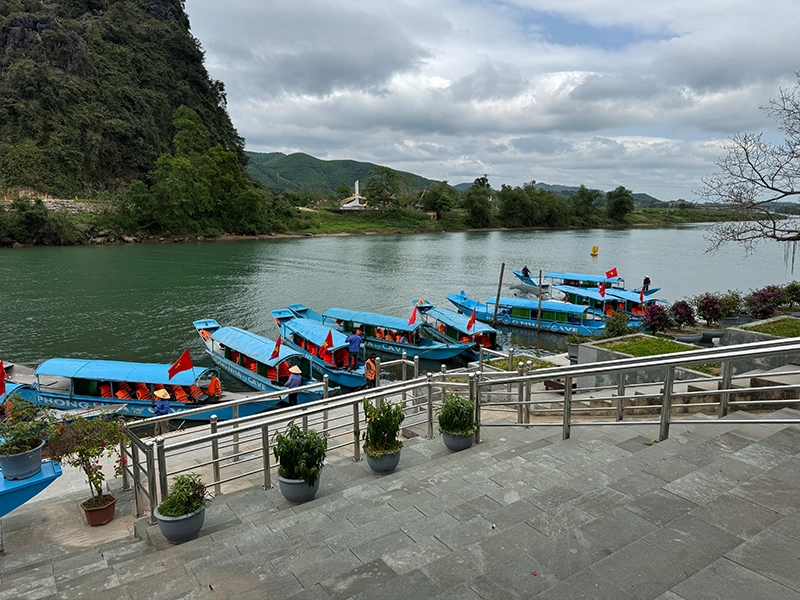
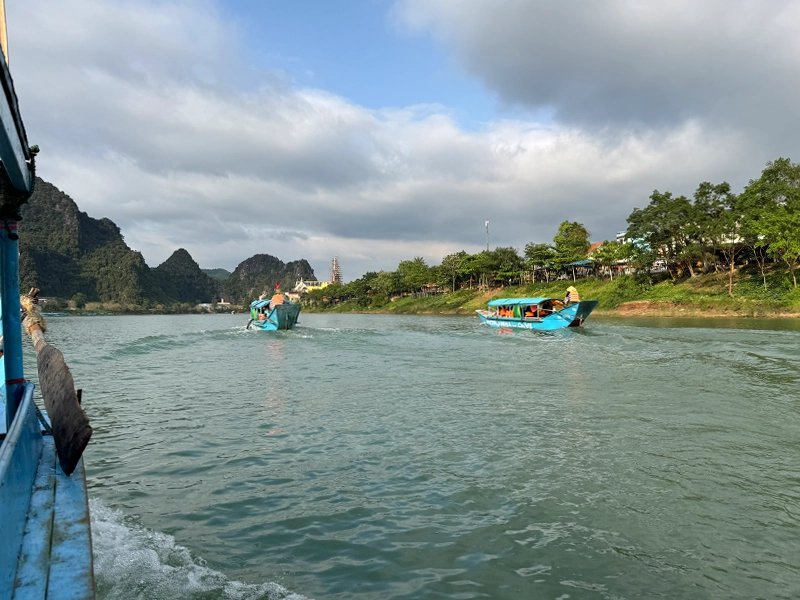
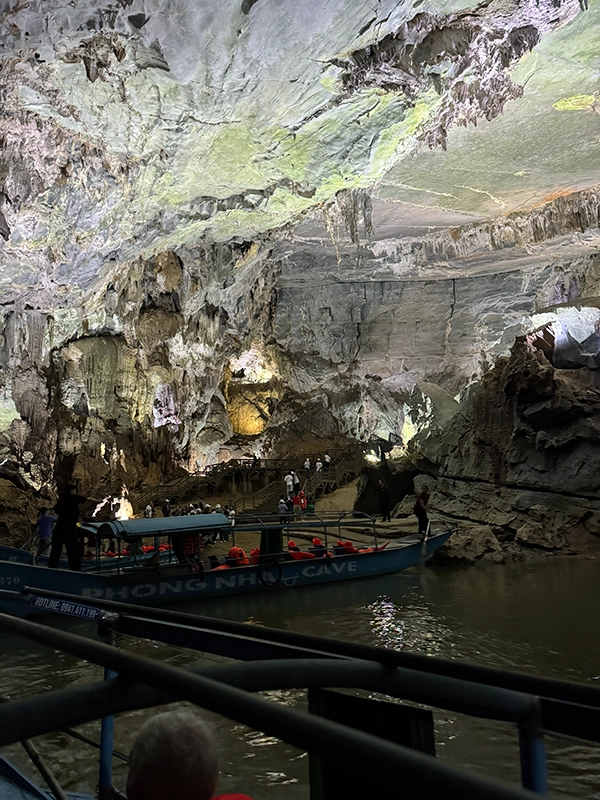
The boats start at Phong Nha Cave Boat Station and cruise down the Son River until they reach the cave entrance. Along the ride on the boat you can see the limestone karsts of the national park, some forests and the homes of people living on both sides of the river. Boats are an essential mode of transportation, since there is only one bridge across the Son River. Our guide told me that thanks to a government initiative to promote tourism as a way of earning a living every local family owns a blue boat. There are apparently over 400! There are not enough tourists to fill every boat every day, even during high season, so families share the working days between them.
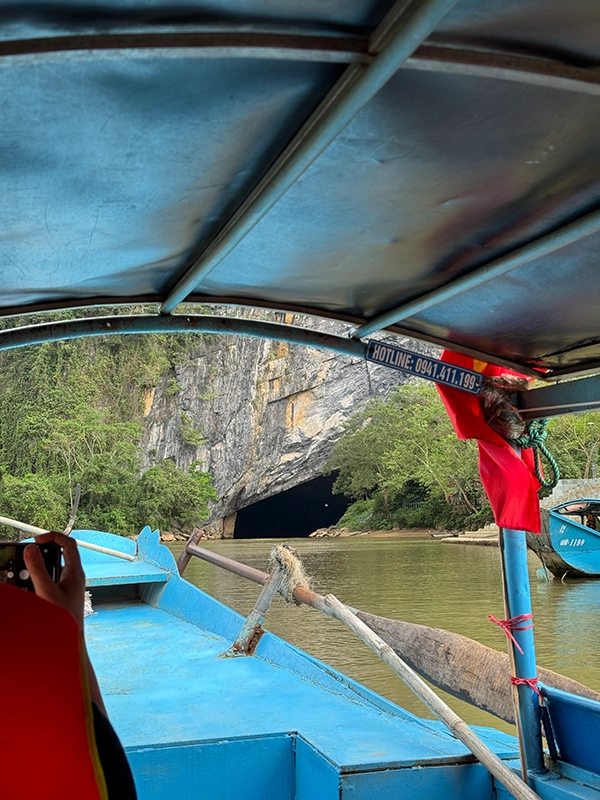
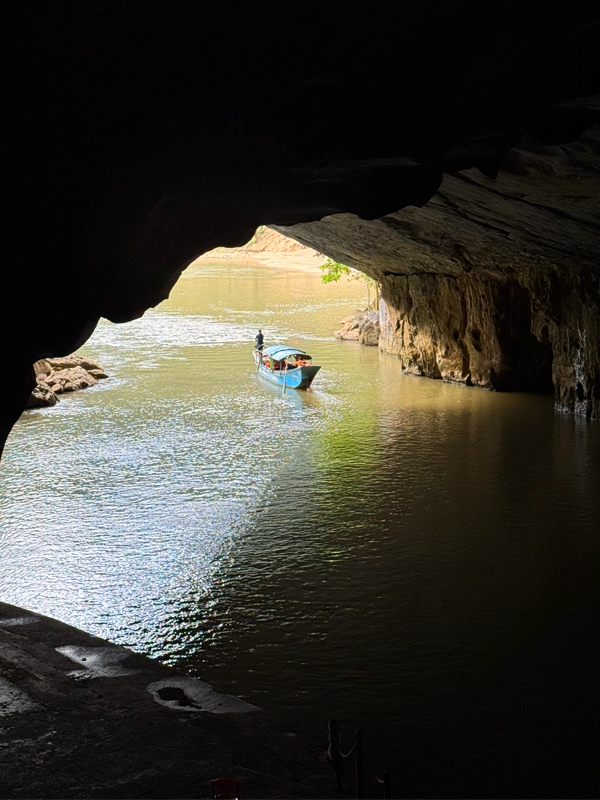
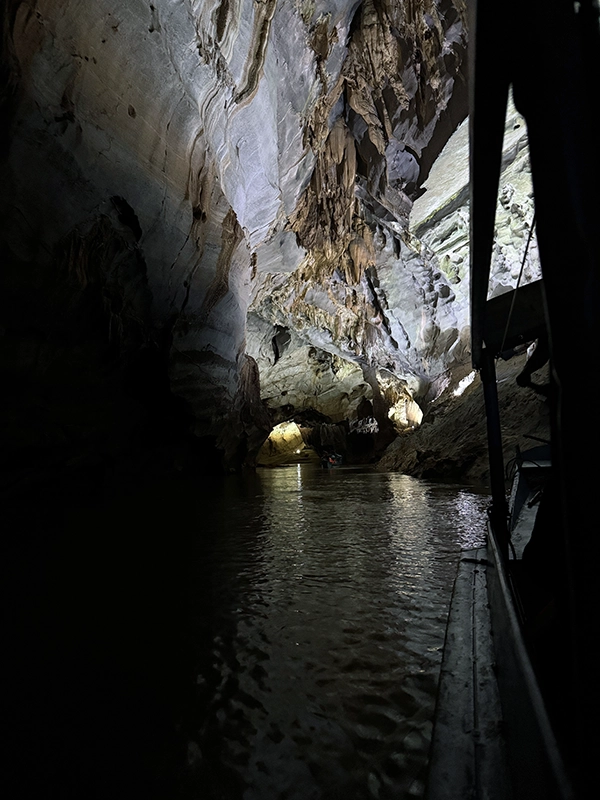
Inside the cave cool air awaits you! It was the coldest cave I visited in Vietnam by a long shot and I was glad I had brought my jacket along. You stay on the boat as you float through the first part of the cave, mostly through relative darkness. Parts of the cave are illuminated and the massive formations of stalactites and stalagmites are very impressive.
I do have to point something out though. On every website, of the park, of tour providers, etc. they say something along the lines of “the boat glides silently through the still waters, creating a calm and serene atmosphere.” Inside the cave it is not silent at all. While yes, the motors are turned off once the boats reach the cave, the boats are made of metal, which means that when they bump into each other they make a loud noise, every time the oar hits the boat there is a loud noise, when water drips from a high ceiling onto the metal there is a noise and sadly people are also loud.
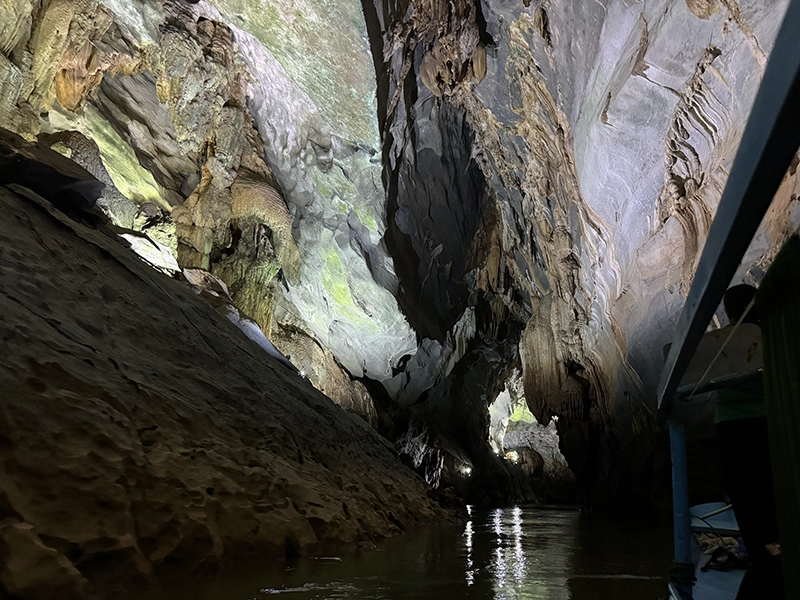
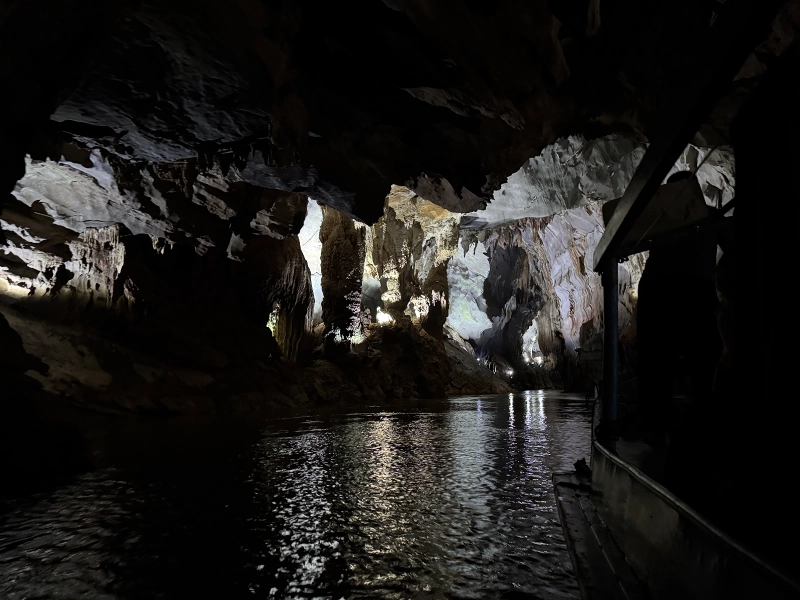
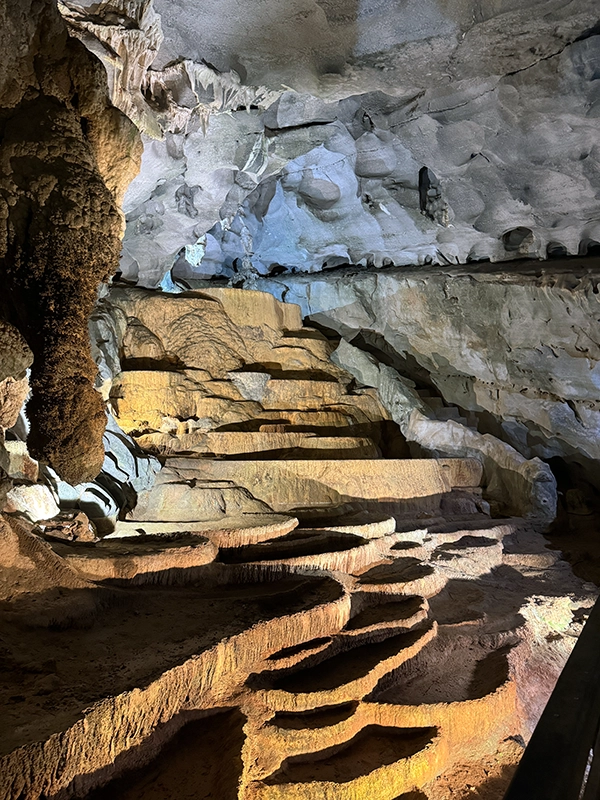
After the boat ride it docks at a small sand landing inside the cave, you disembark and continue on foot. Phong Nha Cave also has wooden walkways, massive caverns and breathtaking stalactite- and stalagmite-formations that are well lit. One of the areas that was most memorable for me was a stone formation that looks like rice terraces.
Tours into Phong Nha National Park
If you are thinking “this sounds all very straightforward, why would I book a tour?”: I did, too!
Then I did more research: The public bus is not too reliable, especially outside the main tourist season. And if you miss one the next comes in an hour… supposedly. If you go by taxi you risk not getting back that way and if you hire a driver it’ll have to be for the whole day, so they will wait for you. Then you have to pay an entrance fee per cave, you have to pay for the electric golf cart and boat by vehicle, so if you’re travelling solo you either get lucky and meet people who agree to share with you or you have to pay the full price by yourself.
There are almost never any prices posted, so unless you like to haggle or you like confrontation going that route is probably more hassle than it’s worth and you are not saving that much money. Especially considering most tours also include lunch, water and a guide who can tell you more about the park and caves.
Effects of the Cave Tourism on Phong Nha
The caves have brought tourists to the village of Phong Nha. The Sơn Đoòng cave tour itself created 125 jobs – more if you consider accommodation, food, supplies, transport, etc. The other caves, tours, transportation and everything connected to them also creates jobs – while at the same time having a massive impact on the environment. Some companies focus on a reduced environmental impact, while most operate under the understandable line of thought “how can you care about the environment if you’re hungry”. So to judge locals from the privileged perspective of a visitor would be incredibly ignorant.
However, I think it is fair to say that I hope a healthy balance can be struck, preserving the natural habitats of many native and some endemic species of plants and animals, while still giving the local people opportunities to make a living. And that no big cooperation get the rights to build all over it and turn this park, one of the last natural wonders of this planet, into a “tourism-experience” … like Fansipan, Black Virgin Mountain, Paradise Village on Cat Ba or Ba Na Hills.
One of the most obvious and harshest impact tourism has had on the caves in Phong Nha National park is people touching the stalagmites and stalactites.
THAT IS A BIG NO GO!
The way these rock formations are formed is by water dripping down from the cave ceiling. Minerals within that water pile up and create these masterpieces of nature. The process takes hundreds to millions of years.
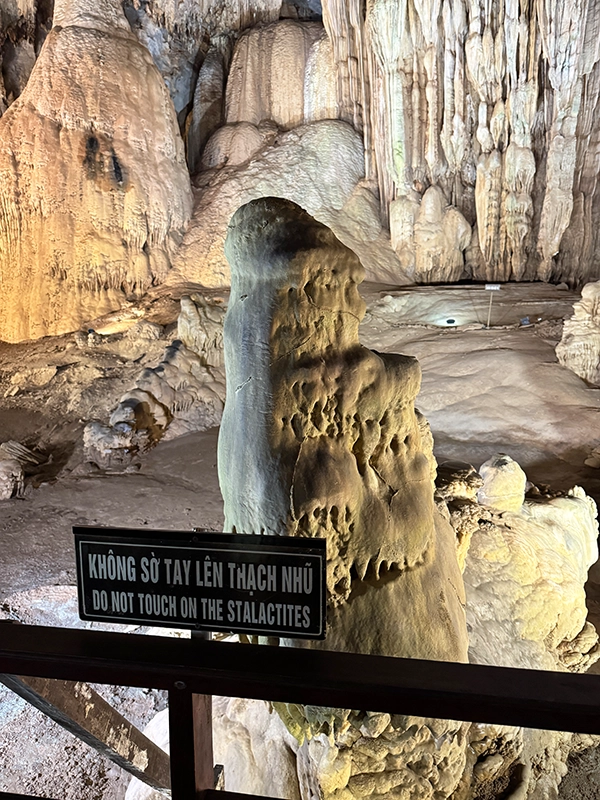
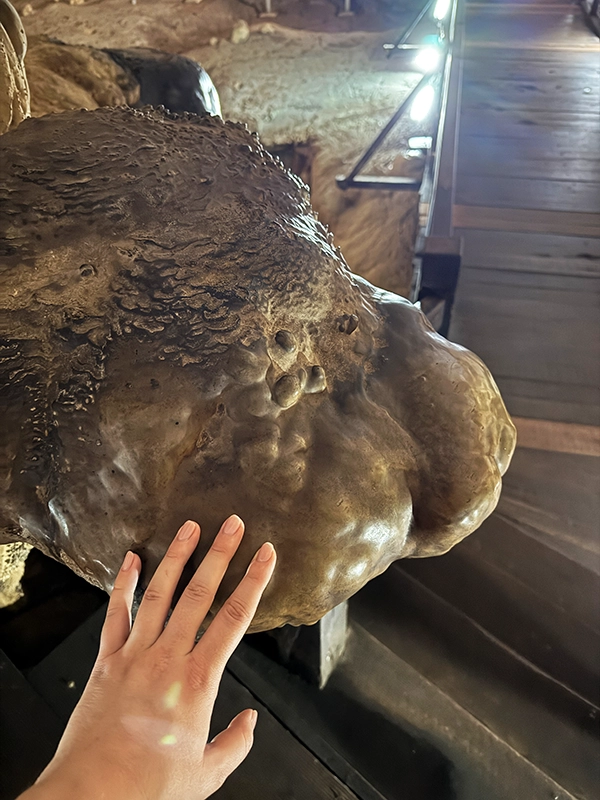
A stalagmite grows between 0.0007 and 0.929 mm/yr. So even if we round it to 1 mm per year that means the 80 meters tall stalagmite inside the Paradise Cave alone took 80.000 years to grow!
And humans can ruin it within just a few seconds. How? Skin oils can alter the surface tension where the mineral water clings or flows. And when the minerals can’t cling to the already existing stone anymore the formation can’t grow.
There are areas in the cave where you can touch the stone, where it is part of the railing along the wooden walkways. Here and only here you are explicitly allowed to touch it. Even encouraged to. In the hopes that people will leave everything else alone. But sadly humans as a whole always have to ruin everything for everyone and the planet. You can see that even directly behind the “DO NOT TOUCH THE STALACTITES” sign, the stone has been touched. Repeatedly.
In conclusion
Be mindful of your surroundings, respect the nature, adhere to the rules and value the work people do.
And here is the answer: I use the word “cave” 59 times in this post!


Related Posts
Hoi An – Vietnams most charming city?
Silversmith Workshop – Hanoi