Peking Opera Experience – Taipei EYE
At Taipei EYE you can experience traditional Peking Opera. Included in the ticket are also a wide range of activities that are connected to this art form like stage makeup, traditional costumes, historical instruments, woodblock printing, face painting and much more.
This post contains affiliate links to things like tours and hotels. These help me earn a small commission at no additional charge to you. Every affiliate link is marked with a *.
Overview of the Peking Opera Experience at Taipei EYE
- Taipei EYE
- Pre-show Experience
- Peking Opera
- Monkey King Fights the Skeleton Demon
- Where to book the Peking Opera Experience at Taipei EYE
Taipei EYE
The TaipeiEYE calls itself the “Home for Authentic Traditional Chinese Performing Arts, Where Eye-Opening Cross-Cultural Encounters Continue in Taiwan”. It first opened its doors in 1915 when the businessman Koo Hsien-Jung bought the Danshui Club from the Japanese business circle, had it renovated, and renamed it Taiwan New Stage. The theater was destroyed during World War II. In 1989 the son of Mr. Koo founded the C.F. Koo Foundation to promote Peking Opera. In 1998 the Taiwan Cement Building was completed. Mr. Koo was the Board Chairman of the Taiwan Cement Company,
In September 2002 the TaipeiEYE had its grand opening in the Cement Building.
Pre-show Experience
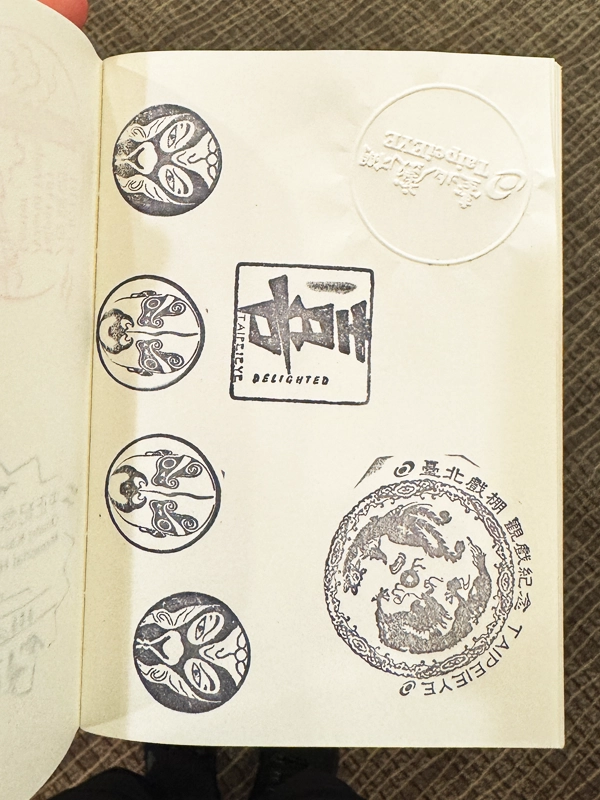
At the Taipei EYE many activities happen before the show. Like at many landmarks, museums and viewpoints in Taiwan there is a stamp station. There are stamps that are Taipei EYE themed, others show masks and makeup from some of their shows.
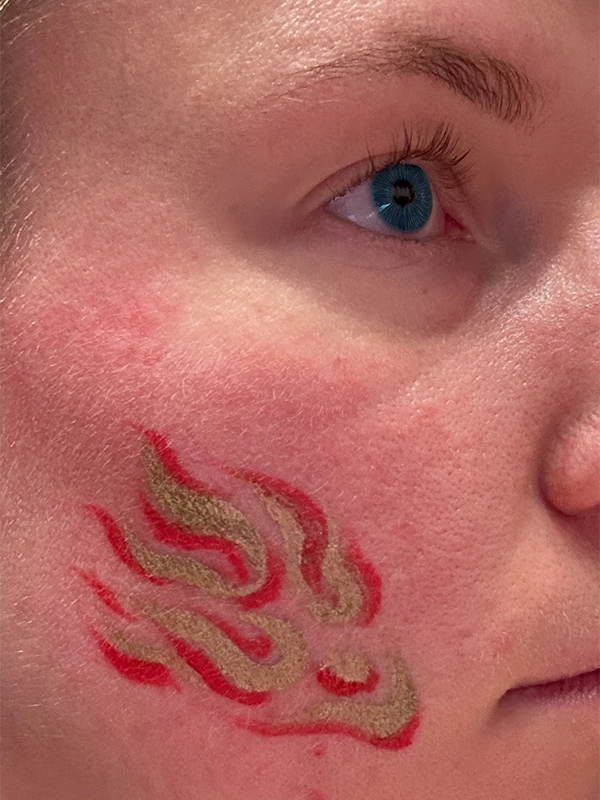
There is face-painting, mainly for children, but when I did it two older Japanese ladies got one, too. I got a selfie with them as well, but since we only communicated via facial expressions and gestures I couldn’t ask if they were okay with me sharing it here.
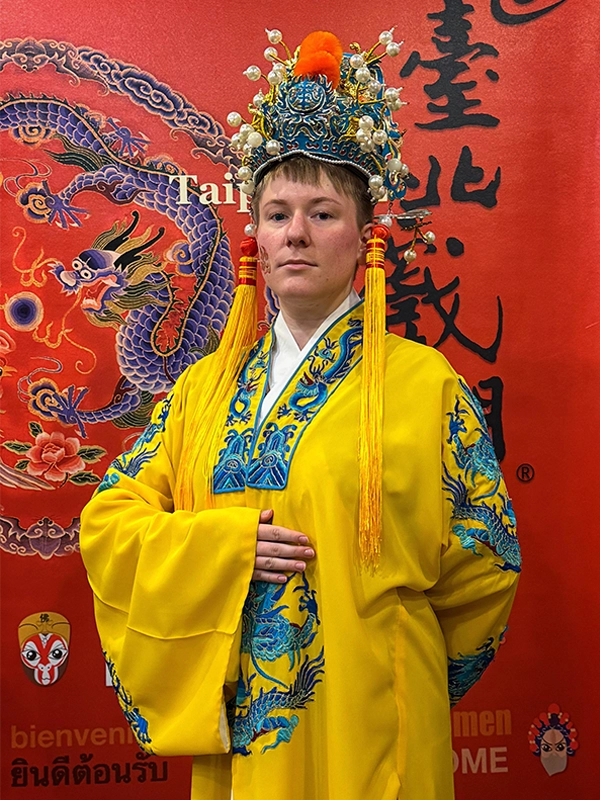
At one end of the lobby was a photo booth with costumes where two staff members helped with costume selection and fitting. They will also provide character introductions and simple posture demonstrations that are in line with the costume and accessories you are wearing.
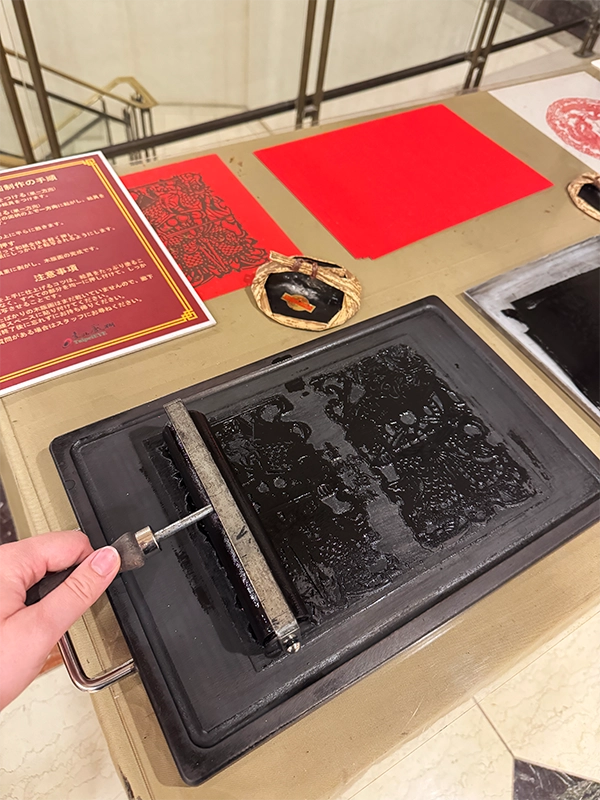
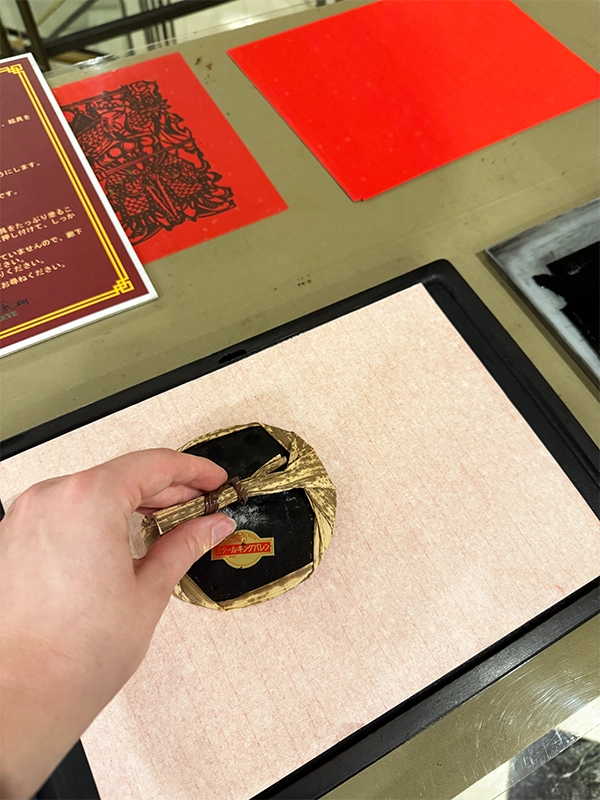
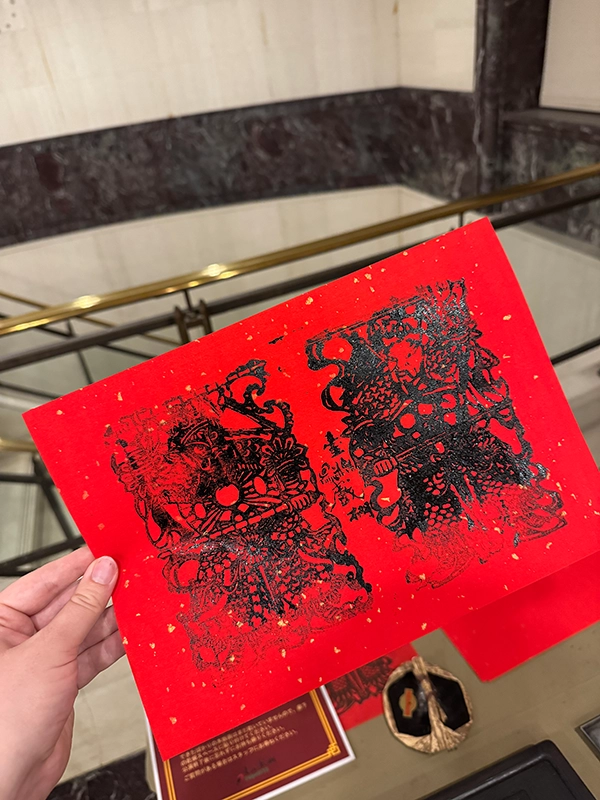
Next to the elevators was a woodblock printing station where you could print a red dragon and phoenix (signature emblem of TaipeiEYE) on white xuan paper or door guardian designs of figures from Taiwanese folk traditions in black ink on red xuan paper. You can hang the papers up with magnets during the show and pick them up once dried to take home afterwards.
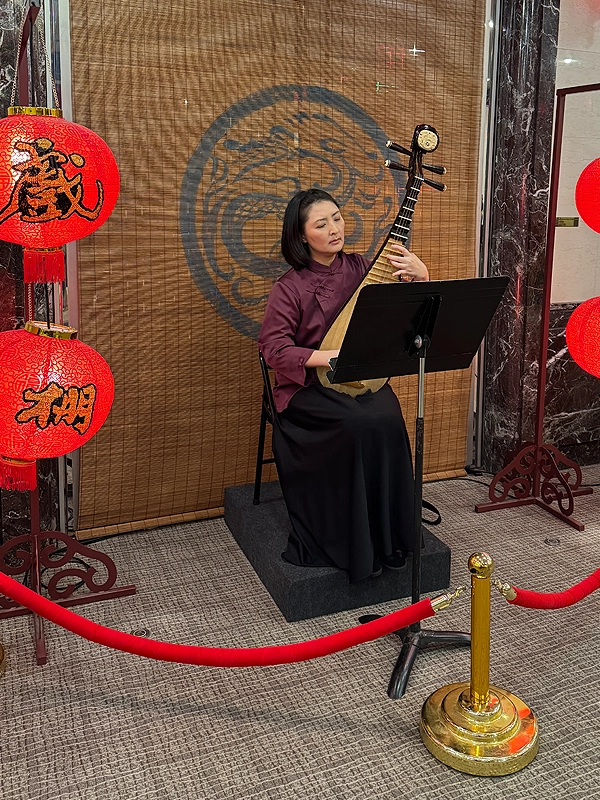
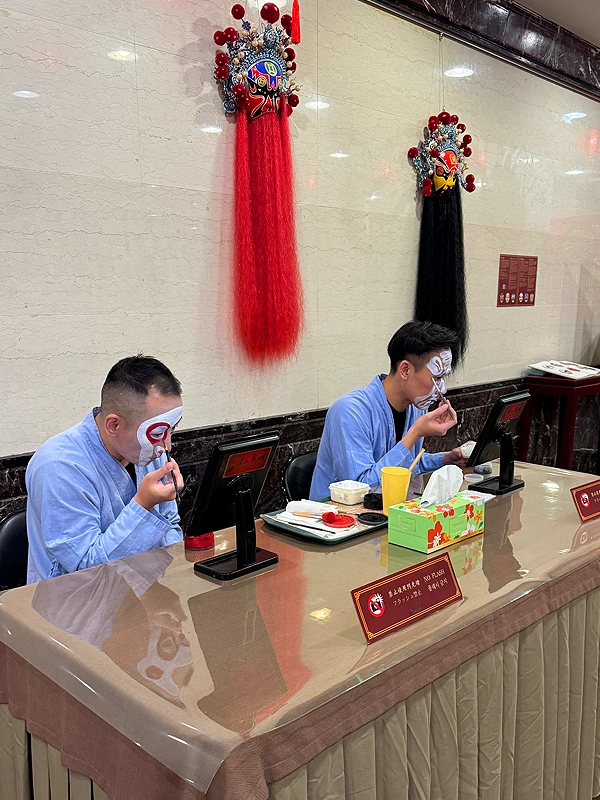
Before the show some of the performers prepare inside the lobby to give guests insight into what goes into the preparation for the stage.
One plays the Pipa. It’s a plucking instrument that can be dated as far back as the Qin and Han dynasties in China. It is used as a solo instrument during the show.
At a table two other performers apply their stage makeup (容妝), the one in the front is painting his face to play one of the monkeys that follow the Monkey King Wukong.
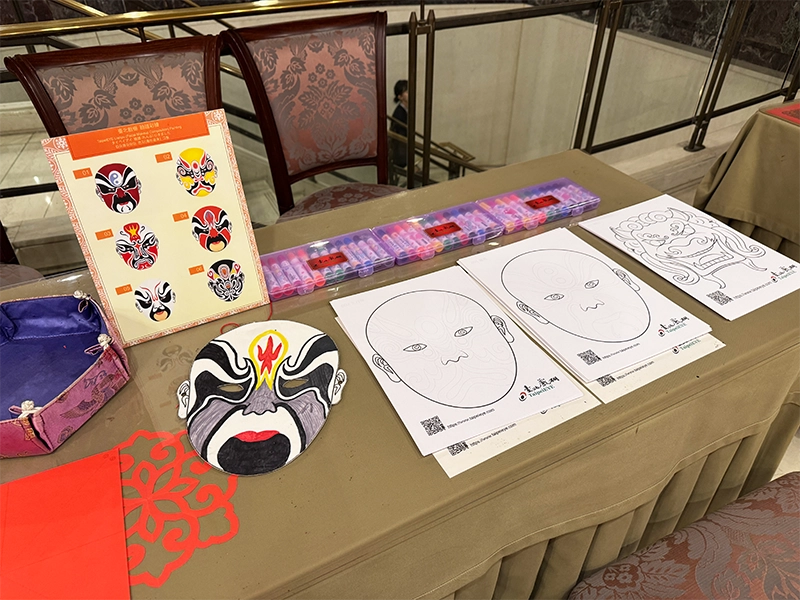
There was also a table for Lianpu colouring.
Several of the masks used in these shows were printed on white paper and there were many coloured felt tip markers.
On an instruction sheet you could find six different examples of masks to colour from, or make your own.
On other days there are other experiences as well as the ones I mentioned above, such as Chinese paper cutting and traditional Chinese opera hair and headdress styling demonstration.
Peking Opera
Peking Opera (京劇) was listed as UNESCO Intangible Cultural Heritage of Humanity in 2010. Peking Opera describes a performance art that incorporates singing, reciting, acting, martial arts and music on traditional instruments.
Monkey King Fights the Skeleton Demon
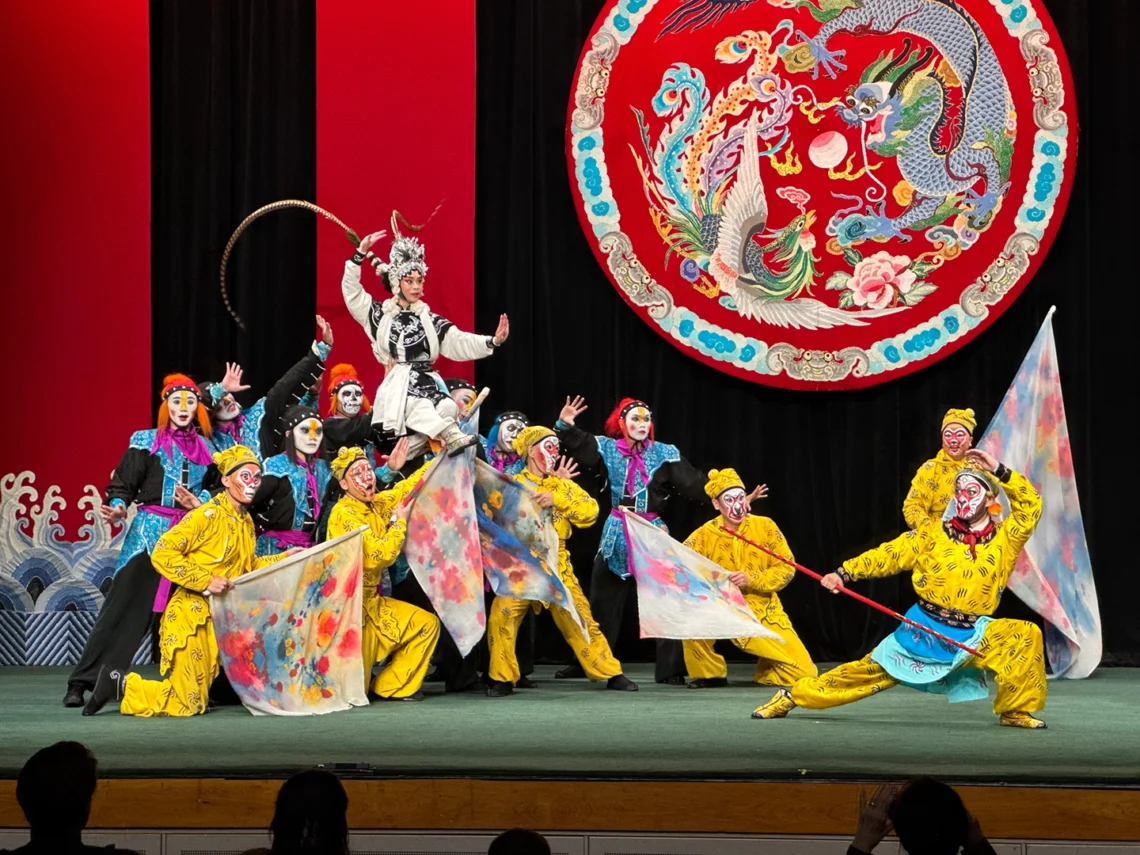
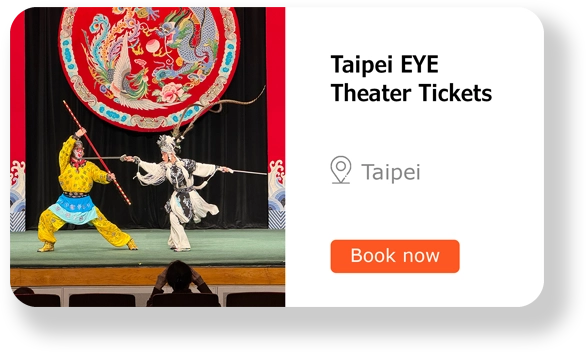
The show they were showing was called the “Monkey King Fights the Skeleton Demon”. The story originated from a chapter of the novel The Journey to the West, one of China’s four great classical novels from the 16th century, but was adapted to a stage show for Peking Opera. It contains dancing, singing and acrobatics.
In the story Buddhist monk Tang Sanzang (red) travels through the mountains with his three disciples: the Monkey King Sun Wukong (yellow), Zhu Bajie a formerly divine being that was exiled to the human realm and was birthed by a sow so that he now looks like a pig-human and Sha Wujing, another banished deity. The White Bone Demon detects Tang Sanzang’s presence wants to eat his flesh to become immortal.
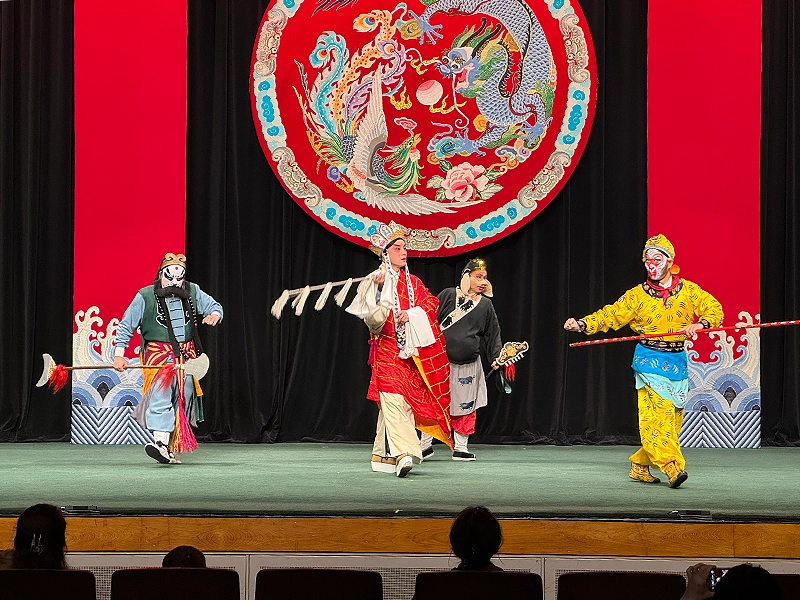
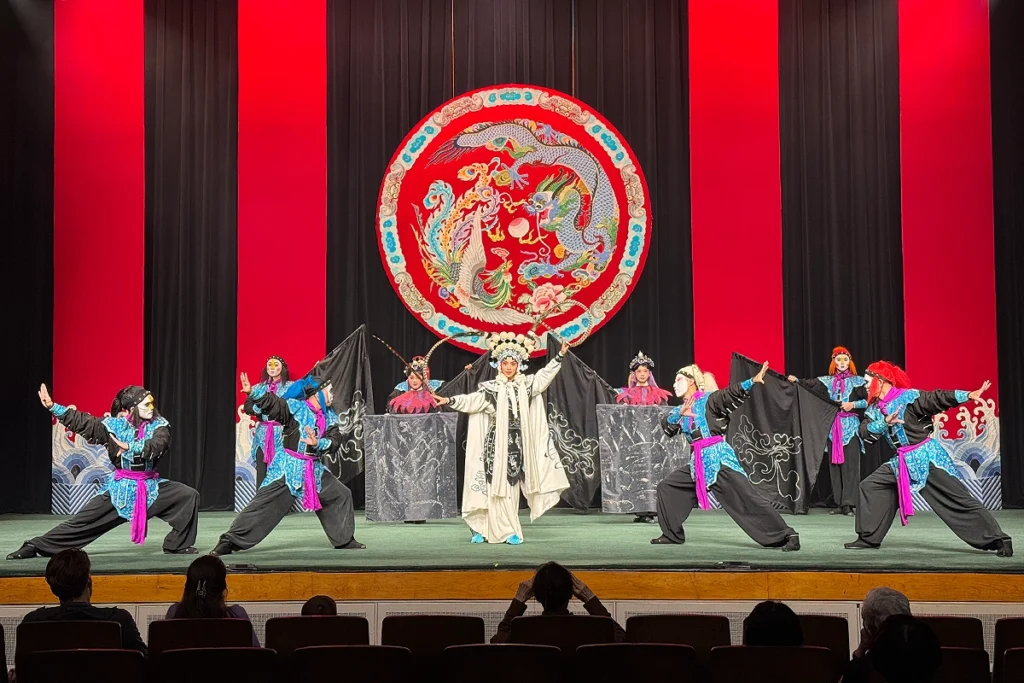
While the monkey king is away from the group looking for food it transforms into a beautiful young woman, claiming to bring food to the nearest monastery. Zhu Bajie is hungry and wants to accept her food. When the Monkey King returns to their camp he sees through this facade and attack the demon, driving it away. It leaves behind a fake corpse.
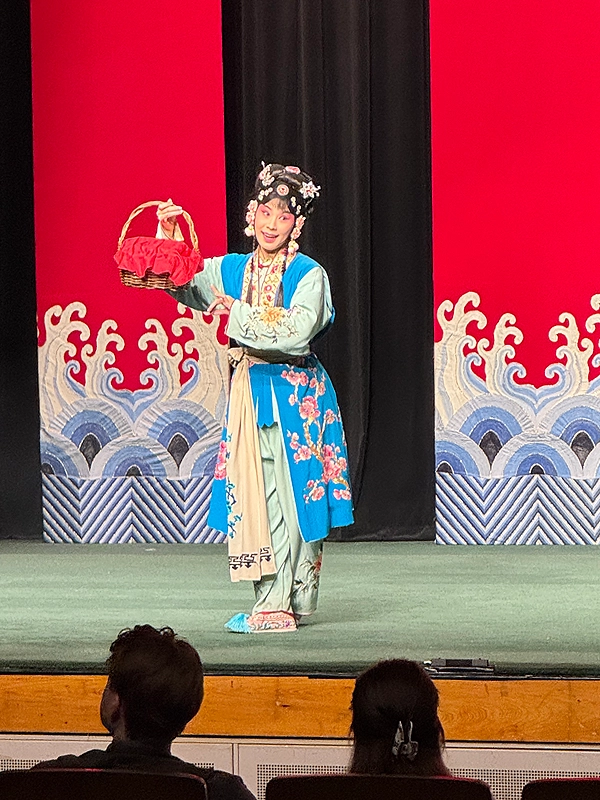
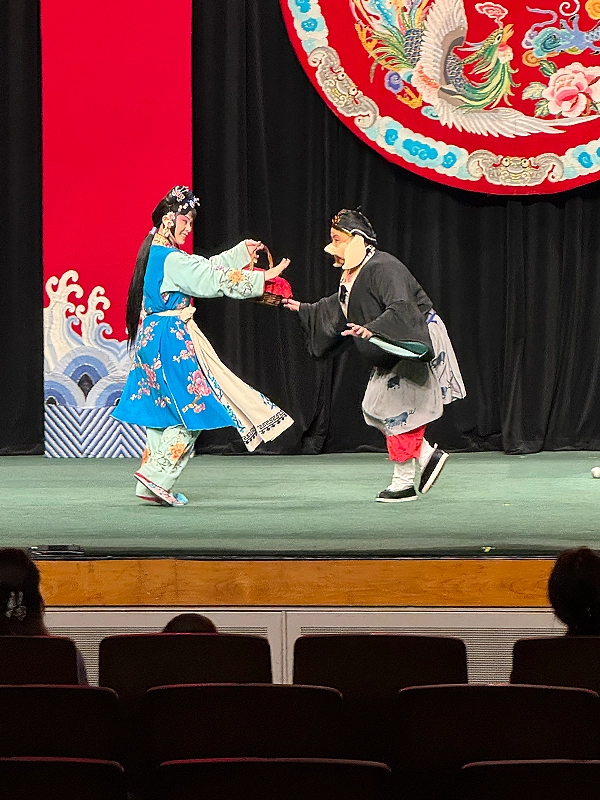
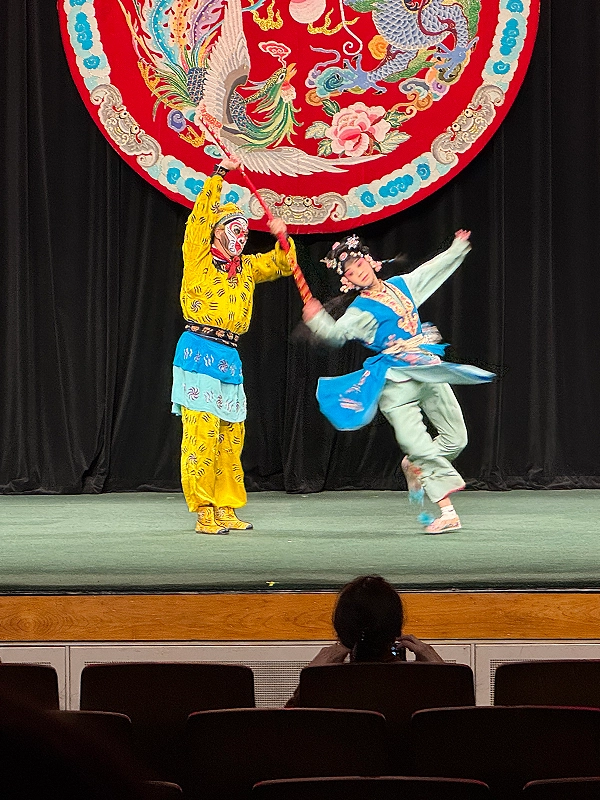
Zhu Bajie accuses Sun Wukong of murdering her for no reason. The demon shows up again, this time in the from of an old woman looking for her daughter. Once again the Monkey King attacks her and the other three try to stop him. Eventually he kills the old woman as well. Once again a fake corpse is left behind. Again Zhu Bajie and Monk Tang think he killed an innocent.
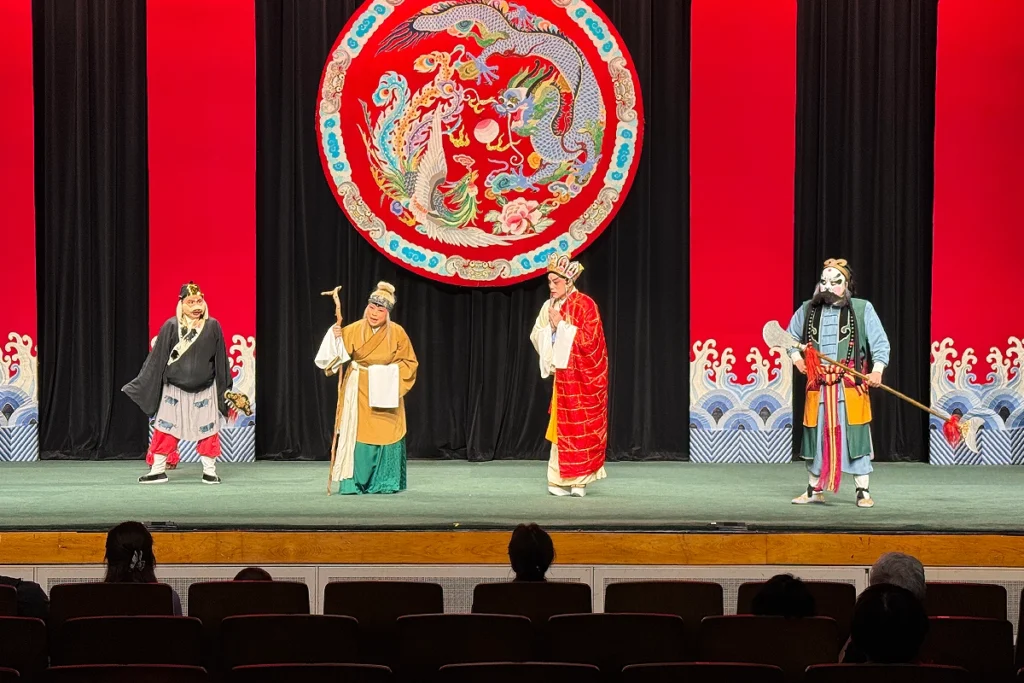
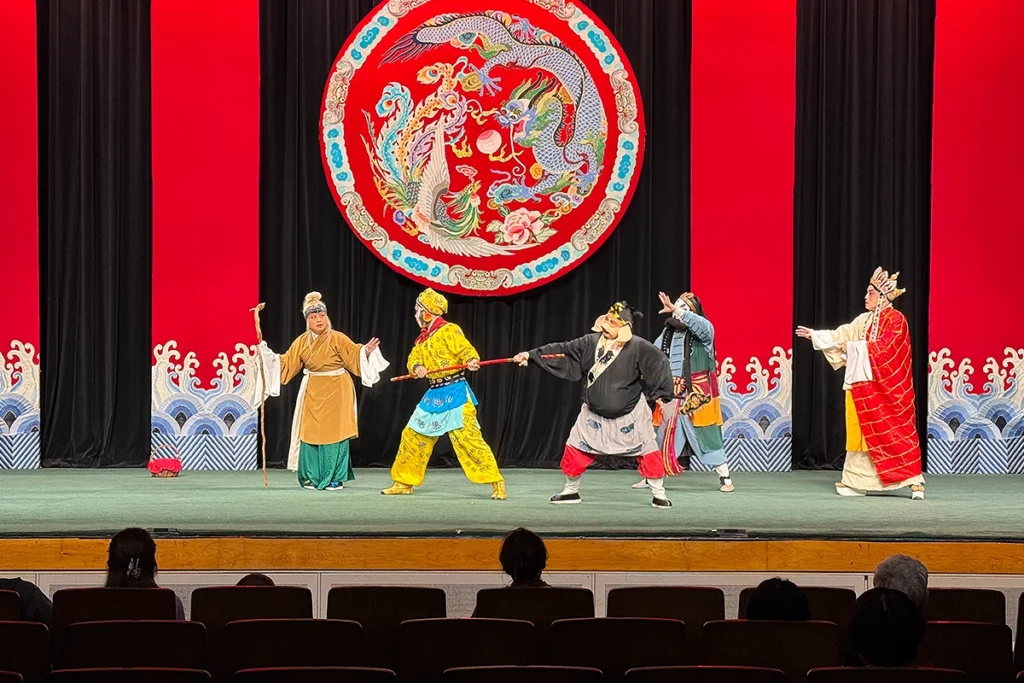
The third time the demon shows up as an old man, pretending to look for this family. This time monk Tang even places himself between the demon and the Monkey King, believing the old man to be innocent. Once again Sun Wukong gets past their defences and defeats it. This time it is too much for Monk Tang and he recites a spell that punishes the Monkey King, then he dismisses him. The now trio continues their journey while Sun Wukong returns to his home, not without telling Sha Wujing to protect their master.
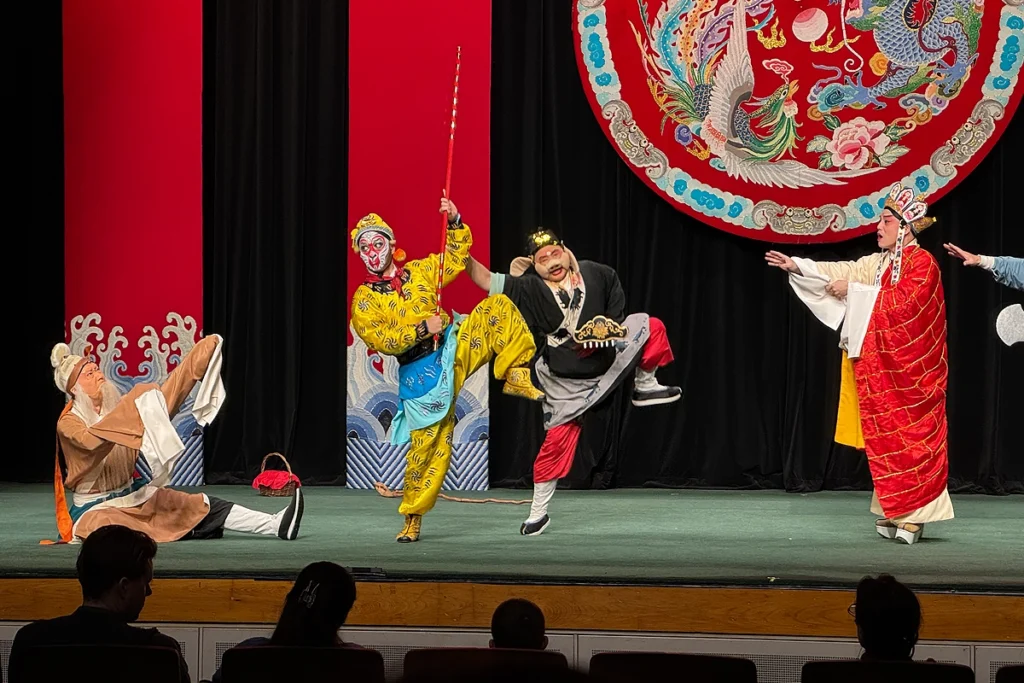
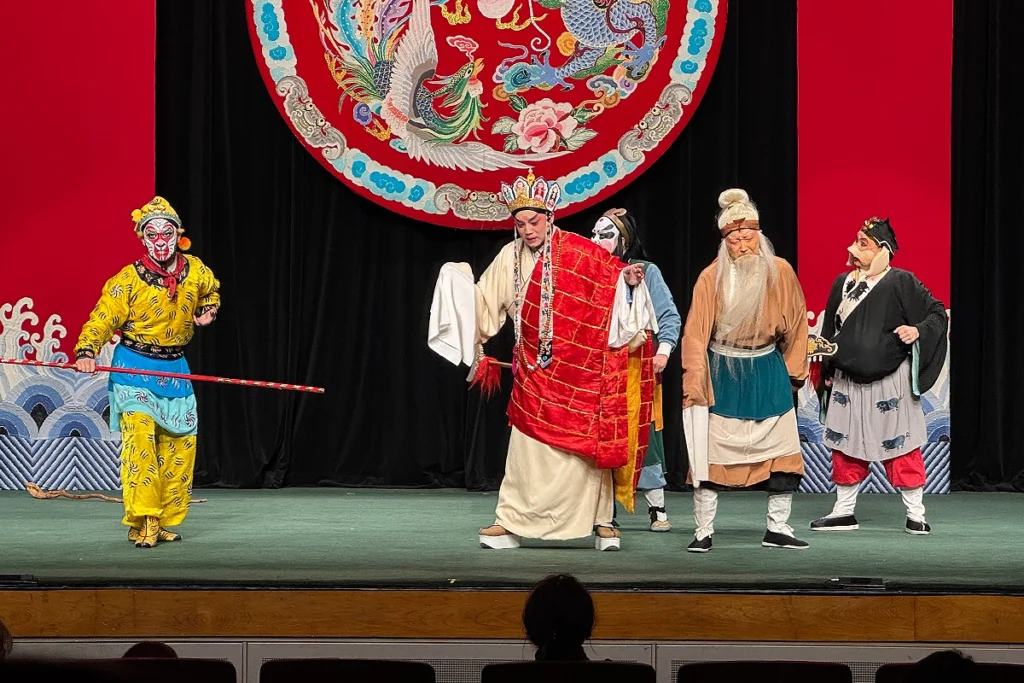
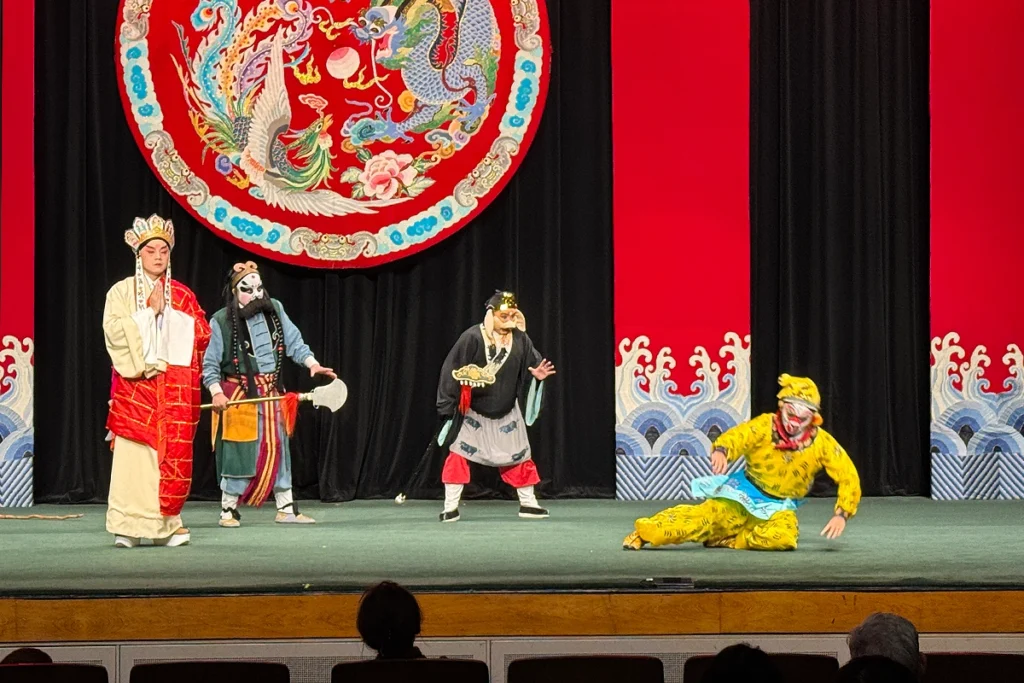
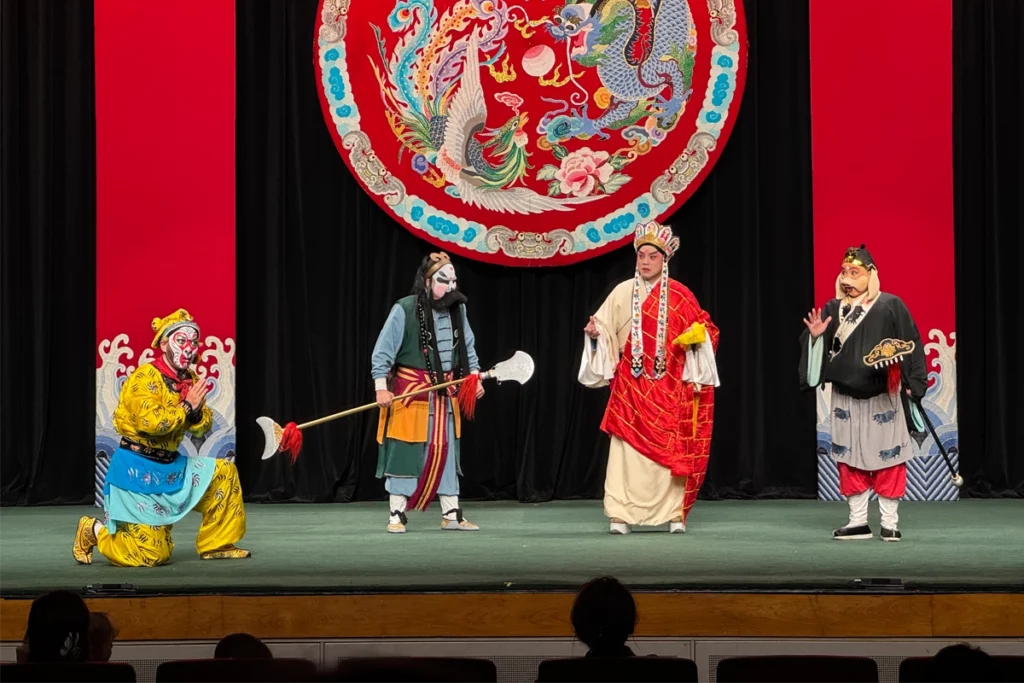
In the story version of this Peking Opera the White Bone Demon manages to capture monk Tang. Sun Wukong gets wind of this and disguises himself as the white bone demons mother to infiltrate her ranks. Just as she is about to take a bite out of him he transforms back and the two fight. Meanwhile Zhu Bajie and Sha Wujing fight her demon henchmen. The battle seems to go in favour of the villains when the Monkey Kings monkeys show up to joint he fight.
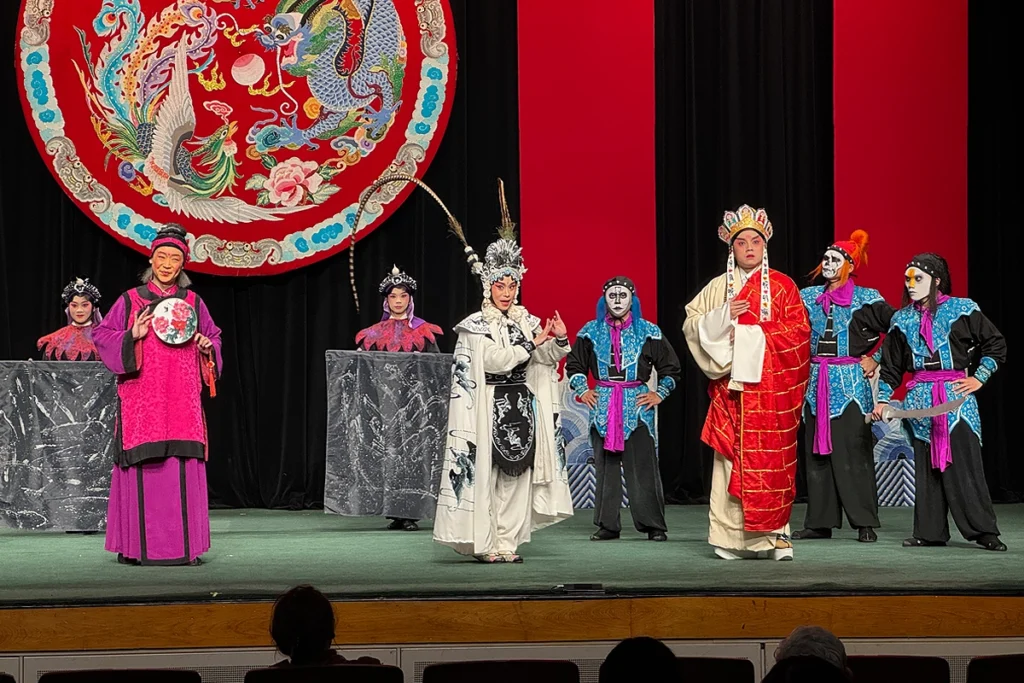
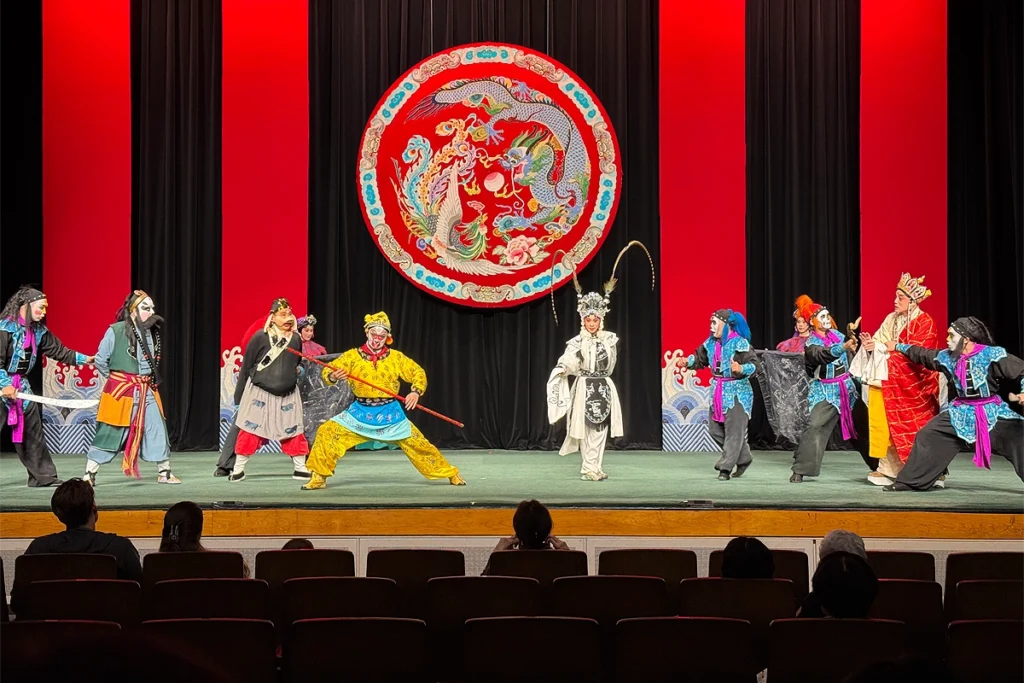
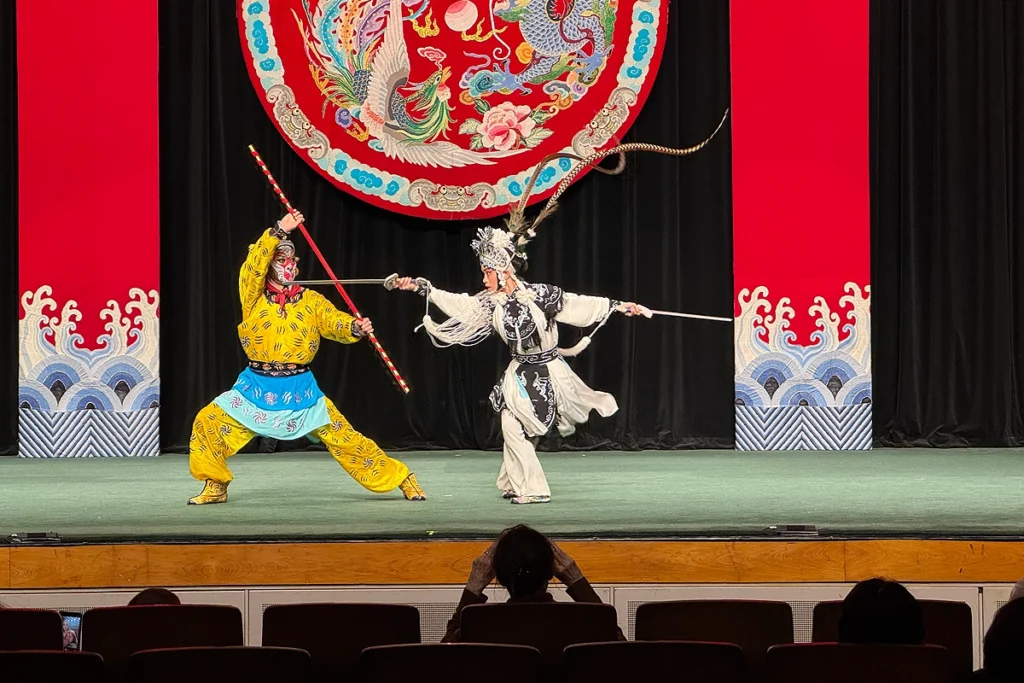
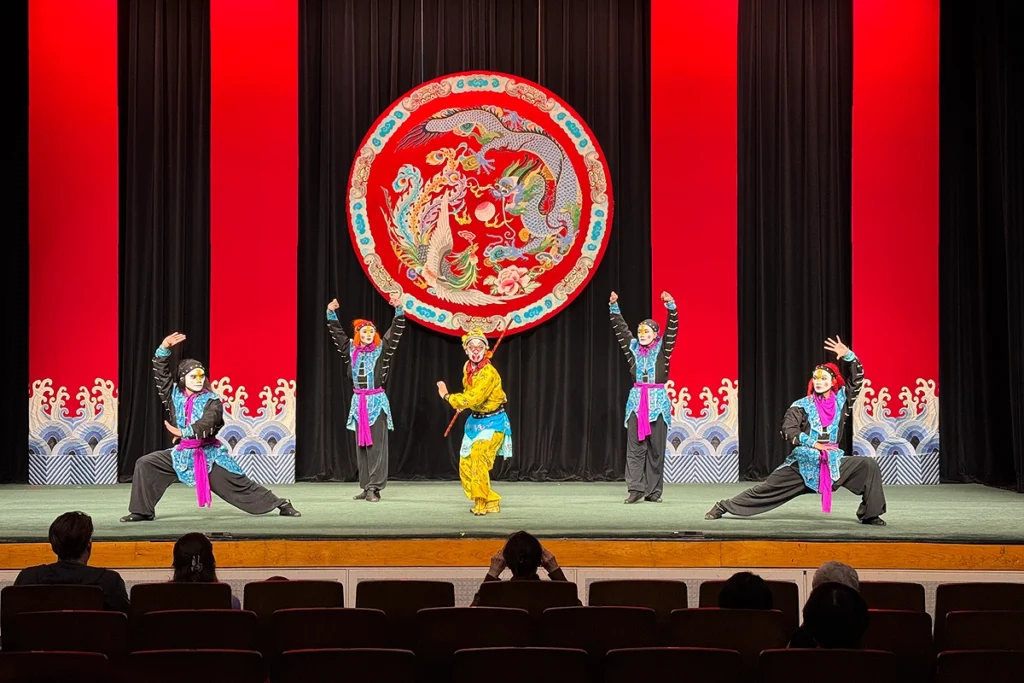
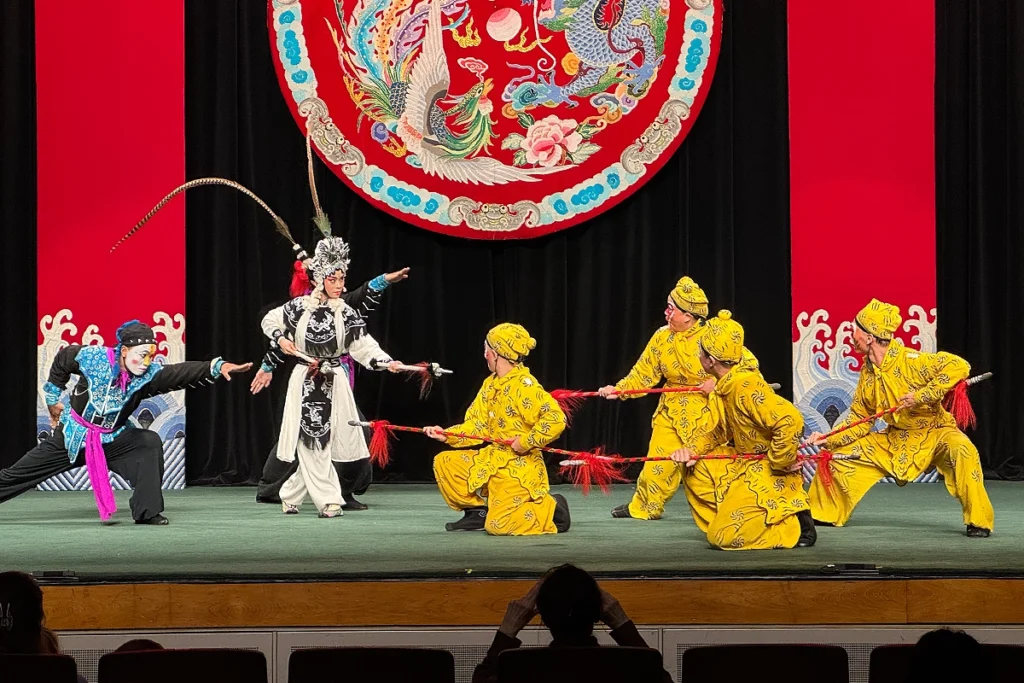
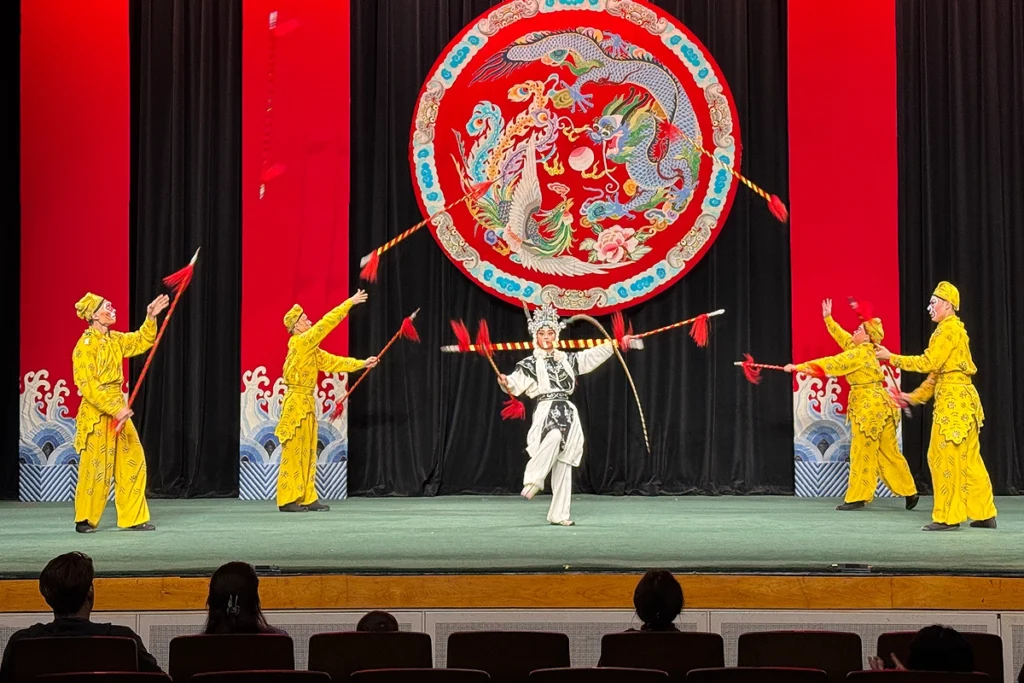
The White Bone Demon fights against the monkey warriors and it is one of the most acrobatic scenes of the show. It ends with a fight between the two main characters and the liberation of monk Tang, who accepts Sun Wukong back as his disciple.
The show is translated with real time subtitles in Chinese, Japanese, Korean and English.
Where to book the Peking Opera Experience
The shows with the experiences happen every Wednesday, Friday and Saturday evening.
You can book directly with Taipei EYE online on Tripadvisor* or on Klook*.
I recommend klook* for all bookings in Taiwan. It has the best offers for the country all in one place.

Related Posts
Four days in Can Tho – from Ho Chi Minh City
Tam Thanh Mural Village – The first of its kind in Vietnam