Traditional Vietnamese Medicine Museum
The traditional Vietnamese Medicine Museum in Ho Chi Minh City, also called Fito Museum, has five floors on this topic. With many interesting exhibits offering a unique perspective on ancient medicine, the evolution of Vietnam’s medical heritage and the relationship between Chinese and Vietnamese medicine.
The museum building
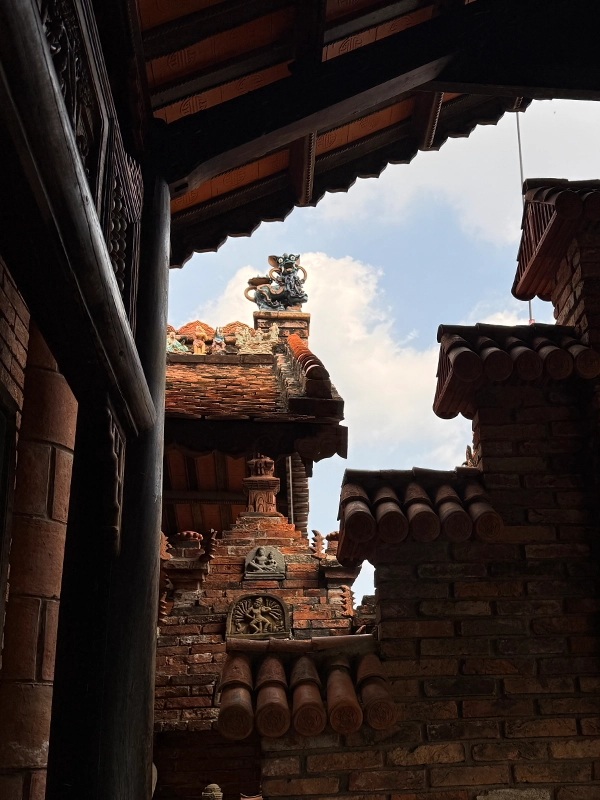
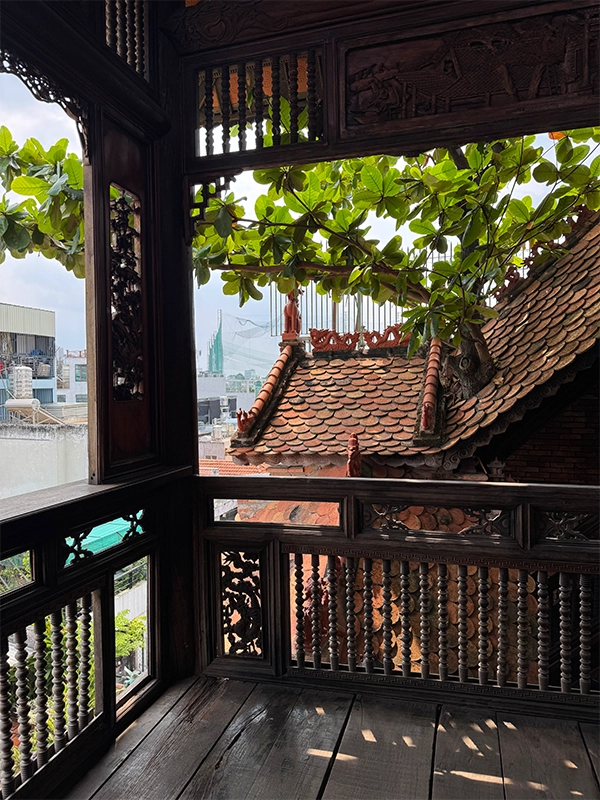
The museum building aims to blend traditional and modern architecture, with five floors (and an attic type floor) that contain the exhibition. The visit starts with an overview of the exhibition, then a short documentary movie about the history, evolution and contents of traditional Vietnamese medicine. The stairwell is wooden, from floor to ceiling, the walls covered with pictures about acupuncture, anatomy, drawings of old medical institutions and medicinal plants. Some parts of the roof are exposed and you can see the symbol for “health” on the underside of every tile.
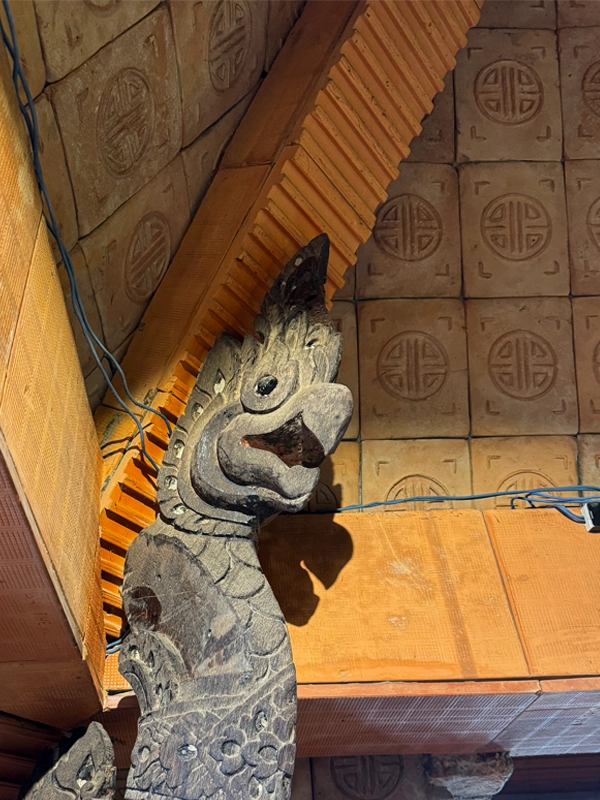
Traditional Vietnamese Medicine Museum Exhibition
After the movie you take the elevator up to the fourth floor. From there you can take a small staircase (almost a ladder) up to an attic like space on the fifth floor. The exhibits are mostly grouped by type:
- Implements to prepare traditional medicine: Knives, grinders, mortars and pestles, pots and jars.
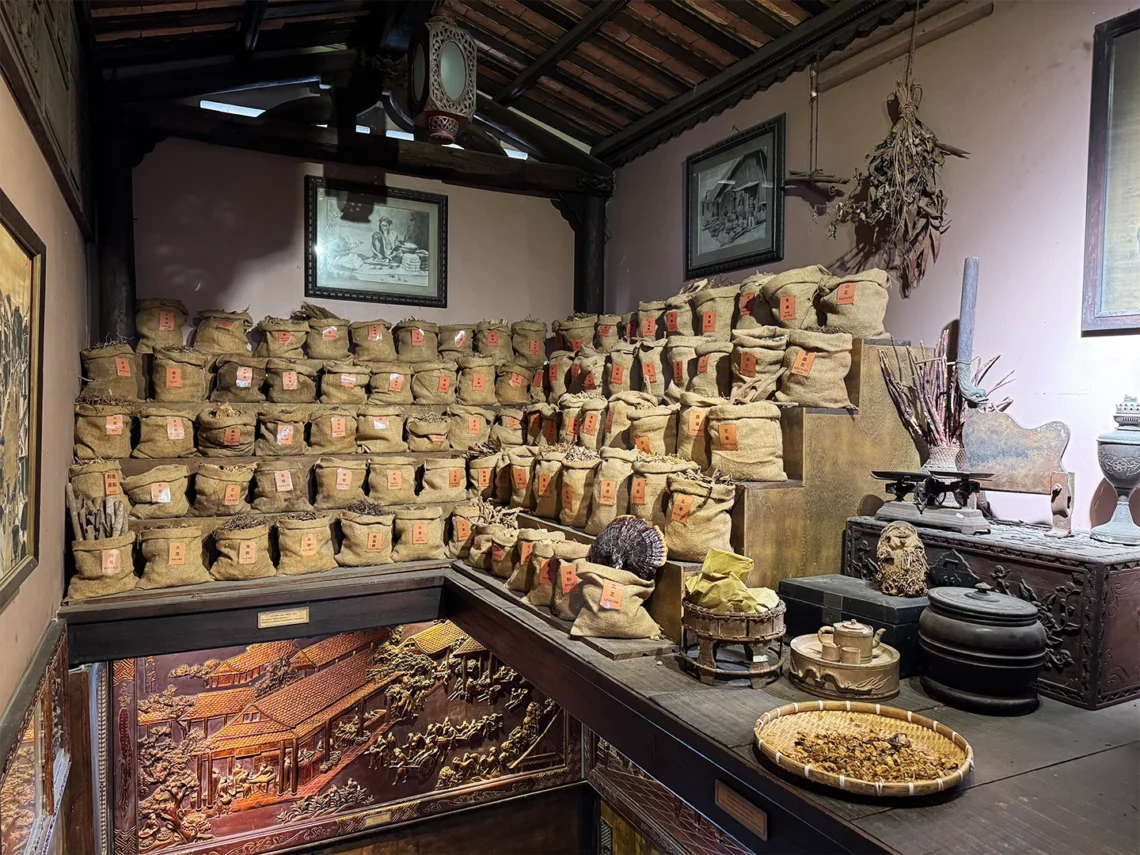
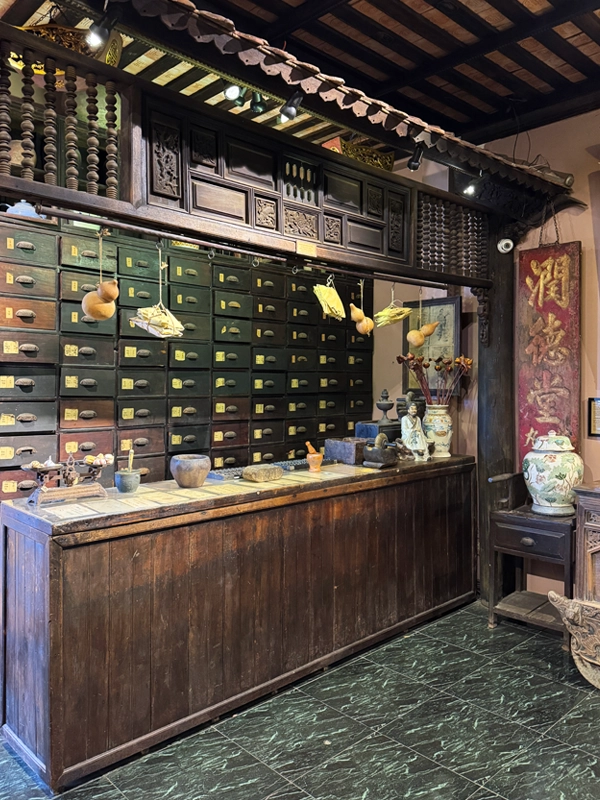
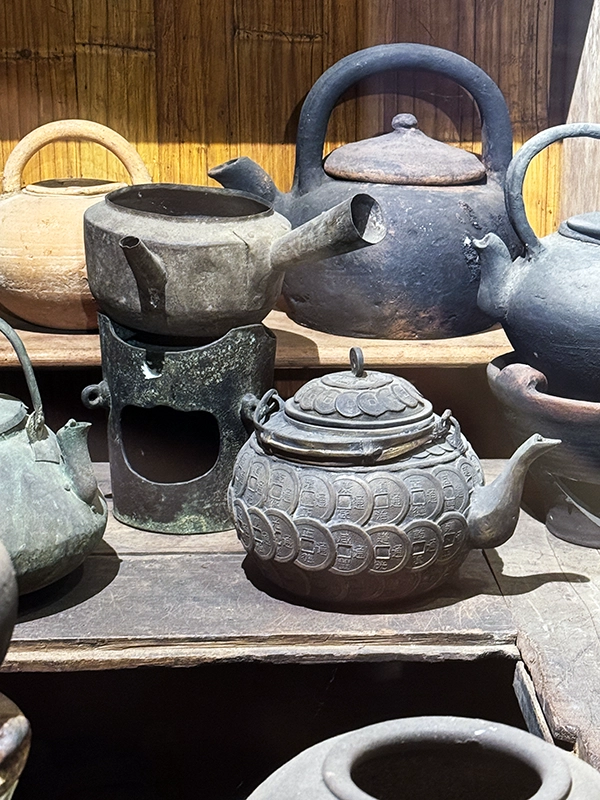
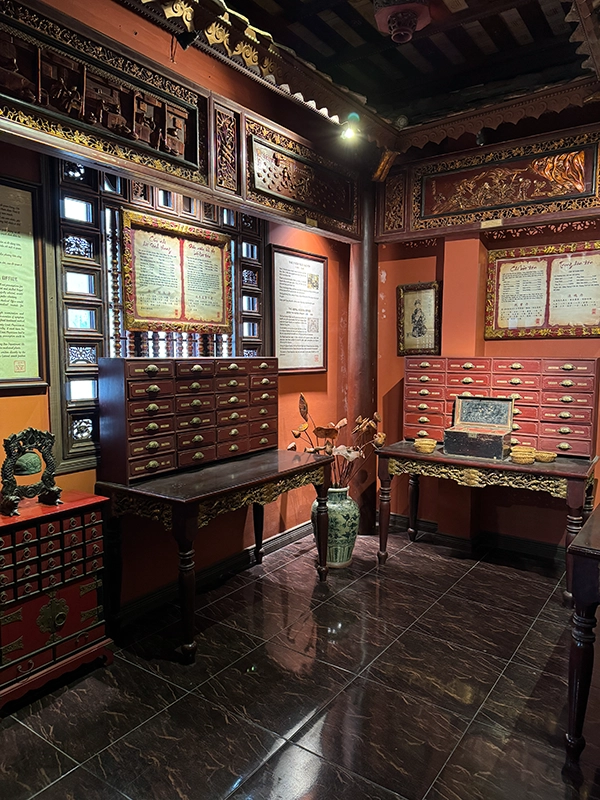
- The interior of a traditional pharmacy, complete with cales, medicine cabinets, storage years and ceramic pots, printing mold, teapot, etc.
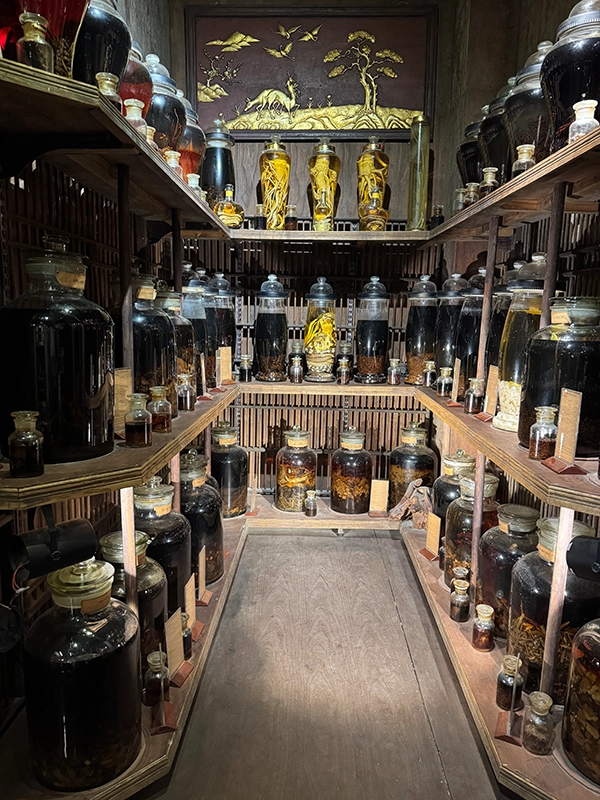
- Medical alcohols, with all kinds of things submerged inside
- Anatomical descriptions, as well as records of illnesses, treatments and cures
- Medicinal plants and their uses
Soaking herbs in liquor is an ancient method of preparing medicine. Quote from one of the museum descriptions “It was believed that tonic liquor had the effect of activating blood, regulating yin and yang, and enabling the flow of blood vessels. According to traditional medicine, medicinal liquor could be used as a medicine carrier, having the effect of nourishing and complementing, activating and harmonizing the blood and opening the meridians. The type of liquor commonly used to soak medicine is white liquor distilled from rice, corn, sweet potatoes, etc.”
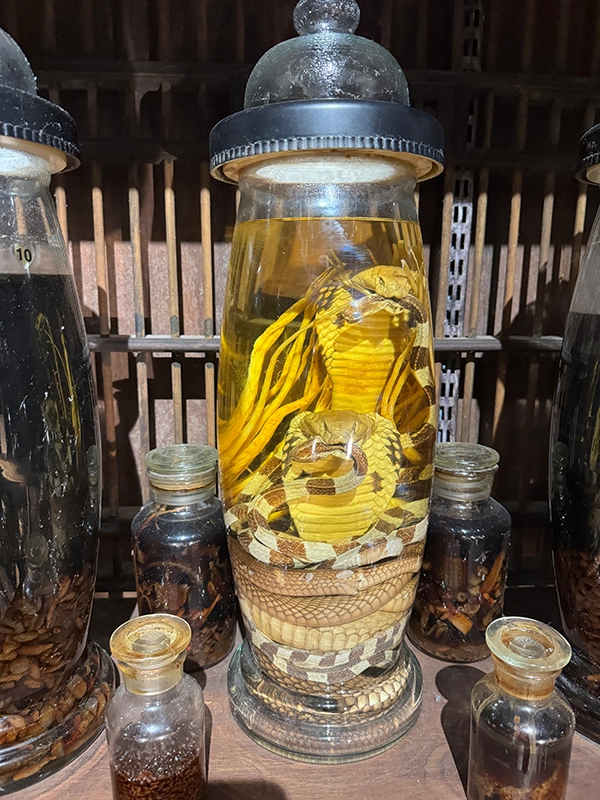
But not only herbs were soaked in alcohol. Other things that were used were scorpions, snakes, seahorses, snails, chickens, etc.
Inside the museum you can find glass jars with ginseng liquor, different roots, but what I remember most vividly is the liquor with four snakes: Two cobras who are draped as if they are biting the neck of the two other snakes.
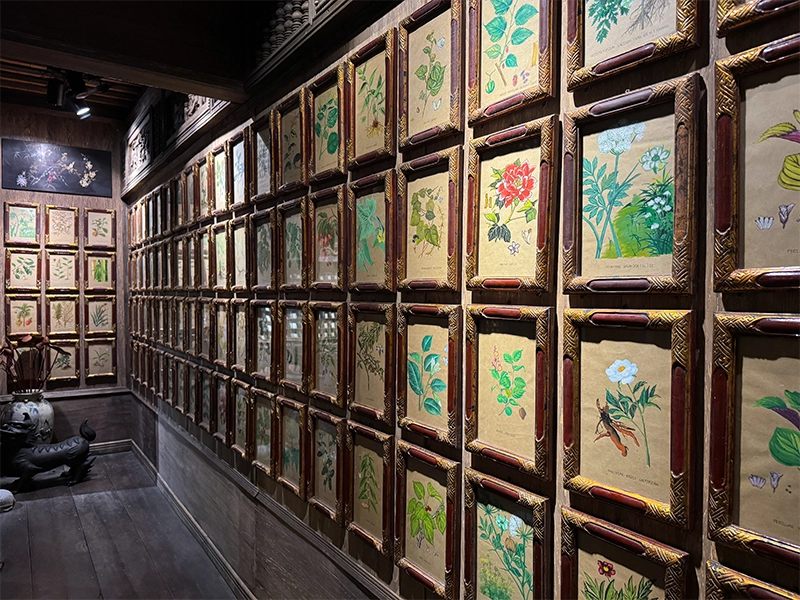
The majority of one of the floors is dedicated to plants. Multiple walls are covered by paintings of plants used for medicine. These paintings were done by Bui Xuan Chuơng (1932-2022). He was a pharmacist, who had a talent for painting. He specialised in drawing medicinal plants and animals in Vietnam. For that he travelled all over the country to search for and paint thousands of unique black and white pictures of medicinal plants and animals of Vietnam. His illustrations are printed in almost all the most significant publications on medicinal plants in Vietnam.
Compared to other countries with similar traditional oriental medicine (China, Japan, Korea), Vietnam is the only country located in a region with a tropical climate. The hot and humid weather provides the perfect conditions for many plants to thrive. The usage of them for medicinal purposes has been recorded from as early as the time of the Hung Kings (2879-258 BC). Today more than 1800 medical plants are known and recognized. One of the walls has a collection of storage jars:Every jar has a medical mixture or dried herb inside
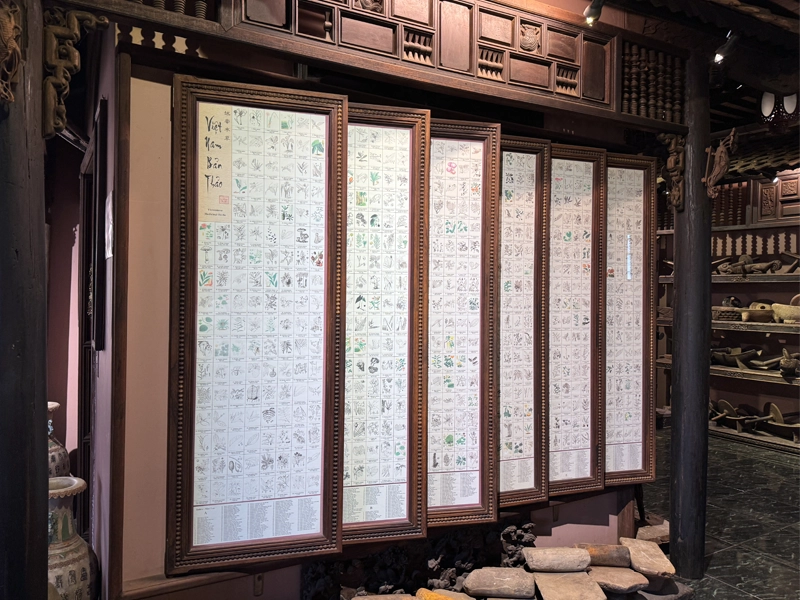
A special exhibit is the “Vietnam Manuscript“: A 12 page album (one page is roughly 1,50m long) containing pictures of medicinal plants. 1,863 species of 238 plant families have been discovered to this date. You can flip through it at your leisure.
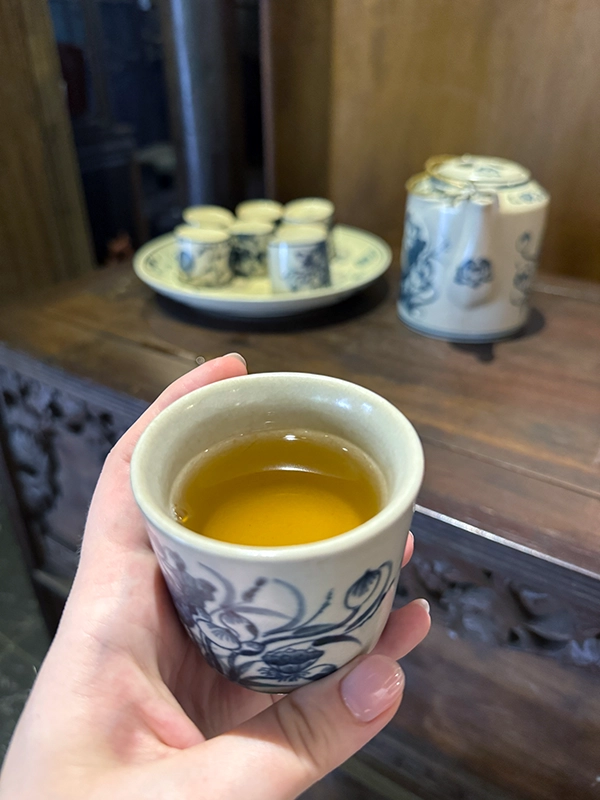
At the end of the exhibition, when you return to the ground floor, you get a free cup of herbal tea. The museum shop looks like a typical souvenir shop at first, but actually sells medical teas and other traditional medicine based products.
Most of these products are produced by the pharma company Fito. They specialize in manufacturing traditional medicine based on the foundation of ancient herbal remedies. This company is also the operator of the museum.
Some things to be aware of
Admission is more expensive than most museums in Vietnam: 180.000 VND. When I was there it had to be paid in cash, however other reviews during the same time say they had to pay by card and yet others say the tickets could be paid by card, but in the shop they only accept cash? It seems to depend on the employees. Make of that what you will.
At the traditional pharmacy there apparently used to be someone acting like an ancient pharmacist and you could even “mix” your own medicine. But all pictures and information I can find about that is dated before the border closure during the Covid-19 pandemic.
If there is a tour or not included in the price is unclear as well. Some people apparently get one, others don’t. I didn’t. There is no official schedule either, so that was not the problem.
I got a plastic folder with some printed explanations in English, German would have also been available. The explanations in the folder were very confusing at times, as if they had been printed a while ago and the museum had been reorganised since then. Many things were not where they were pointed out in the folder, but I managed to find most of them at some point.
Online you’ll find some complaints that people use the Traditional Vietnamese Medicine Museum as a backdrop for their photo shoots. I visited during a weekday, and there were still quite a few people in costumes taking photos, as well as an amateur movie being filmed. Both things in themselves are not a problem, until they block entire areas of the museum. At first I waited for them to take some pictures, polite person that I am, expecting in turn be afforded the courtesy as a visitor of the museum to see the exhibits they were blocking. Except for one pair of women (in beautiful Áo Dài), just did not happen.


Related Posts
Tea tasting in Hoi An – La.kao Teahouse
20 free things to do in Singapore
