Montenegro – The good, the bad & the ugly
My thoughts on Montenegro: what makes it a destination often called the “hidden gem of Europe”, which things you have to expect when you go there and why and how mass tourism is one of the biggest risks to what is drawing people to the country in the first place.
The good
I’ll start with the highlights
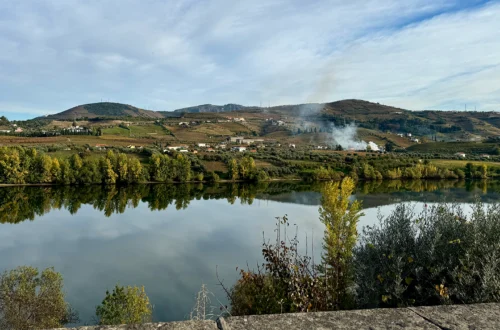
The country as a whole is pretty. It has both mountains and an a gorgeous coastline. The nature is breathtaking and since the terrain is not the friendliest towards development a lot of it is still intact. Some areas have been declared national parks and have striker regulations to keep the flora and fauna save.
The weather is very pleasant during shoulder season – speaking as a Northern European. The travel times where less people are there (early spring, autumn) still has temperatures well over 20 degrees Celsius and quite a few hours of sunshine, while „back home“ they are between 5 and 15 degrees celsius and the sun is seldom seen.
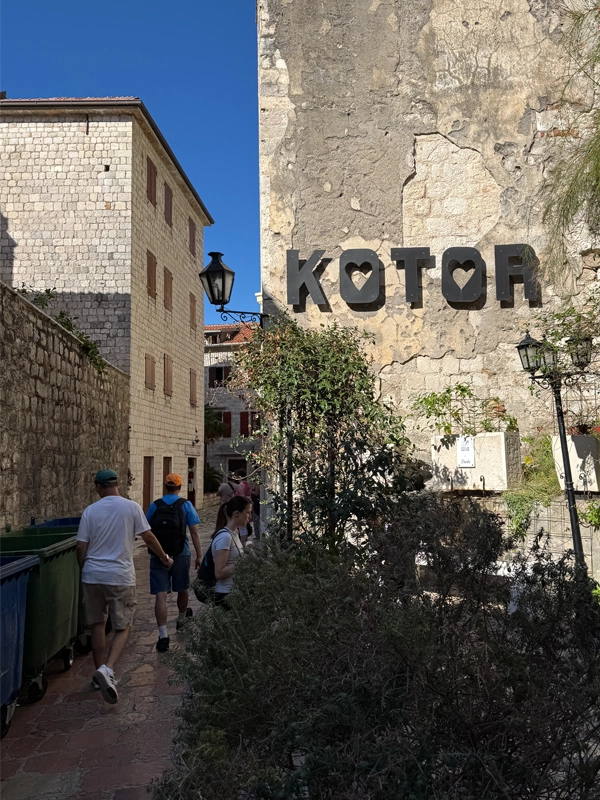
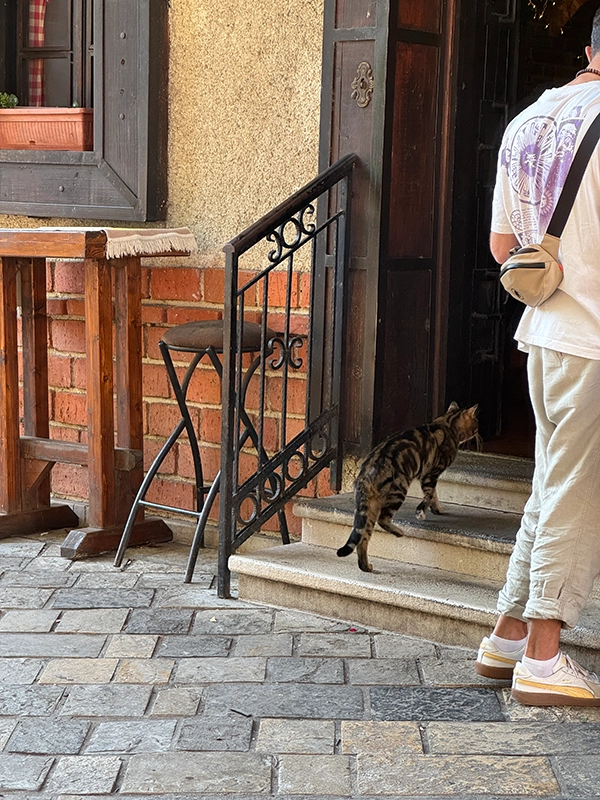
If you love cats then you will have the opportunity to meet many of them and most of them are not aggressive. Cities like Kotor have adopted their street cats into their identity over the years and care for them more than before.
As a tourist another plus is that most people speak basic English. Which makes it super easy to communicate. If you are from the EU another plus is that even though they are not an EU country Montenegro is part of the Euro zone. Which means there is no need to exchange money.
The bad
Now to the less pleasant parts
I have to mention the cats again. While they are cute and it’s different to see cities embrace street cats as much as Kotor and Perast have it also means that there are a lot of street cats. Which in turn means a lot of cats that aren’t cared for, aren’t well fed, don’t see a vet regularly for health problems and aren’t spayed or neutered. You can read more about the cats on my blog here: Street Cats of Montenegro
Everything I earn through affiliate Links in ALL the posts in the category Montenegro will go to the charity “Kotor Kitties” that takes care of street cats in Montenegro. That means YOU can also give to the charity, without spending an extra cent! Just book a tour through my blog you’d book anyway and a portion of the price goes to help the cats!
For some reason there is loud music almost everywhere. In restaurants, in bars, in cafes, outside of all of those establishments, coming from speakers on the boardwalk, people with loudspeakers connected to their phones. It feels like everyone is competing over which music to hear and then they make it louder and louder to not hear everyone else’s music?
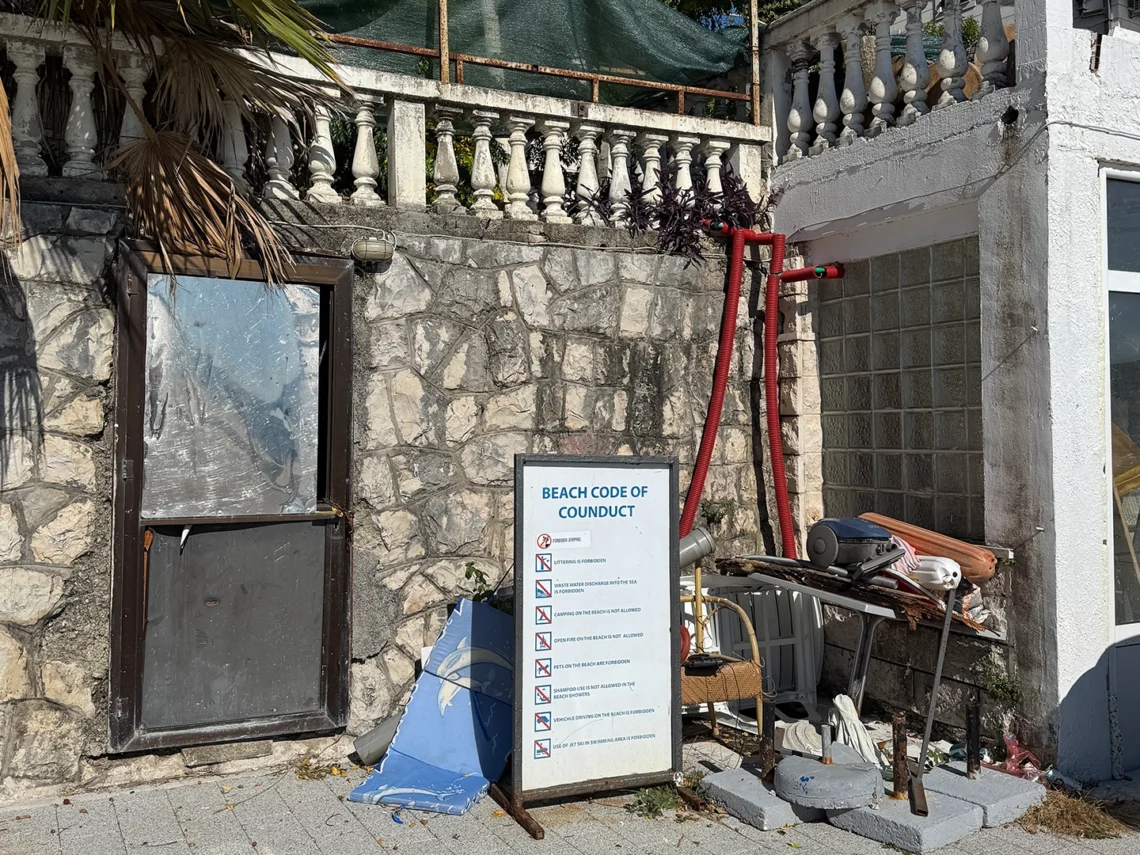
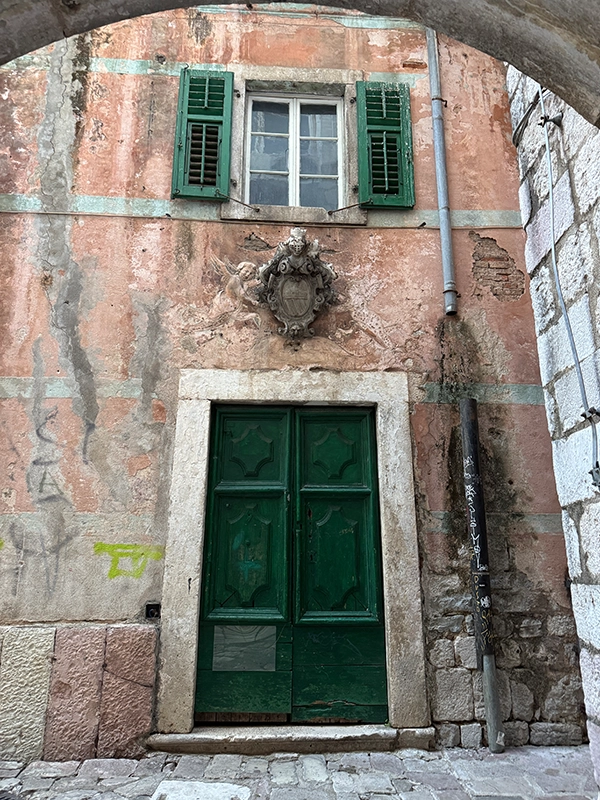
Things aren’t up to date. And by that I don’t mean potholes in the roads (well, not only), but mainly that it feels like development stopped some time in the late 90s, early 00s. Which probably is the case. After the devestating 1986 the earthquake that destroyed a lot of the coast and cities along the coast and then nthe Yugoslav wars from 1991 to 2001 the country was rebuilt, at the standards of those times, with the help of money from other countries. Since then things have stayed the same – no, they have deteriorated. If they had stayed the same it would have meant that people maintained them.
Public transport is… often nonexistent. And when it exists it is unreliable, packed and cramped. At least it’s cheap I guess.
You’d think „oh, if the public transport is basically nonexistent it’s probably because they value cars too much as their main mode of transport – like the USA.” But that’s also not the case, since the parking situation is atrocious. Either there is no parking or it’s a X that doubles as a trash dump, a strip of dirt next to the road, overgrown with hedges or charged by 10-minutes.
The ugly
And finally the worst parts
The traffic comes to mind first. Traffic laws; what are those? Speed limits? Suggestions! As one of our guides said „If it says 40 km/h, we multiply that by the amount of people in the car – or if there is nobody then the amount of wheels“.
Have you ever seen a whole line of cars drive off the road and mid-way across a field because people were too slow in the roundabout? No? Do you want to? If yes, you are in luck. You will see it within the first hour of being in the country.
When the road is barely wide enough for two old cars, nevermind modern ones, to pass each other, while going 30% downhill in a 90 degree curve. What is the appropriate cause of action? Correct. Aggressively take over the car in front of you.
As I was told „We are able to tell who the tourists are, they follow all the rules when they drive“.
Scams. Sadly they are there and they are prevalent. From „missing“ menus leading to being overcharged, to people collecting parking fees and entrance fees where there are none and threatening you if you call them out on it to hotels offering „breakfast“ that looked and tasted a few days old, with coffee machines that were so dirty that they didn’t dispense milk anymore and „complimentary bikes“ that were a threat to our health since they fell apart during use – we had it all. Thankfully I just look nice and am not, so we got out of most of them, but still.
People smoking everywhere. Even inside. Even when there are big „no smoking“ signs. They are just decoration. Is this what the past was like?
And finally: Mass tourism.
Mass Tourism and it’s effect on the Kotor region
The “Natural and Culturo-Historical Region of Kotor” was declared a UNESCO World Heritage site in Danger in 1979, after an earthquake had devestated 70% of the monuments in the the town and surrounding areas in April 1979. This status persisted until 2003, when it was declared to be in danger no longer due to restoration works. However the urbanisation of the area and the political uncertainty in the following years almost made UNESCO reconsider this step. Until today even more “risks” have been added to the list of why this part of the World Heritage is in danger, such as (direct quote from the UNESCO Website):
- Effects arising from use of transportation infrastructure
- Ground transport infrastructure
- Housing
- Impacts of tourism / visitor / recreation
- Land conversion
- Legal framework
- Major visitor accommodation and associated infrastructure
- Management systems/ management plan
- Society’s valuing of heritage
All of these factors can be felt when you are in Kotor, as well as any of the smaller towns and villages along Boka Bay. Montenegros coastal beauty and southern European climate have made it a favourite among tourists, especially from cruises. The impact this many people have on such a small strip of land is staggering and not in a good way. Streets are clogged, the little available public transport overloaded, housing and other prices have skyrocketed since the “wealthy foreigners” can afford them, nature and historical places are sacrificed to “create new experience areas” for tourists. All under the claim that tourism like this will benefit the country as a whole.
Other places in Europe, like Venice, have suffered the same problem. With cruise ships arriving in port, carrying people in the hundreds and thousands (around 20 million people visit the city each year, with > 50,000 people entering the city during peak days – most of them day trip tourists from cruises and inland). The city has since deployed rules and regulations to try and combat the negative effects mass tourism has on the economy, the social life and the ecological systems.
It is high time for Kotor and other places in Montenegro to do the same, to hopefully salvage things before they get even worse. Some examples are cruise ship restrictions to lower the amount of people every day, a day-trip entry fee to support the city as a whole, short-term rental regulations to help the housing market as well as heritage and nature protection efforts to make sure that erosion and capitalistic exploitation won’t ruin the very things that attracted people to the cities in the first place.